China Top 10 Banjo Suppliers for Global Buyers introduces manufacturers serving musicians, retailers, educators, and distributors worldwide. China’s banjo market includes traditional five-string models, open-back instruments, resonator banjos, and customized student designs. Supplier capability can differ sharply, even when product photos look similar.
As banjo expert Bela Fleck has said, “The banjo is a happy instrument.” That character depends on more than appearance. Wood selection, tone-ring construction, neck stability, fret accuracy, head tension, and final setup all influence the playing experience. This guide reviews ten Chinese suppliers through practical buying factors, including manufacturing experience, export communication, quality control, customization options, sample policies, and after-sales support.
Details matter. A clean fretboard is encouraging. A stable tuning machine matters more. Buyers should request material specifications, inspection photos, packaging information, and realistic production timelines before placing larger orders. Factory visits, third-party inspections, and sample testing can reduce avoidable surprises.
Still, no supplier list is permanent. Pricing changes. Workshops improve. Some smaller factories may offer excellent craftsmanship but limited export systems. Others may present polished catalogs while lacking consistent production capacity. That is worth questioning.
The companies featured here are not presented as universally perfect choices. They are potential partners requiring careful verification. Global buyers should compare sound, durability, communication, compliance documents, and total landed cost. A banjo that looks attractive online may feel different in a player’s hands. This guide aims to make that difference easier to evaluate.
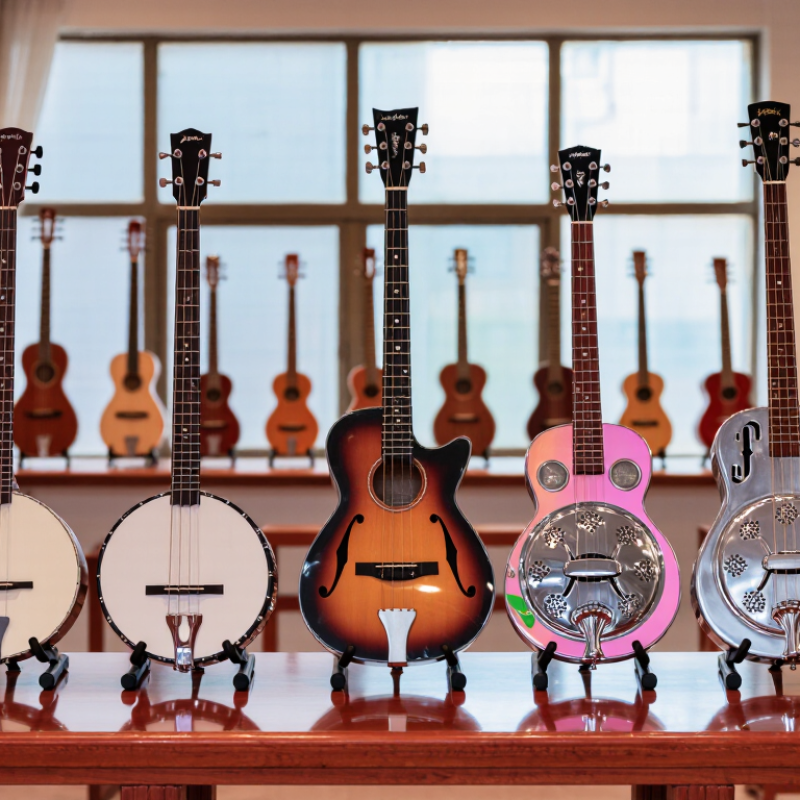
Banjo Manufacturing in China: An Overview for Global Buyers
China has become an important manufacturing base for banjos sold to global buyers. Production often combines CNC machining with skilled hand finishing. Workshops may shape maple or mahogany necks, press wooden rims, and assemble metal tone components. The final sound depends on small details, including rim fit, head tension, bridge placement, and fret accuracy.
Experienced buyers should examine the complete production process, not only product photos. A reliable supplier can explain material sources, machining tolerances, coating methods, and final inspection steps. Ask for a physical sample. Check neck straightness, fret edges, tuning stability, string action, and finish consistency under direct light. Factory visits or independent inspections can verify equipment, storage conditions, and worker procedures. Clear inspection records matter.
Packaging also deserves attention. Foam protection, moisture control, and reinforced cartons can reduce damage during long-distance shipping. However, no factory is perfect. A beautiful sample may hide inconsistent batch quality. Some suppliers may also promise faster delivery than their capacity allows. Buyers should compare sample results with mass-production controls and request written specifications. Small issues, such as uneven binding or loose hardware, can become expensive after shipment. Regular communication helps, but it cannot replace documented quality checks. Even experienced buyers should review their own assumptions before placing large orders.
China Top 10 Banjo Suppliers for Global Buyers - Banjo Manufacturing in China: An Overview for Global Buyers
| Rank | Anonymous Supplier Profile | Primary Banjo Types | Typical Construction | Customization Capability | Indicative Sample MOQ | Indicative Bulk MOQ | Typical Production Lead Time | Export Readiness | Buyer Suitability |
|---|---|---|---|---|---|---|---|---|---|
| 1 | Profile A — Full-Service OEM Manufacturer | 5-string resonator, open-back, tenor | Maple or mahogany neck; wooden rim; metal tone ring and tension hardware | High: specifications, finishes, inlays, packaging and private-label production | 1–2 units | 50–100 units | 45–75 days after approval | Strong: commercial invoice, packing list and export carton support commonly available | Best for established distributors and long-term OEM programs |
| 2 | Profile B — Mid-Market String Instrument Factory | 5-string and open-back banjos | Maple neck; hardwood rim; plated steel hardware; synthetic or natural head options | Medium to high: logo placement, color, hardware finish and setup options | 1–3 units | 30–80 units | 35–60 days after sample confirmation | Good: suitable for container, LCL and parcel export orders | Best for online retailers and regional wholesalers |
| 3 | Profile C — Traditional Acoustic Instrument Workshop | Open-back folk and clawhammer banjos | Wooden rim and neck; lightweight construction; simple metal tailpiece and tuners | High for wood selection, neck profile, scale length and hand-finished details | 1 unit | 20–50 units | 50–90 days after design approval | Moderate to good: export documentation should be confirmed order by order | Best for specialty retailers and traditional music markets |
| 4 | Profile D — Volume-Focused OEM Production Line | Entry-level 5-string and beginner banjos | Laminated wood rim and neck; standard plated hardware; factory-applied finish | Medium: standard body shapes with custom colors, decals and packaging | 2–5 units | 100–300 units | 30–55 days after deposit and artwork approval | Strong for repeat bulk orders and standard export packaging | Best for mass-market distribution and education programs |
| 5 | Profile E — Premium Hand-Finished Manufacturer | Professional resonator and hybrid banjos | Selected solid or laminated hardwoods; upgraded tone-ring, bridge and tuner specifications | Very high: construction, ornamentation, setup, materials and small-batch designs | 1 unit | 10–30 units | 60–100 days after technical approval | Moderate: buyers should verify packing, inspection and export processes | Best for premium boutiques and specialist importers |
| 6 | Profile F — Custom Musical Instrument Supplier | 5-string, tenor and customized limited-edition models | Mixed hardwood construction; configurable rim depth, scale length and hardware sets | Very high: engineering drawings, prototypes and small-batch customization | 1 prototype | 10–50 units | 55–90 days after prototype approval | Good, subject to product testing and destination-market requirements | Best for new product development and differentiated collections |
| 7 | Profile G — Retail-Ready Instrument Exporter | Beginner, intermediate and standard 5-string banjos | Standard wood construction; pre-adjusted action; retail-oriented accessory packages | Medium: packaging, manuals, accessories and color variations | 1–2 units | 30–100 units | 30–50 days for standard models | Strong: commonly structured for overseas retail fulfillment | Best for e-commerce sellers and catalog-based importers |
| 8 | Profile H — Small-Batch Artisan Supplier | Open-back, folk and compact banjos | Hand-selected wood; lighter rims; individually adjusted neck and bridge components | High, but production capacity is limited | 1 unit | 5–25 units | 70–120 days depending on order complexity | Moderate: international shipping arrangements require advance confirmation | Best for boutique brands and limited releases |
| 9 | Profile I — Accessories-Integrated Supplier | Beginner banjo packages and student models | Standard laminated wood body; basic metal hardware; bundled case or gig-bag options | Medium: bundle configuration, packaging, accessories and instruction materials | 2–5 units | 50–200 units | 35–60 days after order confirmation | Good for consolidated shipments and complete starter kits | Best for schools, music programs and entry-level retail channels |
| 10 | Profile J — Cost-Competitive Contract Manufacturer | Standard 5-string and economy resonator banjos | Cost-optimized laminated wood; standardized hardware and factory setup procedures | Low to medium: most suitable for existing specifications and standard components | 3–5 units | 100–500 units | 25–50 days for repeatable models | Good for high-volume orders after pre-shipment quality approval | Best for price-sensitive markets and promotional programs |
Buyer verification note: The figures above are indicative sourcing ranges for anonymous supplier categories, not audited company-specific claims. Before ordering, global buyers should verify factory capacity, wood legality documentation, product specifications, quality-control procedures, packaging standards, payment terms, trade terms and destination-market import requirements.
FAQS
Suppliers were reviewed through factory experience, export records, product ranges, technical documents, and buyer-focused checks. Sample orders tested fret alignment, neck stability, finishes, and packaging strength.
Manufacturing consistency received 30% of the score. Export experience received 25%, while technical documentation received 20%. Capacity counted for 15%, and communication counted for 10%.
Samples reveal details that catalogs often hide. Buyers can inspect fret leveling, tuning stability, neck relief, finish quality, and carton strength. Photographs are not enough.
Entry-level models may use basswood or maple. Higher-grade instruments may include mahogany, walnut, and layered rim assemblies. Material claims should be supported by clear specifications.
Buyers may request different scale lengths, neck profiles, headstock shapes, bridges, fret materials, colors, and packaging. Some factories also support private-label production and sample approval.
Ask for recent production samples, inspection records, and realistic monthly output. Manual finishing can reduce consistency, even when factory capacity appears high. Capacity claims need testing.
Useful records include dimensional reports, inspection results, material details, and batch traceability. For wooden instruments, ask about moisture control and transport protection. Humidity may change setup quality.
No. Market data provides industry context, but it does not prove individual supplier performance. Factory audits, random checks, and trial orders offer stronger evidence. Public data is incomplete.
Certification can suggest controlled procedures, but it cannot replace product testing. Buyers should still inspect samples, production records, and after-sales handling. Certification is only one signal.
No ranking is perfect. Seasonal production, small workshops, and changing materials can affect results. The article also combines musical instruments with industrial fitting references, so buyers should verify each supplier’s actual product category. A ranking can change.
Conclusion
China has become an important source of Banjos for global buyers, supported by established woodworking, metalworking, assembly, and export capabilities. This guide explains the country’s banjo manufacturing landscape and outlines how the top 10 suppliers can be evaluated through product quality, production experience, customization capacity, factory resources, communication, and international service performance. It is designed to help buyers understand the strengths and differences among suppliers without relying solely on promotional claims.
The supplier profiles focus on product ranges, including different body styles, materials, finishes, hardware options, and accessories. Buyers can also compare suppliers based on pricing, quality control, production consistency, certifications, packaging, lead times, minimum order quantities, and export support. By reviewing these factors together, importers, distributors, retailers, and project buyers can identify suitable manufacturing partners, balance cost with reliability, and make more informed purchasing decisions for various global markets.