Choosing among Parlor Guitars in 2026 is about more than finding a small instrument with vintage charm. The right one should feel natural in your hands, sound balanced in your room, and suit the way you actually play. C. F. Martin IV, a longtime guitar-industry leader, has said, “We’re not in the guitar business; we’re in the music business.” That idea is useful here: a guitar’s specifications matter most when they help you make music comfortably.
Start with the details you can feel. Check the scale length, nut width, neck profile, and body depth. A shorter scale may ease stretches, but string tension and tuning response can change too. Sit with the guitar for several minutes. Notice whether its upper bout presses against your arm, or whether the neck feels cramped near the first frets. Small differences add up.
Listen closely. Pluck open chords, then play single notes across the strings. Does the bass overwhelm the trebles? Do notes sustain clearly, or fade before a phrase feels complete? A compact body is not automatically quieter or more comfortable. Wood choice, bracing, setup, and construction all shape the result. And shop labels can mislead.
This guide will compare sound, playability, materials, and value, then explain what to test before buying. It will also consider travel, home practice, and recording, since one guitar rarely excels at everything. Treat online reviews as clues, not verdicts. Your hands may disagree.
Define the Parlor Format: Compact Bodies and Short-Scale Design
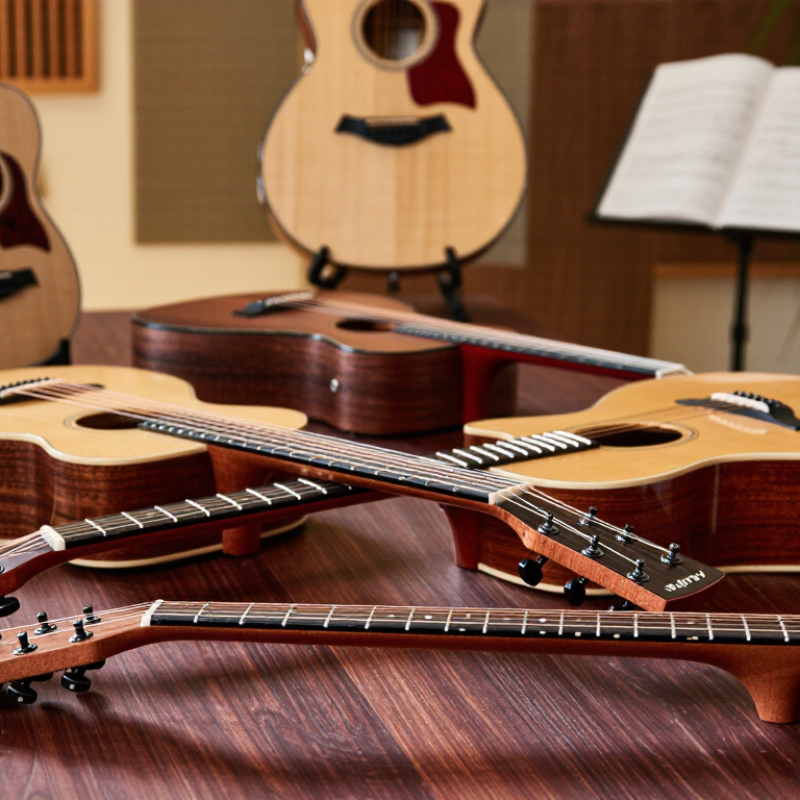
A parlor guitar is a compact-bodied acoustic instrument, often narrower across the lower bout than a full-size dreadnought. The name does not describe one fixed blueprint. Body depth, waist shape, and scale length vary between makers, so compare measurements rather than relying on the label alone. Many models use a shorter scale, commonly around 24 to 25 inches, though some fall outside that range.
A shorter scale places the frets closer together and often reduces string tension with the same strings and tuning. This can feel comfortable for smaller hands or relaxed fingerstyle playing. The trade-off is real: loose strings may feel less firm, and a small body usually produces less bass than a larger guitar. Listen for clear notes across the neck, not just a warm sound in an open chord. A dry, rattly note near the fifth fret may signal a setup issue, not a flaw in the parlor format.
Tips: Check the published scale length and body depth, then try a few chords while seated. Notice whether your picking hand rests comfortably near the bridge. If buying online, ask about nut width, string gauge, and return terms. Small details matter. I would not choose by size alone; comfort can be excellent while the tone still misses your needs.
Defining the Parlor Guitar: Compact Body, Short Scale
Parlor guitars have a narrower body than many larger acoustic formats. Their lower bout is typically about 13.5 inches, compared with roughly 15 inches for concert guitars and 16 inches for dreadnoughts. Many parlor models also use a short scale of about 24–25 inches; exact dimensions vary by design, and these formats do not have universal measurements.
Compare Manufacturer Specs: 24.9–25.5-Inch Scales in Small-Body Models
How to Choose the Best Parlor Guitars in 2026?
A 24.9-inch scale and a 25.5-inch scale can feel noticeably different, even on similarly sized bodies. The longer option adds 0.6 inches, or about 2.4 percent. Standard vibrating-string calculations show that, with the same strings and tuning, tension rises roughly 4.9 percent. That is a useful comparison, not a promise of better tone. Check published manufacturer specification sheets and professional string-tension tables, since body shape and bracing also affect the sound.
Try both lengths with the same chord shapes. On a 24.9-inch neck, reaching a wide first-position stretch may feel easier; a 25.5-inch neck can feel firmer under the picking hand. Small difference. Still real. If possible, compare the same string gauge and tuning, then play softly and with a stronger attack. Listen for clear bass notes, balanced chords, and whether bends feel manageable. I still catch myself judging comfort from a quick strum alone; that can miss fatigue after ten minutes.
For a fair comparison, record each model’s scale, nut width, body depth, and string gauge. Those details appear in spec sheets, but scale length alone cannot predict comfort or projection. Industry market reports track sales and demand, not how a particular neck feels in your hands. Use the numbers to narrow the choice, then let a longer playing test settle it.
How to Choose the Best Parlor Guitars in 2026? - Compare Manufacturer Specs: 24.9–25.5-Inch Scales in Small-Body Models
| Scale-Length Benchmark |
Metric Equivalent |
Relative String Tension* |
Typical Playing Feel |
A Good Fit If You… |
| 24.9 in |
632.5 mm |
100% — reference |
Slightly shorter reach and a comparatively relaxed feel with the same strings and tuning. |
Prioritize comfortable fretting, chord stretches, and a traditional short-scale feel. |
| 25.0 in |
635.0 mm |
About 100.8% |
Very close to 24.9 in; the difference is small for most players. |
Want a compact-guitar scale with a familiar, balanced response. |
| 25.4 in |
645.2 mm |
About 104.1% |
A longer reach and firmer string feel; can support a more taut response. |
Prefer a long-scale feel or want firmer strings for strumming and alternate tunings. |
| 25.5 in |
647.7 mm |
About 104.9% |
The longest option in this comparison; typically feels firmer than the shorter benchmarks. |
Want a small body with a familiar long-scale feel and stronger string resistance. |
How to use this comparison: These are scale-length benchmarks, not brand or model listings. Verify the stated scale length on the individual guitar’s specification sheet. Scale length alone does not determine comfort or tone; nut width, neck profile, setup, string gauge, body construction, and playing style also matter.
*Relative tension: Approximate comparison calculated using the same string, material, and tuning, with tension proportional to the square of scale length. The 24.9-inch value is the reference (100%); actual playing feel varies with the guitar and setup.
|
Compare String Feel: D’Addario Light .012–.053 vs. Extra-Light .010–.047
On a parlor guitar, string gauge changes the feel more than the numbers suggest. A light .012–.053 set usually feels firmer under the fretting hand. Its thicker plain strings can give single notes a solid, rounded response. Chords may also stay steady when you strum with more force. But firm is not always comfortable. On a short-scale instrument, tension can still feel demanding, especially during long bends or extended practice.
An extra-light .010–.047 set generally bends more easily and takes less finger pressure. That can help new players, frequent fingerstyle work, or sore fingertips. The trade-off may be a softer attack and greater sensitivity to a heavy touch. Small-bodied guitars can sound lively with either set; the result depends on scale length, setup, tuning, and playing style. I’d compare them at the same tuning, playing the same chord shapes and picking pattern. Notice fret buzz, tuning stability, and how your fingers feel after ten minutes. I sometimes give tone too much weight and overlook comfort. That is worth questioning. If the guitar already has high action, ask a qualified repairer to check the setup before blaming the strings.
Check Setup Against Martin’s 12th-Fret Action Benchmarks: 3/32-Inch Bass, 2/32-Inch Treble
How to Choose the Best Parlor Guitars in 2026?
A parlor guitar should feel comfortable without sacrificing clear, even notes. Check its string action at the 12th fret, measuring from the fret crown to the underside of each string. A useful reference is 3/32 inch on the bass side and 2/32 inch on the treble side. These figures are a starting point, not a guarantee. Not a verdict.
Tune the guitar before measuring, and keep it in a normal playing position. A small ruler with fine markings helps; estimate carefully if the marks are hard to see. High action can make first-position chords tiring, while very low action may cause buzzing when you play firmly. Listen for rattles across several frets, not just open strings. Fret wear, neck relief, and humidity can all affect the result, so one measurement cannot explain everything. I would also check whether the guitar feels right under a light touch; that preference is easy to overlook.
Tips: Compare both sides of the neck, then play a few soft notes and stronger strums. If the action misses the reference, ask a qualified repairer to inspect the setup before judging the instrument.
Choose Tonewoods, Electronics, and Value for Your 2026 Playing Needs
A parlor guitar’s compact body can feel lively on a sofa yet thin in a noisy room. Listen for clear notes across the neck, not just a sweet open chord. Spruce often gives quick attack; mahogany can emphasize a warm midrange, though build and bracing matter too. The USDA Forest Products Laboratory’s 2021 Wood Handbook lists Sitka spruce at roughly 0.40 basic specific gravity. That figure describes density, not guaranteed tone. Small body. Big character. Try two guitars unplugged, then compare their response at a soft fingerstyle touch.
For electronics, test the pickup through the kind of amp or interface you actually use. Listen for harsh treble, handling noise, and sudden volume jumps. A simple onboard tuner is useful, but reliable controls and an accessible battery compartment matter more than extra features. Set a budget that includes a setup, strings, and a protective case. Compare those costs before judging two similar prices. A discounted instrument can still be poor value if its pickup is noisy or its neck needs costly adjustment. It is easy to overrate a polished finish; comfort and sound deserve the final vote.
Tips: Sit with the guitar for ten minutes. Check whether your picking hand clears the top, and whether the first-position frets feel comfortable. Ask for an unplugged test and a plugged-in test. If you cannot try it in person, confirm the return window and setup support before buying.
Conclusion
Choosing the right Parlor Guitars for 2026 starts with understanding the format: a compact body and often a shorter scale make these instruments comfortable for travel, relaxed playing, and smaller spaces. Compare scale lengths across small-body models rather than assuming every parlor guitar feels the same. Options around 24.9 to 25.5 inches can differ noticeably in string tension, reach, and response.
String choice and setup also shape the playing experience. Light strings around .012–.053 offer a different feel from extra-light .010–.047 strings, so consider your preferred tension and playing style. Check the action near the 12th fret against practical reference points of 3/32 inch on the bass side and 2/32 inch on the treble side, while allowing for personal preference. Finally, weigh tonewoods, electronics, and overall value according to how and where you plan to play.