Buying Acoustic Guitars wholesale requires more than comparing catalog prices. It demands careful listening, practical inspection, and reliable supplier research. A low unit cost may look attractive, yet hidden defects can quickly reduce your profit. Experienced buyers examine wood quality, neck alignment, fret finish, bridge attachment, tuning stability, and protective packaging. They also request clear specifications before placing a large order. Photos help, but they cannot reveal every uneven fret or weak internal brace.
This guide presents ten practical tips for evaluating wholesale Acoustic Guitars with greater confidence. It considers factory reputation, sample testing, order quantities, customization, shipping protection, payment terms, and after-sales support. A supplier should provide consistent records, honest product details, and responsive communication. Ask for a sample guitar first. Play every string. Check the action near the twelfth fret. Small details matter.
Still, no buying guide removes every risk. Wood varies naturally, and production results can change between batches. I have seen attractive instruments fail because their cartons lacked proper corner protection. That mistake was expensive. A careful buyer should leave room for inspection costs, replacement claims, and slower seasonal demand. Some assumptions may need revision after real testing. The best wholesale decision balances sound, durability, appearance, and dependable service. In the following tips, each checkpoint helps turn a promising quotation into a more informed purchasing decision.
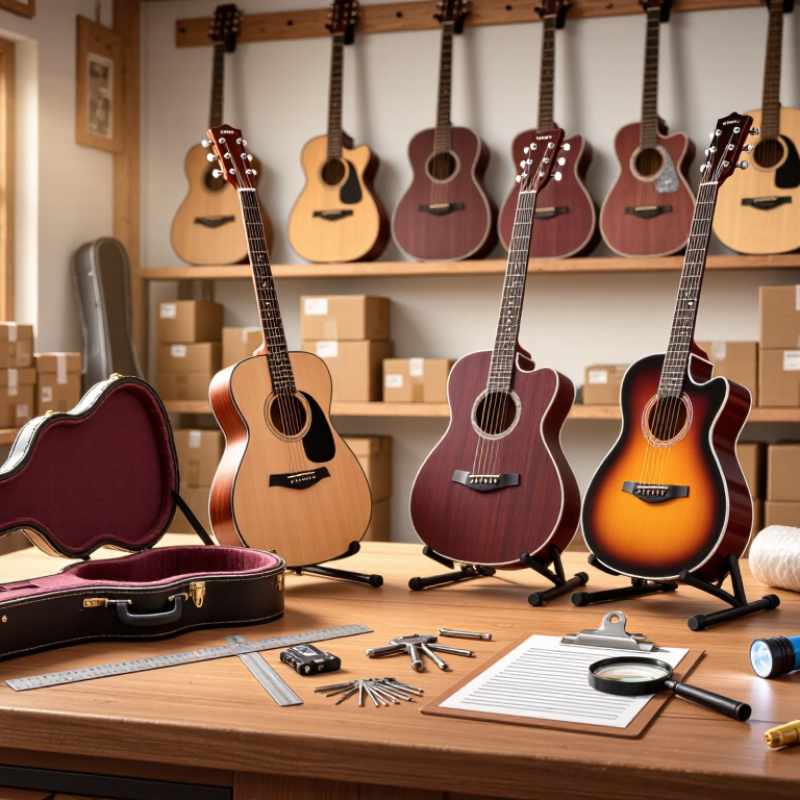
Define Your Wholesale Acoustic Guitar Needs and Buyer Profile
Define Your Wholesale Acoustic Guitar Needs and Buyer Profile
Wholesale buying starts with a precise customer picture, not a large order. A 2024 Grand View Research assessment valued the global acoustic guitar market at about USD 1.3 billion in 2023. It also projected strong growth through 2030. These figures suggest opportunity, but they do not define your customers.
Ask practical questions. Are your buyers beginners, teachers, performers, or experienced collectors? A school may need durable dreadnought bodies, soft strings, and simple finishes. Independent music shops may prefer several body shapes, left-handed options, and mid-range instruments. Online sellers need consistent photography, stable packaging, and specifications that customers can understand quickly.
Small details matter.
Review your last twelve months of sales by price, body size, wood type, and return reason. Then compare those findings with regional income, lesson activity, and seasonal demand. Industry forecasts often disagree because they use different definitions and sales channels. That is a useful warning. Do not treat one market report as a buying order.
A realistic buyer profile should include target age, playing level, preferred budget, expected order volume, and acceptable defect rate. For example, a beginner-focused retailer might test 20 to 30 units before committing to a full carton. Inspect neck relief, fret edges, bridge alignment, tuning stability, and case protection. I would also record setup labor, because a low invoice price can hide expensive adjustments. My earlier mistake was focusing too heavily on unit cost. The better question is whether each guitar fits a specific customer and sells without avoidable service work.
FAQS
Identify age, playing level, budget, expected volume, and acceptable defect rate. Beginners may need comfortable necks, soft strings, and durable finishes. Schools often value simple models. Do not order heavily before confirming demand.
Review twelve months of sales by price, body size, wood type, and return reason. Compare those results with local income, lesson activity, and seasonal demand. Market forecasts can disagree. Treat them as clues, not purchase instructions.
Check neck alignment, neck relief, bridge attachment, fret edges, binding, and finish. Look under bright, even light. Watch for cracks, cloudy patches, excess glue, or lifting bridge edges. Small defects multiply across large orders.
Test guitars in a quiet room from several playing positions. Strum open chords and play individual notes above the twelfth fret. Listen for balanced bass, clear mids, and controlled treble. Try light and firm picking. Record short samples.
Samples reveal buzzing, weak notes, uneven volume, stiff tuning machines, and uncomfortable action. Play every string across several frets. Product photos cannot show everything. One impressive sample does not prove stable production.
Request wood type, dimensions, string type, packaging details, and moisture-control information. Ask how production checks bracing, fretwork, glue joints, and final setup. Inspection records are useful. Vague promises are not enough.
Include invoice price, setup labor, packaging, shipping damage, replacements, delays, and customer returns. A low unit price may hide expensive adjustments. I once focused too much on unit cost. That was a costly blind spot.
Confirm the reporting period, required evidence, replacement process, and responsibility for damaged shipments. Photograph crushed carton corners and exposed seams at delivery. Keep several units unopened while testing the batch. Leave room for defects and feedback.
Conclusion
Buying Acoustic Guitars wholesale requires careful planning, clear goals, and a strong understanding of your target customers. Start by defining your preferred guitar styles, price range, expected order volume, and buyer profile. When evaluating products, examine the wood, body construction, finish, hardware, playability, tonal balance, and overall durability. A reliable instrument should offer consistent quality and value rather than relying only on appearance or low pricing.
Next, compare suppliers by reviewing their wholesale prices, minimum order quantities, production capacity, payment terms, and communication standards. Request samples before placing a large order, verify relevant quality and safety standards, and understand each supplier’s return or replacement policy. You should also calculate shipping costs, delivery times, customs requirements, and suitable storage conditions to protect your inventory. Building a long-term supplier relationship through clear agreements, regular quality checks, and honest communication can help ensure stable supply, reduce risks, and support sustainable business growth.