0%

Electric Basses give a music store a practical way to serve beginners, working players, and bands building their first shared setup. Their appeal is easy to demonstrate: a customer can feel a neck’s profile, compare pickup sounds, and hear how a bass sits beneath a drum beat. Yet stocking them well takes more than choosing popular colors. Scale length, string spacing, weight, and setup can change whether an instrument feels comfortable after a full rehearsal.

Industry research offers useful context, though not a guaranteed sales forecast. Fender’s 2021 Future of Music research reported a surge in new guitar players in the United States during the pandemic period. That finding points to wider interest in learning string instruments, but guitar participation does not automatically translate into bass purchases. A store should treat it as a signal to test local demand, not as proof. NAMM’s 2024 Global Report provides broader music-products industry context, helping retailers assess the market alongside their own sales, customer questions, and inventory turnover.

The strongest bass section feels considered, not crowded. A compact short-scale model beside a standard-length bass can help shoppers compare reach and comfort. A reliable tuner, strap, cable, and small practice amplifier make the first purchase easier to picture. Staff knowledge matters, too: explaining active and passive electronics in plain language builds trust. Small details count.

There is a trade-off. Deep inventory ties up cash, while too few options can leave a serious player unconvinced. Review sell-through regularly, ask buyers what they play, and adjust the range. Some assumptions will be wrong. That is useful information.
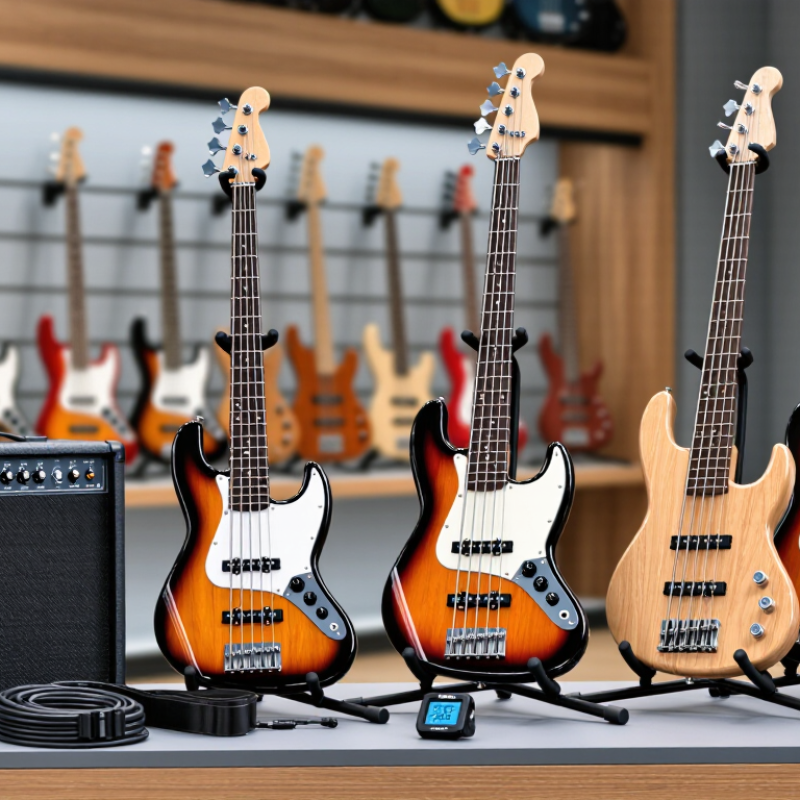
Why Choose Electric Basses for Your Music Store?

What Defines an Electric Bass and Its Main Types

An electric bass is a stringed instrument that turns string vibration into an electrical signal. Magnetic pickups sense the movement of compatible strings, and an amplifier makes the sound audible at performance volume. Most models have a long neck and a scale length designed for low notes. The body may be solid or partly hollow. The details matter.

Four-string basses are the familiar starting point, usually tuned from low to high in fourths. Five-string models commonly add a lower string, useful for extended low notes. Six-string basses add both a lower and a higher string, but their wider necks may take adjustment.

Fretless basses have no metal frets, allowing smooth pitch slides; they also demand careful finger placement. Fretted versions offer clear visual and tactile reference points. A store’s categories can overlap: a bass may be five-string, fretless, and semi-hollow at once. That distinction is useful, though not perfect. Feel it in your hands. Scale length, neck width, pickup placement, and body weight all affect comfort and tone, so specifications alone rarely tell the whole story.

How Electric Basses Serve Different Players and Musical Styles

Electric basses serve players who need a clear low end, steady rhythm, and room to shape a song’s feel. A four-string model suits many beginners and working musicians, with familiar tuning and a manageable neck. In a quiet shop, players can compare its sound through headphones or a small practice amplifier. Listen for note clarity, not just volume.

Musical style affects what feels right. A five-string bass gives players access to lower notes for extended-range arrangements, while a fretless instrument can produce smooth, vocal-like slides. Rock players may prefer a firm attack that stays distinct with drums. Jazz and soul players often look for warm sustain and comfortable movement between notes. Feel matters, too. String spacing and neck width can change how easily a player moves across the instrument.

For a music store, offering varied scale lengths, string counts, and pickup layouts helps more shoppers find a practical match. A shorter-scale bass may feel easier to reach, though some players prefer the tension and spacing of a longer neck. There is no perfect setup for everyone. Staff can ask about the player’s style, hand comfort, and amplifier before suggesting options. Sometimes the first bass chosen is not the final one.

Why Electric Basses Belong in a Music Store’s Product Range

Why Choose Electric Basses for Your Music Store?

Why Electric Basses Belong in a Music Store’s Product Range

An electric bass gives a store a practical way to serve beginners, working musicians, and home-recording players. Its low notes support a band’s rhythm, while a small practice amplifier lets shoppers hear a playable setup on the sales floor. The opportunity sits within a wider music economy: IFPI’s Global Music Report 2024 says recorded-music revenues reached US$28.6 billion in 2023, up 10.2% year over year. That figure measures recorded music, not bass purchases, so it signals industry activity rather than guaranteed retail demand.

A balanced range can include a comfortable entry-level instrument, a mid-priced option, and a few useful accessories. A strap, cable, tuner, and amplifier help customers picture a complete setup. Staff demonstrations matter, too: compare neck feel, weight, and control layout, not just appearance. Bass sales may be quieter than guitar sales in some stores. That can make stock planning imperfect; review sell-through and customer requests before expanding inventory.

Tips: Keep one bass tuned and ready to try. Check setup, string height, and tuning stability regularly. Ask shoppers what music they play, then recommend an instrument that fits their hands, budget, and practice space.

What Store Owners Gain from Stocking Electric Basses

Why Choose Electric Basses for Your Music Store?

What Store Owners Gain from Stocking Electric Basses

Electric basses can help a music store serve beginners, working players, and musicians exploring a new sound. A well-chosen selection gives shoppers practical choices: lightweight bodies, different neck shapes, and varied pickup configurations. Keep a few price points in view. Customers often want to compare feel and sound before deciding.

A playable bass on the floor can make that comparison easier. Staff can demonstrate how string spacing affects hand comfort or how pickup placement changes the instrument’s tone. Small details matter. Keep a tuner and cable nearby, and check each display instrument regularly. A dead battery or loose output jack can undermine a customer’s confidence.

Basses may also bring useful add-on sales, such as straps, gig bags, strings, and compact practice amplifiers. These items make sense when they match the shopper’s needs, not just the register total. Stock should reflect local demand; a large range is not automatically a better one.

Even experienced buyers may need time to choose. Ask what music they play, what feels comfortable, and where they plan to use the instrument. The answers can guide a more helpful recommendation, though staff will not get it right every time.

How to Choose Electric Basses for Your Store’s Customers

Choose electric basses for the customers who visit your store, not for an imagined average player. Ask whether they are buying their first instrument, playing local gigs, or recording at home. Beginners often benefit from a comfortable neck, manageable weight, stable tuning, and straightforward controls. Let them stand with the bass strapped on; a heavy instrument can feel different after ten minutes. Small detail, big difference. Keep a few contrasting neck shapes and pickup configurations available, then explain how each affects feel and tone without promising one “correct” sound.

For gigging customers, check tuning stability, accessible controls, and whether the bass balances well while standing. Home recordists may care more about clean output and quiet electronics.

Grand View Research estimated the global musical-instrument market at $17.47 billion in 2023 and forecast 7.1% annual growth from 2024 to 2030 in its Musical Instruments Market Size, Share & Trends Analysis report. That figure covers instruments broadly; it does not prove local demand for electric basses.

Use your own sales records, customer requests, and return reasons to guide stock depth. A useful correction: popular finishes can draw attention, but comfort and fit often close the sale.

FAQS

What should a beginner look for in an electric bass?

A four-string bass offers familiar tuning and a manageable neck. Try it with a small amplifier, and listen for clear notes.

How does musical style affect bass choice?

Rock players may prefer a firm attack that cuts through drums. Jazz and soul players may favor warm sustain and smooth movement.

When might a five-string bass be useful?

It adds access to lower notes for extended-range arrangements. Not every player needs that range.

What does a fretless bass sound like?

It can create smooth, vocal-like slides between notes. The feel takes some getting used to.

How do scale length and neck shape affect comfort?

A shorter scale may feel easier to reach, while longer necks can offer different tension and spacing. Hands vary.

What should a shopper compare in a store?

Check neck feel, weight, string spacing, and control layout. Play a few notes through headphones or an amplifier.

What accessories can complete a basic setup?

A strap, cable, tuner, and small practice amplifier can help. Match them to the player’s needs and practice space.

How should a store maintain display basses?

Keep one tuned and ready to try. Check string height, tuning stability, batteries, and the output jack regularly.

Does stocking more basses always improve sales?

No. Review sell-through and customer requests before expanding the range. Stock planning can be imperfect.

Conclusion

Electric Basses are versatile instruments that use pickups to convert string vibrations into an amplified signal. Common options include solid-body models, as well as variations with different numbers of strings, scale lengths, and tonal characteristics. These choices help players find an instrument suited to their experience, preferred feel, and musical style, from straightforward rhythm parts to more expressive bass lines across a range of genres.

For a music store, stocking Electric Basses can serve beginners, experienced musicians, and players seeking a new sound or setup. A thoughtfully selected range gives customers useful choices and can complement related instruments and accessories. Store owners can build a more complete offering by considering factors such as price, playability, construction, sound, and the needs of local customers. Balancing accessible entry-level options with instruments for more demanding players helps make the selection relevant to a wider audience.

Evelyn

Evelyn

Evelyn is a professional marketing specialist with a strong understanding of product strategy, customer needs, and market trends. As a valued member of our company, she combines analytical thinking with clear, engaging communication to present complex product information in a practical and......