Engineered Fretted & Folk String Solutions
Explore our precision-crafted electric ukuleles, companion fretted instruments, structural components, and high-tensile accessories engineered to fulfill tier-one global market standards.
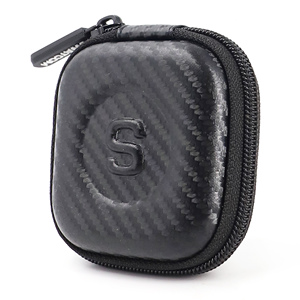
Custom Small Carbon Fiber EVA Wireless Earbuds Pouch Cover Case Bag
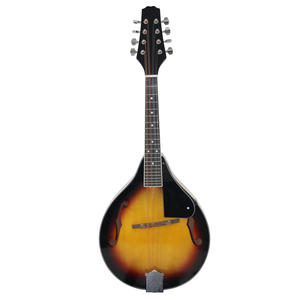
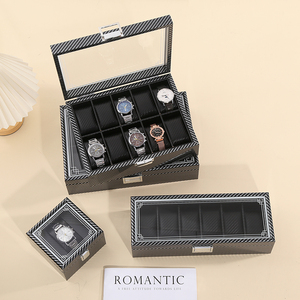
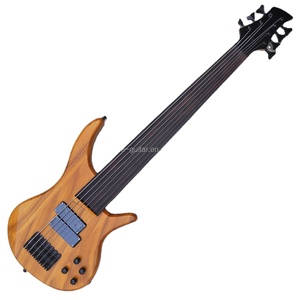
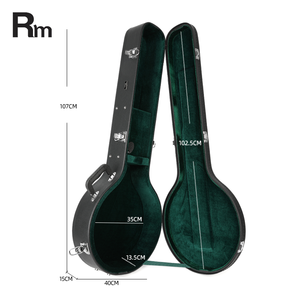
Raibonw High Quality Banjo Instrument Case OEM ODM Plywood & Leather
Industrial Engineering: The Modern Electric Ukulele Paradigm
The global fretted instrument market has experienced an evolutionary renaissance. As contemporary musicians transition toward versatile electro-acoustic performances, digital audio workstation (DAW) integration, and silent stage rehearsal environments, the demand for precision-crafted electric ukuleles has expanded exponentially. Once perceived merely as leisure instruments, contemporary electric ukuleles manufactured in China represent an intricate balance between classic acoustic resonance and modern pickup signal routing. China's state-of-the-art lutherie infrastructure now integrates multi-axis computerized numerical control (CNC) milling, precision fret dressing, and computerized humidity conditioning with heritage tonecraft rooted in over 150 years of stringed instrument tradition.
Manufacturing high-grade electric ukuleles requires solving complex tonal challenges unique to four-string instruments. Given their reduced string length and lower string tension relative to full-scale electric guitars, signal pickup linearity and natural acoustic timber preservation demand specialized under-saddle piezo transponders, active preamplification circuitry, or custom-wound magnetic single-coil and humbucking configurations. As an industry leader with historical origins tracing back to 1871—anchoring brands such as Oscar Schmidt and partnerships with Washburn under the JAM USA LLC umbrella—our manufacturing ecosystem adheres to uncompromising structural tolerances. Every neck profile, truss-rod channel, fingerboard radius, and shielding cavity is calibrated to eliminate electro-magnetic hum while ensuring an intonation curve that satisfies both professional concert soloists and commercial retail buyers.
Emerging Sourcing & Procurement Trends
Strategic purchasing managers must navigate changing international trade standards, environmental laws, and consumer sound expectations.
Solid-Body Silent Architectures
B2B commercial channels observe rising demand for headless, minimalist solid-body electric ukuleles equipped with integrated headphone preamps and aux-in connectivity, enabling silent headphone practice for urban multi-instrumentalists.
CITES Compliance & Alternative Woods
Global logistics strictly regulate endangered rosewood (Dalbergia) and mahogany. Leading Chinese OEM factories utilize engineered composite fretboards, kiln-stabilized Okoume, carbon fiber laminates, and thermo-treated spruce tops to bypass customs friction effortlessly.
Active Preamp & Onboard Modulation
Modern distribution favors factory-installed active piezo pickups integrating calibrated 3-band EQs, chromatic backlit digital tuners, and USB-C digital audio interfaces for direct-to-smartphone recording without external soundcards.
Technological Evolution: Next-Generation Electric Ukulele Engineering
The manufacturing architecture of stringed musical instruments has undergone a fundamental transformation over the last decade. Historically, production variability in fretted wooden goods was heavily affected by ambient climatic fluctuations, seasonal timber settlement, and subjective manual filing. In our modern manufacturing facilities, this reliance on uncontrolled variables is systematically eradicated through closed-loop manufacturing operations.
Every wooden blank designated for our electric ukulele bodies—whether solid mahogany, resonant swamp ash, flame maple veneer, or select spruce—undergoes precision kiln drying followed by a minimum 90-day climatic stabilization cycle. This sequence stabilizes wood moisture equilibrium (EMC) between 8% and 10%, effectively preventing future neck bowing, fret spout, or body warping when instruments are exported to arid or tropical destination ports. Furthermore, dual-action structural truss rods are engineered directly into tenor, baritone, and concert-scale necks, granting end-users micro-adjustable action height regardless of string tension choices.
From an acoustic-electric perspective, signal integrity is our top manufacturing priority. Cheap under-saddle transducers suffer from inter-string output imbalances and harsh, metallic piezo spikes. Our custom-developed discrete analog preamps feature matched individual pole-piece impedance buffers and shielded internal cavity lining, delivering transparent, warm, dynamic acoustic acoustic projection when plugged into acoustic amplifiers or stadium line-arrays.
Why Global Importers Partner With Us
Combining historic heritage validation with heavy industrial production bandwidth to support international distributor catalogs.
Heritage Pedigree (Est. 1871)
Over 150 years of acoustic stringed excellence, carrying the legacy of the original Autoharp® and storied folk manufacturing into state-of-the-art electric production lines.
Automated CNC Repeatability
Computer-guided fret routing and neck shaping within 0.02mm tolerances, guaranteeing uniform string action, buzz-free performance, and identical intonation across mass lots.
Complete Category Coverage
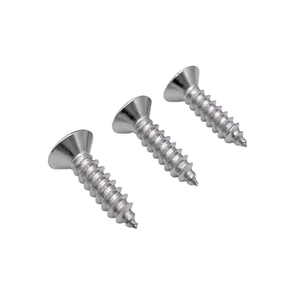
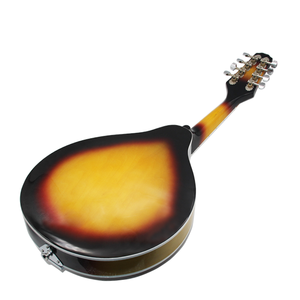
Single-source supply capability spanning electric and acoustic ukuleles, mandolins, banjos, multi-string basses, hard-shell flight cases, and precision hardware screws.
Certified Warranty & QC
Every batch undergo rigorous multi-stage drop, drop-cable pull, climate box cycling, and frequency spectral analysis, supported by certified after-sales warranty networks.
Frequently Asked Sourcing & Manufacturing Questions
Crucial answers regarding OEM tooling, timber legalization, acoustic pickup configurations, and minimum order commitments.
What distinguishes an acoustic-electric ukulele from a solid-body electric ukulele?
How do you guarantee timber stability against cracking during transoceanic shipping?
Can we request bespoke OEM neck carves, headstock logos, and custom electronics?
Are your exported musical instruments fully compliant with Lacey Act and CITES guidelines?
What are your standard Minimum Order Quantities (MOQ) and production lead times?
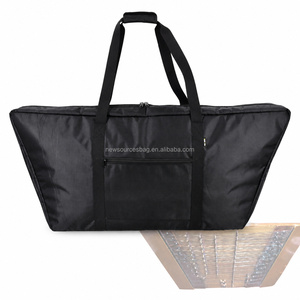
Do you offer matching protective gig bags and hardshell cases within the same shipment?
Initiate Your Electric Ukulele Manufacturing Partnership
Connect with our technical lutherie engineering team to receive full OEM/ODM product specifications, raw material certifications, volume pricing tiers, and custom prototype scheduling.
Send an Inquiry