Featured OEM/ODM Production Showcase
Explore our industrial-grade manufacturing spectrum, covering traditional resonator instruments, bluegrass banjo assemblies, and custom folk luthiery.
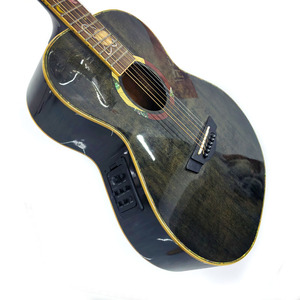
GALYDA 36 Inch Professional Acoustic Electric Guitar Solid Top with EQ Shell Inlay High Gloss
View Details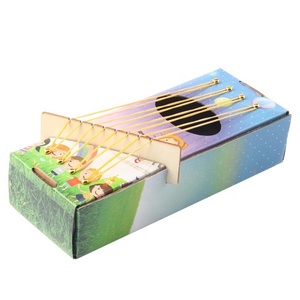
DIY Development Musical Instrument Chinese Zither Toy Educational Training Kit
View Details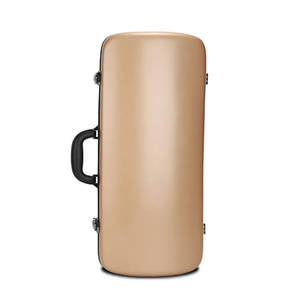
OEM/ODM Heavy-Duty Tenor Saxophone & Banjo Molded Fiberglass Protective Case
View Details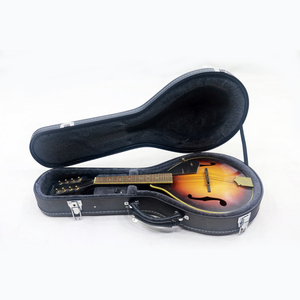
Wholesale Factory Price Custom Archtop PU Leather Wood Hardshell Banjo/Mandolin Case
View Details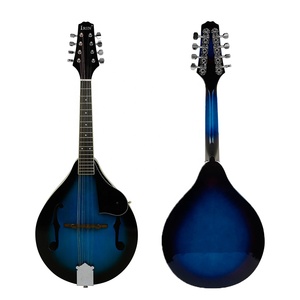
Wholesale IRIN Professional 8-String Traditional Folk Archtop Mandolin
View Details
High-Tension Modified Monofilament Plain Core Acoustic Folk String Set
View Details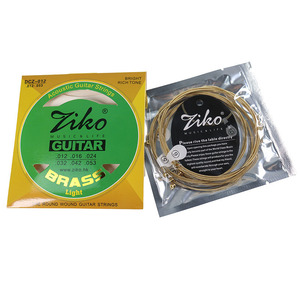
Custom OEM Package High-Carbon Anti-Rust Hex-Core Brass Acoustic Strings
View Details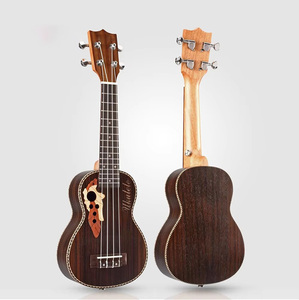
Master Grade Exotic Solid Tonewood Tenor Banjo-Ukulele & Concert Series
View DetailsIndustrial Whitepaper: The Strategic Evolution of Chinese Resonator Banjo Manufacturing
A comprehensive technical report on supply-chain metallurgy, multi-ply wood rim acoustics, and global distributor risk mitigation.
1. Structural Acoustic Engineering: Inside the Modern Chinese Resonator Banjo Factory
The resonator banjo represents one of the most acoustically complex instruments within the modern fretted instrument industry. Unlike flat-top guitars or open-back banjos that rely on spherical air cavity diffusion, a professional resonator banjo works as a mechanical acoustic speaker. Sound projection depends strictly upon the synergy between the vibrating head membrane, the brass alloy tone ring, the multi-ply rim, and the parabolic reflective curve of the resonator chamber.
Historically, premier bluegrass resonator banjos relied on early-twentieth-century North American luthier techniques. Today, the world's most technically advanced resonator banjo factories are centralized in specialized Chinese instrument clusters. These production bases combine five-axis CNC lutherie tooling with classical metallurgical casting to manufacture pre-war standard components at scale.
At our manufacturing facility, the rim construction utilizes hard rock Canadian maple, cold-bent in three plies under thermo-controlled hydraulic pressure. This prevents micro-fracturing along the wood grain, ensuring structural roundness within a tolerance of ±0.02 mm. Such precision eliminates air gaps between the rim and the sand-cast bell bronze 20-hole tone ring, optimizing low-frequency acoustic transfer and enhancing transient response above 2.5 kHz.
Bell Bronze Tone Metallurgy
Utilizing high-purity copper-tin-zinc formulations (Cu80/Sn20), cast in sand molds to duplicate pre-war bell bronze resonance without structural porosity.
Parametric Resonator Design
Bookmatched curly maple and mahogany veneers pressed under hydraulic heat beds to craft acoustic parabolic inner walls for maximum forward velocity.
Dual Coordinator Rod Alignment
Case-hardened steel coordinator rods that preserve long-term rim integrity, neutralize string pull stress, and permit micro-adjustments to neck action.
2. Future Procurement Trends in the Global Stringed Instrument Supply Chain
Commercial buyers, enterprise distributors, and international musical instrument brands are realigning their procurement specifications. Sourcing teams are transitioning away from unbranded, fragmented workshops in favor of enterprise OEM/ODM partners capable of delivering verified regulatory, environmental, and metallurgical compliance.
1. Strict Traceability & CITES Compliance: Global customs crackdowns on restricted rosewoods and exotics have elevated alternative engineered fingerboards (such as high-density technical ebony, stabilized walnut, and thermally modified purpleheart). Leading Chinese manufacturers operate closed-loop certification frameworks, ensuring all consignments transition across US Lacey Act and European EUTR inspections smoothly.
2. Hybrid Electro-Acoustic Banjo Integration: The folk-rock and alternative acoustic resurgence has spurred consumer demand for factory-installed active transducers. Rather than retrofitting after-market pickups, purchasers demand factory-shielded humbucking assemblies or dual-source piezo/condenser electronics directly integrated during assembly.
3. Lightweight Composite Shells for Tour-Grade Resilience: While the 12-pound brass-and-maple construction remains standard for bluegrass purists, a rising segment of cross-over and urban players seeks weight-reduced magnesium alloy tone rings or carbon-fiber reinforced composite resonators. Chinese R&D divisions are pioneering these hybrid architectures to lower shipping tare weight and increase gigging portability.
3. Technological Advances: Where Folk Luthier Heritage Meets Industrial Precision
The manufacturing gap between boutique American master luthiers and high-volume factories has narrowed considerably. Modern manufacturing leverages robotic neck profiling, laser-guided fret slotting, and cryogenic metal stabilization. Automated UV curing tunnels now cure polyester and thin-skin polyurethane finishes in minutes, maintaining coat thicknesses below 0.12 mm. This finish profile allows the instrument's tonewood to breathe, vibrate freely, and produce resonant projection comparable to vintage nitrocellulose lacquer.
Furthermore, climate stability represents a key manufacturing differentiator. Resonator banjos ship to varied global climates—from arid desert regions to hyper-humid coastal ports. Top-tier factories maintain closed-loop, environmental humidity controls (45%–55% RH) throughout storage, CNC milling, fretting, and packaging. This eliminates fingerboard sprout, fret buzzing, and wood shrinkage after export dispatch.
Enterprise Heritage & Contract Manufacturing Superiority
Rooted in historic stringed-instrument traditions dating back to 1871, we provide high-throughput OEM and ODM capabilities for world-class private labels.
Our group heritage is tied to over 150 years of historic instrument craftsmanship. Drawing on decades of manufacturing lineage—including the production of iconic instruments such as the Autoharp®, precision folk banjos, fine acoustic guitars, and concert-grade ukuleles—we provide turn-key industrial solutions for global brands. Our vertically integrated facility coordinates every production phase: raw timber kiln seasoning, brass tone ring sand-casting, high-speed CNC inlay engraving, setup by master technicians, and localized international warranty support.
Procurement & Technical FAQ
Essential insights for overseas purchasing managers, supply chain directors, and distributor networks.
What are the standard tone ring alloys available for OEM runs?
We cast authentic 20-hole and 40-hole Bell Bronze (80% copper, 20% tin alloy), zinc die-cast alloy for entry lines, and lightweight rolled brass tone rings for hybrid intermediate configurations.
How do you prevent rim deformation during ocean transport?
Our multi-ply steam-bent maple rims undergo 60-day climate balancing before final CNC machining. They are assembled with dual-action structural steel coordinator rods that lock rim geometry against temperature swings.
What are the Minimum Order Quantities (MOQ) for custom branding?
For custom silk-screened or mother-of-pearl peghead logos, standard OEM MOQs start at 50 to 100 units depending on body trim, tone ring casting, and hardware plating selections (Chrome, Nickel, or Gold).
Do your timber products fulfill global import standards?
Yes. All lumber is vacuum-kiln dried to 8%–10% moisture content. We supply complete CITES documentation, non-endangered wood sourcing verification, and Lacey Act compliance paperwork with all B2B shipments.
Can we request custom neck profiles and left-handed variations?
Our five-axis CNC carving centers can replicate slim-taper, soft-V, or traditional pre-war vintage neck profiles. True left-handed molds, coordinator rod anchors, and reverse bridge setups are fully supported.
What packaging is used for containerized sea freight protection?
Units are packaged in drop-tested, dual-wall export cartons with custom high-density molded EPE foam buffers, or drop-shipped directly inside our companion custom wood/fiberglass hardshell cases.