Industrial Manufacturing Matrix & Quality Standard
A data-backed review of industrial acoustic and electric guitar hardware engineering, precision tolerancing, and high-volume procurement operations in China.
Engineered OEM Hardware Portfolio
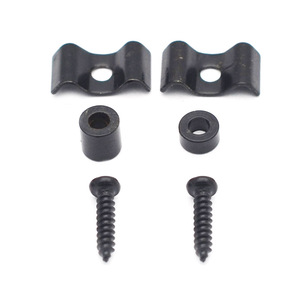
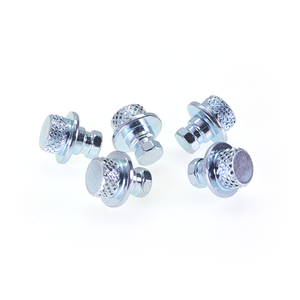
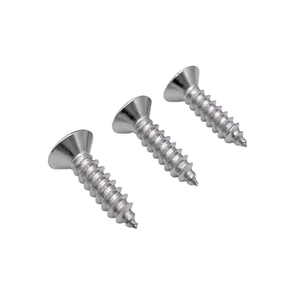
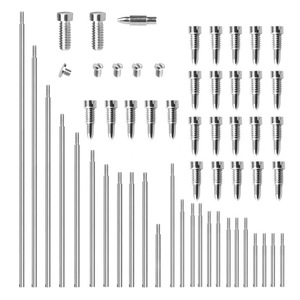
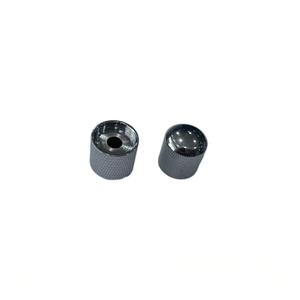
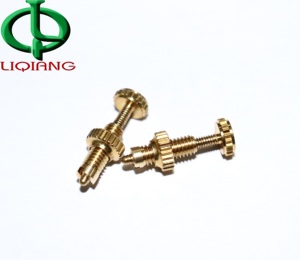
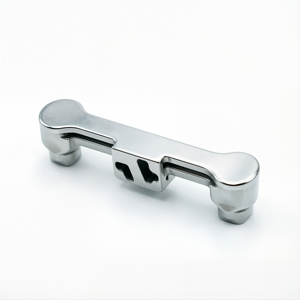
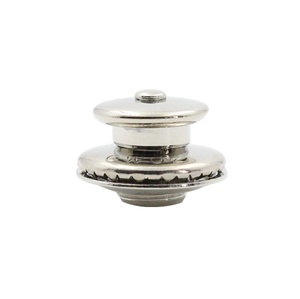
Selected export-grade guitar hardware components machined to critical acoustic resonance, thread integrity, and plating durability tolerances.
Metallurgical Selection & Tone Impact Analysis
In high-end musical instrument engineering, hardware is not merely decorative; bridge saddles, tailpieces, retaining clips, and knobs directly modulate sustain, vibrational decay, and timbre projection.
| Alloy / Metallurgy | Yield Strength (MPa) | Acoustic Resonance Signature | Corrosion Resistance | Primary Application |
|---|---|---|---|---|
| C36000 Lead-Free Brass | 310 - 380 | Warm, harmonic midrange; extended vibrational damping | High (Atmospheric) | Bridges, Sustain Blocks, Bushings |
| AISI 304/316 Stainless Steel | 515 - 620 | Bright upper-register cut; minimal frequency dissipation | Extreme (Sweat / Acid pH) | Bridge Saddles, Tremolo Claws, Screws |
| Cold-Rolled Carbon Steel | 350 - 450 | Vintage attack; aggressive fundamental resonance | Moderate (Requires Plating) | Baseplates, Knurled Knobs, Truss Nuts |
| Zamak 3 / Zamak 5 Zinc Alloy | 280 - 330 | Neutral resonance, cost-optimized mass density | High (Under Electroplating) | Tailpiece Housings, Control Knobs |
Future Procurement & Sourcing Trends (2026–2030)
Global musical instrument supply chains are realigning around tighter tolerances, environmental compliance, and integrated multi-axis machining capabilities.
Eco-Plating & Lead-Free Standards
Upcoming EU and North American regulations necessitate RoHS 3 and REACH SVHC-compliant surface finishing. Top Chinese factories are shifting entirely from hexavalent chrome to trivalent chromium electroplating and PVD (Physical Vapor Deposition) coatings to deliver pristine mirror black, gold, and nickel sheens without environmental hazardous residues.
5-Axis CNC & MIM Replacement
Traditional die-casting leaves microscopic air voids that absorb acoustic vibrational energy. Forward-thinking OEM guitar brands are demanding solid billet CNC-milled bridges and Metal Injection Molding (MIM) for saddles and string locks, guaranteeing consistent atomic density, flat mounting surfaces, and zero acoustic dampening.
Consolidated Hardware Kits
Instead of sourcing pickguard screws from fastener suppliers and bridges from casting shops, brands are contracting integrated kit assemblies. Pre-packaged, color-matched hardware sets—including strap locks, potentiometers, knobs, and tension clips—reduce assembly floor sorting costs and ensure zero finish mismatch between parts.
Enterprise Manufacturing & OEM/ODM Capabilities
Combining traditional luthier sensibility with ISO9001 precision manufacturing infrastructure to support boutique builders and multinational brands alike.
Rapid Tooling & Prototyping
In-house CAD/CAM tooling teams turn custom 2D/3D concept drawings into functional brass or stainless samples in 7 to 12 business days, drastically lowering NPI cycle times.
Optical Dimension Verification
Automatic video measuring systems verify micro-tolerances on thread pitches, knurling depths, and saddle slot radiuses before parts ever transition to electroplating lines.
Accelerated Salt-Mist Chamber
Every plating batch (Cosmo Black, Gold, Chrome, Relic Bronze) undergoes ASTM B117 salt-spray tests to ensure no corrosion under extreme gigging and acidic hand sweat conditions.
Complete Supply Continuity
Direct bulk factory supply with custom export packaging, barcoding, and SKU-level labeling simplifies customs clearance and distribution to domestic assembly plants worldwide.
Procurement & Engineering Frequently Asked Questions
Essential guidance on lead times, material specs, surface finishes, and quality control protocols for OEM sourcing directors.
What is the standard MOQ for custom CNC or cast guitar components?
Standard production runs typically begin at 500 to 1,000 units per specification for cast hardware (such as tailpieces and saddles) due to tooling and mold amortization. For CNC-turned knobs, screws, and strap clips, our flexible cell machining can accommodate pilot batches starting at 200 units for approved OEM accounts.
How do you resolve plating peeling and oxidation on guitar hardware?
Plating peeling is primarily prevented via ultrasonic multi-stage degreasing and micro-etching before intermediate copper and nickel base layers are applied. We monitor bath chemical concentrations every 4 hours and verify surface adhesion using cross-hatch tape testing in accordance with ASTM D3359 protocols.
Can you manufacture custom-fit hardware to vintage inch-pitch specs?
Yes. We operate dual-standard tooling that accommodates both Imperial (6-32, 4-40, 8-32 threads, 1/4" pot shafts) and Metric (M3, M4, 6mm splines) specifications. Full custom thread machining is verified using calibrated Go/No-Go thread gauges for every production lot.
How do stainless steel saddles compare to zinc or brass acoustically?
Stainless steel delivers higher vibrational velocity and hardness (Rockwell B 85-95), which enhances initial transient pick attack and frequency clarity above 4kHz. Brass dampens higher overtones for a warmer, rounder midrange, while zinc alloy offers balanced neutral frequency transmission at a highly competitive component cost.
Ready to Upgrade Your Guitar Hardware Supply Chain?
Partner directly with China's leading instrument hardware manufacturing facility. Contact our engineering team today for technical drawings, material certifications, and quotation schedules.
Send an Inquiry