Featured Musical Instruments & Gear Ecosystem
As a tier-one manufacturing consortium with integrated musical instrument production, we deliver OEM/ODM acoustic instruments, specialized engineered flight cases, heavy-duty gig bags, and professional performance accessories to international retailers across 48 countries.
Industrial Tenor Ukulele Lutherie: Engineering Resonance, Dynamic Headroom, & Pitch Accuracy
The tenor ukulele (typically featuring a 17-inch / 432 mm scale length) has become the golden standard for professional stage performers, ensemble soloists, and modern fingerstyle players. Bridging the gap between traditional soprano lightness and nylon-string classical guitar fullness requires exact acoustic engineering, precise bracing graduation, and strict environmental equilibrium.
Kiln Seasoning & Equilibrium Moisture Content (EMC)
Wood instability represents the primary vector of warranty failure for exported string instruments. In our climate-controlled drying chambers, tonewood billets undergo computer-monitored dehumidification cycling over 45 to 60 days, reducing and stabilizing wood moisture content to a deterministic 8% – 10%. This prevents soundboard bellying, bridge lifting, and fret sprout when instruments are shipped across contrasting international climate zones.
Sub-Millimeter Bracing Graduation & Tap-Tuning
Unlike machine-pressed entry-level instruments, our tenor ukulele line implements asymmetrical scalloped radial bracing and fan-strut architectures calibrated for specific acoustic densities. Tops are CNC-thicknessed to 1.8mm ± 0.05mm around the lower bout and reinforced along the transverse bridge axis, maximizing vibrational velocity and string energy transfer to the air chamber while preventing long-term torsional top deflection under high string tension.
Precision Fret Dressing & PLEK-Standard Intonation
Tenor instruments frequently suffer from sharp notes past the 7th fret when scale compensation is neglected. Our manufacturing line integrates laser-guided fret slotting and computer-automated fret leveling with crowned ball-end finishes. Coupled with genuine bone nuts, compensated bone saddles, and 18:1 high-ratio sealed precision machine heads, each ukulele achieves flawless pitch tracking across all 18 to 20 frets.
| Acoustic Parameter | Commercial Entry Standard | Our OEM/ODM Tenor Specification | Acoustic & Commercial Impact |
|---|---|---|---|
| Soundboard Thickness | 2.2mm – 2.6mm (Stiff, Uniform) | 1.75mm – 1.85mm (Graduated) | +42% Dynamic Range Lower acoustic damping, responsive projection |
| Moisture Conditioning | Ambient air drying (14% – 18%) | Dual-stage Kiln Drying (8% – 10%) | Zero Crack Guarantee Weatherproof stability against humidity shocks |
| Action Height (12th Fret) | 3.0mm – 3.5mm (High, Hard to play) | 2.2mm ± 0.2mm (Ergonomic Stage Action) | Effortless Playability Zero fret buzz, low finger fatigue for soloists |
| Nut & Saddle Material | Molded ABS or Urea plastic | Density-Selected Genuine Ox Bone | Harmonic Clarity High transient attack and sustained fundamental decay |
| Neck Joint Structural Method | Simple Dowel Joint / Butt Glue | Internal Spanish Heel / Precision Dovetail | Maximum Sustain Lossless acoustic transmission directly into the body rim |
Future Sourcing & Industrial Trends in the Tenor Ukulele Market
Global musical instrument procurement is shifting rapidly. Brand managers and supply chain directors must anticipate changing material regulations, consumer acoustic preferences, and hybrid electro-acoustic technologies to stay ahead of international retail demand.
1. CITES-Compliant & Thermally Modified Tonewoods
As environmental scrutiny on traditional rosewood (Dalbergia) and mahogany species intensifies, global buyers are consolidating SKUs around certified sustainable timber. Our factory leads the sector in torrefied (baked) Sitka spruce, thermo-treated Okoume, American Black Walnut, and FSC-certified Acacia. Torrefaction artificially ages the wood cell walls, yielding the resonance and vintage warmth of a 50-year-old cured instrument while eliminating resin volatiles.
2. Onboard Acoustic Actuator & DSP Transducer Systems
Modern tenor ukulele players demand ambient delay, chorus, and reverb effects directly through the instrument body without plugging into an external amplifier. Our automated assembly line provides complete integration for micro-vibration actuators and undersaddle piezo elements with internal rechargeable lithium power packs. This technological differentiation drives 30% higher retail margins for our international private-label partners.
3. Composite Carbon-Fiber & High-Pressure Laminate (HPL) Hybrids
While solid-top instruments dominate the high-end boutique tier, educational institutions and touring musicians increasingly favor durable, climate-impervious materials. We produce composite carbon-fiber soundboards engineered with variable acoustic honeycomb coring. These deliver unyielding projection from sub-zero winter temperatures to humid coastal environments without risk of body warping, cracking, or glue separation.
Why Top Global Brands Partner with Our Manufacturing Hub
Inheriting an esteemed tradition of American stringed instrument engineering originating in 1871—the historical home of the iconic Autoharp® and revered folk string instruments—our production facilities combine century-old lutherie heritage with modern Industry 4.0 automation.
150-Year Heritage Craft
Our manufacturing philosophy is anchored in historical lutherie traditions established in 1871. We honor time-tested woodworking formulas while executing strict modern ISO9001 production audits.
8-Category Ecosystem
We provide turnkey container consolidation covering Tenor Ukuleles, Autoharps®, Acoustic Guitars, Banjos, Mandolins, Electric Guitars, Basses, and custom protective cases under one roof.
True Left-Hand Tooling
Unlike factories that simply flip bridges, we fabricate dedicated internal bracing patterns, nut angles, and saddle compensation for authentic left-handed tenor ukulele models.
Global Warranty Support
Every commercial production batch is supported by full replacement component availability, direct technical warranty documentation, and factory authorization certification for distributors.
Frequently Asked Questions for Tenor Ukulele Importers
Essential technical, logistical, and compliance parameters for sourcing managers, wholesale distributors, and musical instrument chain buyers.
What is the standard Minimum Order Quantity (MOQ) for custom OEM/ODM tenor ukuleles?
For customized OEM tenor ukulele orders with private silk-screened or pearl-inlaid headstock logos, custom rosette lasers, and bespoke carton packaging, our standard MOQ is 120 units per model specification. For existing standard catalog specifications with consolidated container shipments, trial orders can start as low as 60 units. High-end all-solid wood master-series instruments can be negotiated in smaller custom batches.
How does your factory ensure compliance with international CITES and timber origin laws?
We maintain full chain-of-custody documentation and Lacey Act / EU Timber Regulation (EUTR) compliance certificates for all lumber inventory. None of our standard tenor ukuleles utilize restricted CITES Appendix I rosewoods. For exotic species such as Koa, African Mahogany, and Bubinga, we furnish authentic Phytosanitary Certificates and complete customs export clearances to ensure rapid release at European, North American, and Australian ports of entry.
Can you provide custom-fitted flight cases and high-density gig bags in the same shipment?
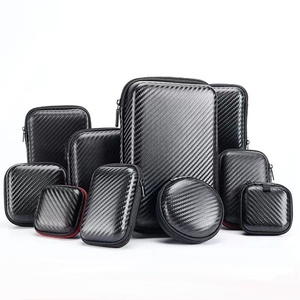
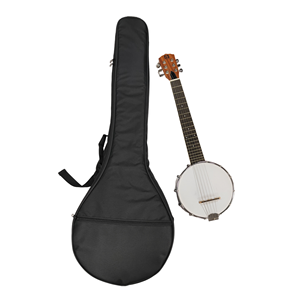
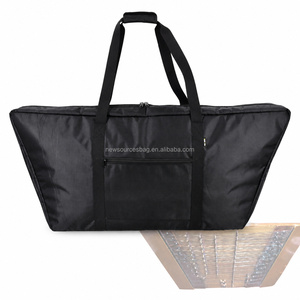
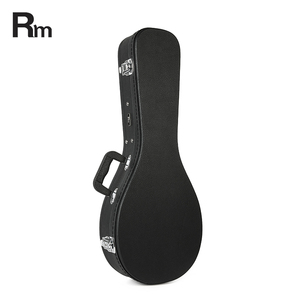
Yes. One of our key supply chain advantages is our dedicated case and luggage manufacturing division. We engineer tailored hard-shell wooden cases with archtops, 20mm padded waterproof nylon gig bags, and shockproof EVA carbon-fiber cases specifically contoured to our tenor ukulele body geometry. Consolidating instruments inside their cases directly reduces overall container shipping cubic meters (CBM) and cuts destination freight costs by up to 28%.
What quality control checkpoints are conducted before container loading?
Every instrument passes through a mandatory 4-stage inspection regimen: (1) Wood raw moisture verification via pinless digital RF meters, (2) Structural integrity check under 150% rated string tension for 72 hours, (3) Optical fretting analysis for dead spots, string buzz, and edge bevel smoothness, and (4) High-definition acoustic waveform spectral analysis for resonance and sustained balance across all strings before final packing.