Top-Tier Bass Guitars, String Instruments & Protective Hardware
Direct from verified industrial workshops in Weifang and coastal export hubs: engineered for tonal dynamic balance, environmental durability, and competitive wholesale landing costs.
The Evolution of Chinese Electric Bass Guitar Manufacturing: An Industrial Whitepaper
Over the past two decades, China’s fretted musical instrument sector has experienced a profound structural evolution. Transitioning from basic labor-intensive manual assembly workshops to high-precision, computer-integrated manufacturing hubs, Chinese bass guitar builders now supply over 65% of the world's entry, intermediate, and boutique-grade OEM instruments. Clusters in Shandong (Weifang/Changle), Guangdong (Huizhou/Dongguan), and Guizhou have transformed how global brands execute contract manufacturing, component casting, and global supply chain logistics.
Building an electric bass guitar requires solving distinct acoustic-mechanical engineering challenges that standard electric 6-string guitars do not face. The fundamental frequency of a standard low B string on a 5-string bass sits at an ultra-low 30.87 Hz, delivering tension forces exceeding 35 to 45 pounds per string. Without precise structural stability across the neck-body heel, premium grain orientation, and advanced moisture stabilization within the core maple or mahogany billets, multi-string basses are vulnerable to structural torsion, dead spots, and fretting irregularities during international maritime transit across changing humidity zones.
Precision Tooling & Advanced CNC Carpentry in Contemporary Bass Production
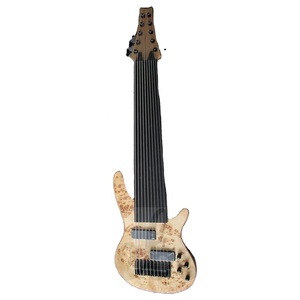
Leading Chinese manufacturing plants have replaced traditional hand-saw templates with 5-axis computer numerical control (CNC) routing machines operating under sub-millimeter tolerances. In extended-range instruments—such as the Weifang Rebon Fretless 10-String Burl Maple Bass—the neck joint profile is milled to within ±0.02 mm of variance. This mechanical coupling ensures seamless acoustic surface contact between the neck wood and the body pocket, directly enhancing sustained low-frequency resonance, fundamental note definition, and eliminating dead spots along the fingerboard.
Furthermore, fret slots on modern OEM lines are indexed digitally and leveled with computerized diamond-tooled pleking technology before final assembly. Hand-polishing crown frets down to mirror smooth edges guarantees zero buzz at ultra-low action settings (1.5mm on the G string, 2.0mm on the low B string measured at the 12th fret), meeting the demanding QA standards of European and American private-label brands.
| Component Specification | Mass-Market Commercial Tier | Professional OEM / Custom Shop Tier | Export Quality Compliance Target |
|---|---|---|---|
| Neck Wood Treatment | Kiln-dried Hard Maple (Single Piece) | 5-Piece Roasted Maple / Walnut Multi-ply | Moisture 8% – 10%, Thermo-Stabilized |
| Reinforcement Rods | Single Standard Steel Truss Rod | Dual-Action Truss Rod + Dual Carbon Fiber Rods | >100 kg/cm Dynamic Deflection Resistance |
| Body Tonewood Tonality | Basswood / Poplar Solid Core | Selected American Alder, Swamp Ash, Burl Maple Top | Resonance Spectrum 40Hz – 4.5kHz Neutrality |
| Bridge & Saddle Material | Die-Cast Zinc Alloy (Chrome Plate) | Precision Investment Cast Stainless Steel / Brass | High-Mass String-Through Sustain Coupling |
| Pickup & Preamp Circuits | Ceramic Magnet Passive Coils | Alnico V Custom Wound / 18V 3-Band Active EQ | Signal-to-Noise Ratio >95dB, Shielded Cavity |
Sustainable Wood Alternatives and International Environmental Compliance
Regulatory compliance is a critical priority for overseas musical instrument buyers. Following international adjustments to CITES (Convention on International Trade in Endangered Species) listings concerning rosewoods (Dalbergia genus), Chinese exporters pioneered the integration of high-performance alternative fingerboards. Certified African Blackwood, Techwood (engineered phenolic laminate), Laurel, Roasted Jatoba, and sustainably harvested Rosewood backed by CITES non-detriment export permits allow distributors to import containerized freight into the EU, US, UK, and Japan without risk of customs seizure or quarantine delays.
Similarly, environmental regulations across Chinese export factories enforce low-VOC water-based finishes, thin UV-cured polyurethane, and polyester sealers that protect the wood grain without smothering the acoustic openness of the instrument. Electrostatic spray painting booths deliver uniform finishes down to ultra-thin coats of 0.15mm, providing both physical durability and maximum resonant vibration.
Strategic Product Recommendations for Importers & Brands
Analyze how to structure your wholesale inventory portfolio to maximize inventory turn rates, gross margin performance, and retail market coverage across key player demographics.
High-Volume Commercial 4-String Basses
The bread and butter of music schools, beginner retail starter kits, and rental fleets. Built with lightweight poplar or paulownia bodies, satin-finished Canadian maple necks, and classic split-coil (P) and single-coil (J) pickups.
- Target Wholesale Cost: $48 – $85 / Unit FOB
- Typical Order Volume: 200 – 1,000 Pcs per SKU
- Core Advantage: Fast turnover, universal consumer appeal
Active 5-String & Multi-Scale Metal Basses
Engineered for contemporary rock, metal, gospel, and session players requiring a solid low B string. Features 35-inch extended scale lengths or fanned fanning frets (34"-37"), dual soapbar humbuckers, and onboard 3-band EQ preamps.
- Target Wholesale Cost: $110 – $210 / Unit FOB
- Typical Order Volume: 50 – 300 Pcs per SKU
- Core Advantage: High retail margins (>55% GM ROI)
Boutique Exotics: Fretless & Extended Range
Niche, prestige collector models such as 6 to 10-string builds, exotic burl maple veneers, multi-piece neck-through-body construction, and fretless ebony/techwood fingerboards for soloists, jazz virtuosos, and studio instrumentalists.
- Target Wholesale Cost: $230 – $480 / Unit FOB
- Typical Order Volume: 20 – 100 Pcs Flexible MOQ
- Core Advantage: Elevated brand halo and flagship authority
Future Sourcing & Procurement Trends: 2025–2030
Anticipate structural market shifts in logistics, raw materials, manufacturing automation, and direct-to-retail supply chains.
Torrefaction & Thermal Modification
Roasted maple necks and kiln-baked bodies are becoming standard even in entry-level ranges. By cooking wood at 180°C–220°C in an oxygen-depleted kiln, hemicellulose breaks down, crystallization occurs, and the wood becomes immune to seasonal humidity swings.
Consolidated Container Logistics & Direct Packaging
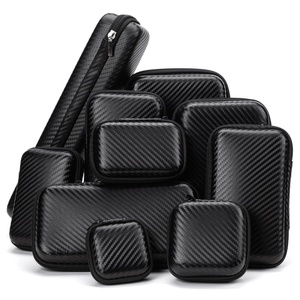
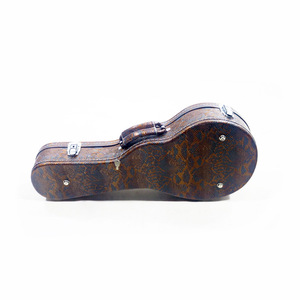
Global brands are shifting away from intermediate warehouses. OEM factories now ship individual instruments packed in high-density EVA cases or drop-test certified mail-order cartons (ISTA 3A compliant), allowing direct delivery from ocean ports to end-user doorsteps.
Investment Casting & Stainless Hardware Integration
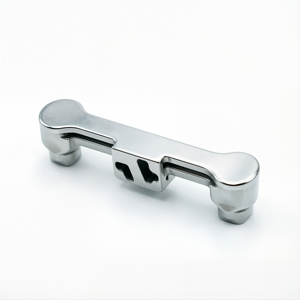
Zinc-alloy die-cast hardware is declining. Precision investment casting in solid stainless steel and bell brass (as seen in our precision bridge saddle components) is replacing porous metals, delivering enhanced harmonic sustain and zero corrosion.
Why Global Musical Instrument Importers Partner With Us
Leveraging a manufacturing tradition dating back to 1871 with modern robotic precision, we eliminate middle-tier markups and ensure steady export delivery.
1 150+ Years String Craft Heritage
Tracing design roots back to 1871 American acoustic traditions, our production incorporates time-tested bracing patterns, ergonomic neck profiles, and proven tonal balance formulas.
2 Multi-Axis Automated CNC Production
Equipped with 24 high-speed multi-axis CNC routing stations for necks, bodies, pickguards, and cavity pockets, ensuring ±0.02mm repeatability across production batches.
3 100% CITES & Legal Wood Assurance
Every shipment is accompanied by origin certificates, CITES chain-of-custody documentation, Lacey Act compliance records, and fumigation/phytosanitary clearance papers.
4 Six-Stage Climatic Quality Control
Every completed instrument rests in a regulated 45% relative humidity buffer chamber for 72 hours before fret dressing, action setup, and vacuum sealing.
5 Full-Spectrum OEM/ODM Private Labeling
From custom headstock contours and abalone/pearl inlay branding to tailored electronics voicing, active circuit routing, and bespoke color finishes.
6 Comprehensive Multi-Category Capability
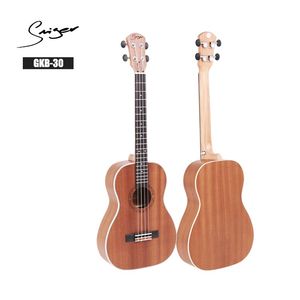
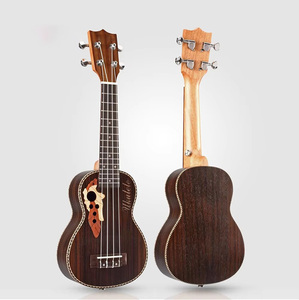
One unified supplier covering electric basses, baritone ukuleles, acoustic folk instruments, CNC hardware components, and protective carbon fiber/EVA hard cases.
Frequently Asked Questions on Wholesale Bass Procurement
Direct operational answers addressing MOQs, production lead times, shipping stability, CITES legality, and private label customization.
What is your minimum order quantity (MOQ) for custom OEM bass guitars?
For standard baseline specifications using active inventory woods (Poplar, Alder, Maple), our initial MOQ is 30 to 50 pieces per finish/model. For fully custom tooling (custom body cutouts, signature inlays, fanned frets), our standard production batch starts at 100 pieces.
How do you prevent neck warping and fret sprout during ocean transit?
We treat all neck wood billets in vacuum kiln drying chambers to guarantee an 8%–10% equilibrium moisture content. Dual-action truss rods combined with twin carbon fiber reinforcement bars are installed. Finished instruments are packed in sealed polyethylene vapor-barrier bags with desiccant packs before boxing.
Are your instruments fully compliant with CITES and US Lacey Act regulations?
Yes. We use legal alternative fingerboard woods (Techwood, Roasted Jatoba, certified Laurel) and legal CITES Appendix II certified rosewood. Every commercial export invoice includes verified wood botanical designations and international compliance certificates.
Can we order customized pickups, electronics, and branded hardware?
Absolutely. We offer complete OEM pickup customization (Alnico V vs. Ceramic magnets, custom wire gauge windings, active preamps with 2-band or 3-band sweepable EQ) along with laser-engraved bridge plates, tuners, neckplates, and branded headstocks.
What are standard sample production times and full production lead times?
Prototype samples for evaluation typically require 20 to 35 business days. Full container load production (20GP or 40HQ containing 800 to 1,600 instruments with gig bags) is typically completed within 45 to 60 days following tech pack sign-off and deposit receipt.
Do you provide drop-test packaging suitable for e-commerce brands?
Yes. We supply 5-ply reinforced corrugated master cartons with custom-molded interior EPS foam or high-density honeycomb inserts engineered to survive standard 1.2-meter Amazon/ISTA 3A drop tests without structural or aesthetic damage.
Ready to Build or Scale Your OEM Bass Program?
Connect directly with our engineering team in Weifang to request our 2025/2026 OEM bass catalog, configure custom prototypes, or secure factory-direct wholesale production runs.
Contact Us