The Evolution of Modern Headless Guitar Manufacturing in China
Over the past decade, the global market for electric and hybrid guitars has experienced a structural paradigm shift. What once resided on the fringes of progressive metal and specialized boutique luthiery has exploded into the mainstream: ergonomic headless guitars. Driven by the demands of touring professionals, traveling creators, and bedroom multi-instrumentalists who prioritize physiological playing posture and space efficiency, the demand for headless designs has surpassed historical records.
As premier China wholesale headless guitars manufacturers and exporters, our facility combines classical acoustic heritage with cutting-edge aerospace-grade multi-axis CNC fabrication. Modern headless guitars represent an unforgiving engineering challenge. Without a traditional peghead to counteract string tension and establish break angles, the structural integrity of the instrument depends entirely on two critical points: the headpiece locking clamp and the base bridge saddle-tuner unit. A deviation of even 0.05 mm in the alignment of the bridge routing will result in severe harmonic intonation issues, microphonic saddle rattle, or fret buzz along the higher registers.
“In traditional guitar building, cosmetic imperfections can often be masked; in headless manufacturing, mechanical geometry is absolute. Either the axial tension vectors align perfectly with the truss system, or the instrument fails under professional stage demands.”
By leveraging standardized industrial robotics, climatic chamber seasoning for resonant tonewoods (such as Roasted Canadian Maple, African Sapele, and American Swamp Ash), and proprietary headless bridge assemblies, our export solutions empower overseas brands, private labels, and musical instrument chain distributors to capture premium retail margins while avoiding warranty claims associated with neck deflection or hardware binding.
Future Procurement Trends for Headless Guitars (2025–2030)
Strategic B2B buyers must anticipate rapidly shifting consumer expectations. Through consolidated sell-through metrics across international markets, our R&D department highlights four dominant trends shaping the next generation of headless wholesale procurement:
Multi-Scale / Fanned Fret Domination
Standard parallel fretboards are increasingly being replaced by fanned fret layouts (e.g., 25.5" to 25.0" scale). This geometry optimizes bass string tension without over-stiffening high plain strings, reducing left-hand tendon fatigue.
Carbon Fiber Reinforcement Inserts
Due to the compact neck profiles typical of headless instruments, dual high-modulus carbon fiber rods flanking the double-action truss rod have become mandatory for ensuring environmental stability during transcontinental shipping.
Acoustic-Electric Hybrid Chambers
Modern players demand versatile instruments. Sourcing trends highlight an uptick in semi-hollow chambered bodies equipped with under-saddle piezo transducers combined with high-output magnetic humbucking pickups.
Technical Benchmarks: Standard OEM vs. Our Precision Export Series
Understanding the internal structural parameters is essential for purchasing directors seeking to avoid high after-sale defect rates in overseas sales channels:
Engineering Attribute
Standard Commercial Wholesale
Our Export Precision Standard
Sourcing Benefit
Body Tonewood Stability
Standard air-dried timber (14-16% MC)
8%-10% Controlled Kiln Dry
Zero shrinkage, no fret-end sprouting across seasons
Neck Construction
Single maple truss rod without support
Dual Carbon Fiber Spine + 2-Way Steel Rod
Immune to neck twisting under touring stress
Bridge Material
Die-cast pot metal (zinc alloys)
Precision CNC Aircraft 6061-T6 + Brass Saddles
Sustained harmonic transfer & thread wear resistance
Nut / String Lock Unit
Friction set-screw direct against wrap wire
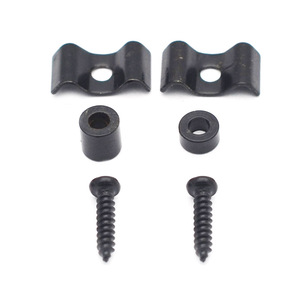
Conical Vice Clamp Mechanism
Prevents string cutting at the anchoring point
Fretwork Finishing
Hand-beveled 45-degree raw ends
Hemispherical Ball-End Polished Stainless Steel
Buttery playability straight out of the export box
Why Partner With Us
Enterprise Strengths & Manufacturing Reliability
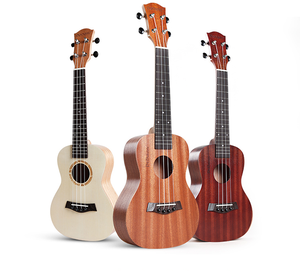
Drawing on an instrument manufacturing tradition that began over a century ago and encompasses Autoharps®, ukuleles, acoustic guitars, banjos, mandolins, and modern headless electrics, our factory infrastructure provides a dependable bridge between classic acoustic tonality and contemporary mechanical design.
Heritage & Structural Breadth
Covering eight fretted instrument categories—from traditional folk instruments to specialized multi-scale electrics—allows our clients to consolidate diverse inventory lines under a single verified manufacturing umbrella.
Global Compliance & CITES Registry
Our raw tonewood stocks (Mahogany, Rosewood alternatives, Maple, Sapele) are ethically harvested and fully verified for international CITES, Lacey Act, and EU Timber Regulations, safeguarding safe customs clearance.
OEM/ODM Customization Flexibility
From custom radius fretboards (9.5" to 16" compound) and custom active/passive electronics routing to personalized laser-etched hardware finishes, we build to your brand’s precise blueprints with accessible minimum order quantities.
Complete Dedicated Lefty Formats
Unlike factories that merely reverse bridge saddles, we mill true, ergonomically flipped left-handed body and neck cavities across all headless and acoustic architectures, opening under-served market segments.
Procurement Advisory
Frequently Asked Questions on Headless Guitar Sourcing
Key operational and technical queries directly addressed by our engineering and international export logistics team.
What is the typical Minimum Order Quantity (MOQ) for custom headless guitar runs?
For standard OEM factory specifications utilizing our proven CNC jigs, the minimum order quantity starts at 30 to 50 units per production batch. For fully customized proprietary hardware milling, custom pickup configurations, or unique body contours, our standard ODM development threshold is 100 units, which can be distributed across multiple finish options.
How do you prevent headless bridge hardware stripping and tuning stiffness?
Tuning stiffness in headless instruments is typically caused by substandard coarse thread pitch and low-grade zinc castings. We exclusively employ cold-rolled brass and stainless-steel micro-threaded worm gears lubricated with high-viscosity synthetic grease. Every tuner assembly undergoes a motorized torque-resistance test before final assembly to guarantee smooth single-finger tuning operation under full string load.
Can your factory supply custom branded protective gig bags and hardshell cases?
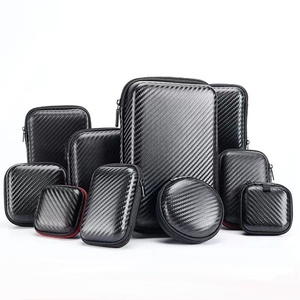
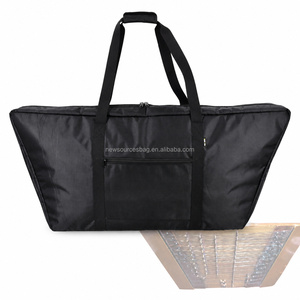
Yes. Because headless guitars feature unique compact footprints, standard electric guitar cases leave dangerous voids that can cause neck snapping in transit. We manufacture custom-fitted high-density EVA hard-shell cases and 1680D waterproof shockproof bags with internal neck-locking cushions tailored specifically to your instrument's exact profile.
How do your manufacturing facilities manage wood moisture during trans-oceanic shipping?
Every wooden component undergoes a minimum 30-day dehumidification and thermal aging process in computerized vacuum kilns, balancing core moisture levels strictly between 8% and 10%. Finished instruments are sealed in anti-static, moisture-barrier polymer sleeves along with industrial desiccant packets inside multi-layered export-grade corrugated cartons to resist maritime humidity spikes.
Are headless bridge systems compatible with standard acoustic or nylon setups?
Yes. In addition to our high-gain electric bridges, we build customized piezo-loaded headless acoustic bridges suitable for steel-string travel guitars as well as modern hybrid nylon formats, utilizing specialized low-friction clamping blocks designed specifically to prevent string core shearing.
Ready to Elevate Your Guitar Brand’s Global Portfolio?
Connect with our technical engineering team today to request structural CAD blueprints, wood species lists, sample fabrication timelines, and wholesale export pricing schedules.