Standard & Custom Commercial Instruments
Engineered across certified Shandong, Hebei, and Guangdong luthiery facilities. Available for wholesale volume consolidation, factory-direct OEM branding, and international distributor fulfillment.
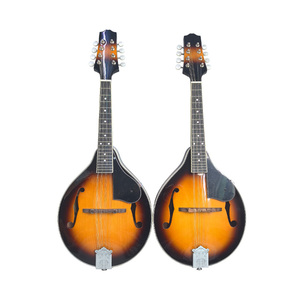
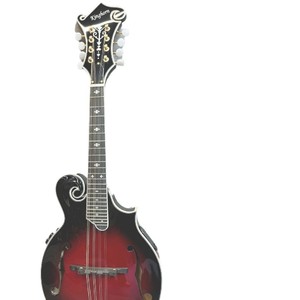
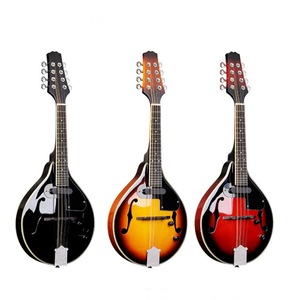
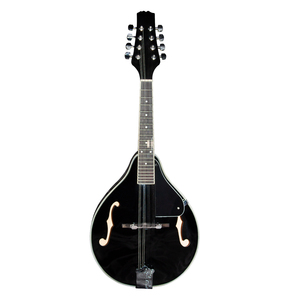
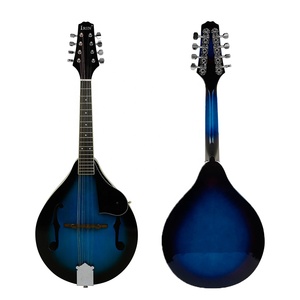
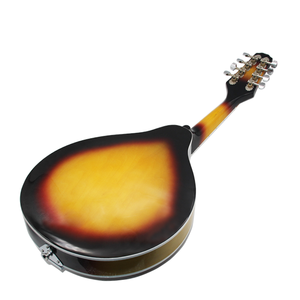
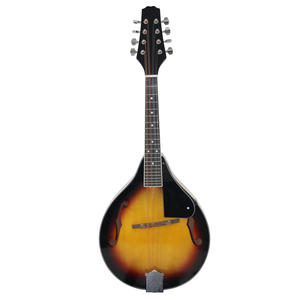
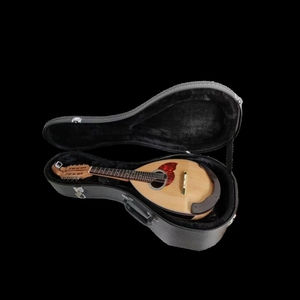
Mandocello & Orchestral Mandolin Manufacturing in China
Moving beyond the ubiquity of soprano A-style and F-style mandolins, international buyers are capitalizing on China’s sophisticated industrial clusters for deep-voiced orchestral chordophones.
The Mandocello (violoncello-mandolin) occupies a distinct acoustic niche within the modern chordophone catalog. Tuned in fifths to C2-G2-D3-A3 (an octave below the mandola and two octaves below the mandolin), the mandocello demands an extraordinary level of structural engineering and acoustic graduation. When global distributors, specialty brand owners, and orchestral supply chains source from China wholesale mandocello manufacturers and factories, the procurement evaluation centers on how structural tension, volumetric air resonance, and wood seasoning are synthesized under high-volume production constraints.
1. Architectural Physics: Scaling from Mandolin to Mandocello
Unlike standard 13-7/8" (352 mm) mandolins, a true concert-grade mandocello features a scale length running between 24.75" and 25.5" (628 mm to 648 mm). The heavy gauges required for paired unison strings—with the lowest C-course typically requiring .070" to .074" wound strings—generate aggregate string tension exceeding 210 to 235 pounds-force (934 to 1045 Newtons).
In our partnered Chinese manufacturing plants, solving for this extreme torque without damping acoustic velocity requires specialized architectural adaptations:
Dual Carbon Truss Rods
Every neck blank is reinforced with paired aircraft-grade carbon fiber non-deforming beams flanking a dual-action high-tensile steel truss rod, completely preventing rotational twist under heavy C-string tension.
CNC Carved Archtops
Solid AAA Sitka and Engelmann spruce soundboards are rough-cut via 5-axis CNC router tolerances of ±0.05 mm, followed by artisanal tap-tuning to ensure fundamental modal frequencies peak near 65 Hz.
Tone-Bar vs X-Bracing
Factories engineer specialized longitudinal parallel tone-bars for percussive acoustic projection, or scalloped asymmetrical X-braces for lush sustain and extended overtone response in Celtic and folk repertoires.
A frequent defect in substandard manufacturing is the collapsing of the belly bridge footprint due to excessive longitudinal force. Leading Chinese factories overcome this through micro-engineered internal soundboard arching, maintaining a consistent 15-to-17-degree break angle over compensated ebony or bone floating bridges anchored by cast brass or machined monoblock tailpieces.
2. Tonewood Curing, Chemical Stability, and CITES Compliance
A critical consideration for B2B musical instrument importers is timber equilibrium. Chinese factories operating in coastal or humid regions must prevent wood movement when instruments are shipped to arid climates like the American Southwest, Northern Europe, or Western Australia.
Tier-1 Chinese factories utilize a rigorous three-stage stabilization regimen:
- Natural Air Seasoning: Spruce billets, flamed maple backs, and mahogany neck blanks undergo minimum 3 to 7 years of shaded outdoor aeration in climatically buffered log yards.
- Radio-Frequency Vacuum Kiln Drying: Dehydrating moisture from the core outwards, preventing micro-capillary structural collapse and stabilizing the Equilibrium Moisture Content (EMC) at 7% to 9%.
- Climate-Controlled Production Halls: Clean rooms maintain an automated 45% to 50% relative humidity (RH) at 22°C across all CNC carving, purfling inlay, and gluing assemblies.
| Acoustic Model Tier | Soundboard / Body Architecture | Scale Length & Frets | Nut Width / Neck Profile | Hardware & Tailpiece | Target B2B Application |
|---|---|---|---|---|---|
| Commercial Student / School | Laminated Spruce Top / Agathis or Basswood Back & Sides | 24.75" (628 mm) / 22 Nickel-Silver | 38 mm / Modern C-Shape (Maple) | Die-Cast Chrome Tuners / Stamped Steel | Public school orchestras, beginner starter kits, entry retail catalogues. |
| Distributor Intermediate OEM | Carved Solid Engelmann Spruce / Flamed Maple Laminate | 25.0" (635 mm) / 24 Medium Jumbo | 40 mm / Shallow V-to-C (3-pc Mahogany) | 18:1 Grover-style geared / Cast Bell-Brass | Mid-tier private label brands, specialty bluegrass shops, Celtic folk lines. |
| Master Luthier Performance | Master Grade AAA European Spruce / Solid Bookmatched Curly Maple | 25.5" (648 mm) / 24 EVO Gold / Jescar | 42 mm / Asymmetrical Carve (Carbon Truss) | Custom Machined Monoblock / Hand-Buffed Nitro | Boutique brands, professional soloists, symphonic folk ensembles. |
| Dual-Source Acoustic-Electric | Archtop Solid Spruce with Magnetic Mini-Humbucker + Under-Saddle Piezo | 25.0" (635 mm) / 22 Frets w/ Cutaway | 40 mm / Radiused Ebony Fingerboard | Independent Blend Preamp / Onboard 3-Band EQ | Modern stage performers, amplified ensembles, multi-instrument crossover stages. |
Future Procurement Trends in Mandocello & Folk String Sourcing
How technological automation, shifting global tariffs, tonewood regulations, and hybrid instrument popularity are reshaping wholesale trade over the next decade.
1. Hybrid Tonewoods & Alternative Eco-Materials
With international CITES crackdowns on Rosewood (Dalbergia) and ebony depletion, leading Chinese facilities are pioneering thermally modified (torrefied) maple, richlite synthetic fingerboards, and fast-growing sustainable bamboo/catalpa cores that pass US Lacey Act and EU FLEGT audits without documentation bottlenecks.
2. PLEK Precision & Robotic Automation
The competitive edge among Chinese manufacturers has migrated from sheer low labor cost to computerized consistency. Advanced factories now deploy German PLEK machines to scan and dress every fret under simulated string tension, achieving target string action of 1.5 mm at the 12th fret with zero fret-buzz upon container arrival.
3. Rise of Crossover Tenor & Guitcello Hybrids
Commercial demand is surging for dual-use 8-string models featuring guitar-style bodies with arched tops, cutaways, and onboard preamps. Cross-genre acoustic guitarists seeking cello-register voices are expanding the traditional market beyond classical mandolin orchestras into commercial indie-rock and cinematic composition.
Evolutionary Horizon: The Chinese Mandolin Industrial Cluster
Historically clustered in Beijing and Tianjin for bowed orchestral instruments, the specialized mandocello and fretted folk manufacturing centers have consolidated into highly efficient supply ecosystems in Shandong (Weifang, Changle) for electric-acoustic architectures, Hebei (Wuqiang) for high-volume orchestral woodwork, and Guangdong (Huizhou, Guangzhou) for ultra-high-end boutique nitrocellulose lutherie.
This regional concentration allows China wholesale factories to source custom cast tailpieces, calibrated truss rods, multi-ply celluloid binding, and heavy-gauge phosphor bronze winding within a 100-kilometer radius. The resulting supply velocity lowers tooling times for new OEM prototypes from 6 months down to 30–45 days, providing international distributors with unparalleled speed-to-market.
Why Leading Brands Choose Our Manufacturing Infrastructure
Combining an authentic fretted lineage dating back to 1871 with modern high-precision ISO9001-certified factory capabilities across 8 core acoustic categories.
Century-Old American Heritage
Rooted in historic string craft traditions established since 1871, our manufacturing parameters preserve classical neck geometries, authentic tone-wood balancing, and historic acoustic voicing prized by players worldwide.
Catalog Breadth & Consolidations
Covering 8 primary fretted families—Mandocellos, Mandolins, Autoharps®, Banjos, Acoustic Guitars, Electric Guitars, Basses, and Heavy-Duty Cases—allowing buyers to mix SKUs within single 20ft/40ft HQ containers.
Dedicated Left-Handed Tooling
Unlike factories that offer inverted nut conversions, we maintain genuine mirrored molds, braced tops, and specialized CNC routing for left-handed instruments across all folk models without surcharge penalties.
Global Dealer & Warranty Support
Backed by official factory warranties, readily available replacement hardware kits, documented regulatory certificates (CITES/RoHS/REACH), and authorized service hub coordination across North America and Europe.
Accelerate Your Mandocello & Folk Supply Chain
Consult directly with our Chief Luthier and B2B Export Directors. Inquire about customized private-label specifications, batch production sample runs, container consolidation tariffs, and custom tooling schedules.
Get a QuoteFrequently Asked Questions for Wholesale Buyers
Critical operational answers addressing Minimum Order Quantities (MOQs), climate conditioning, OEM tooling, and logistics security.