Featured Mini & Specialty Stringed Instruments & Gear
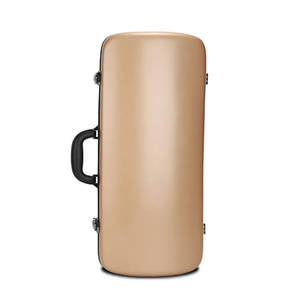
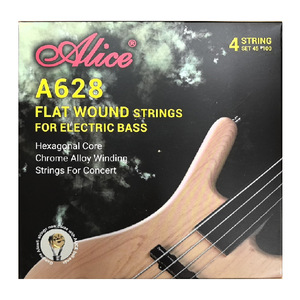
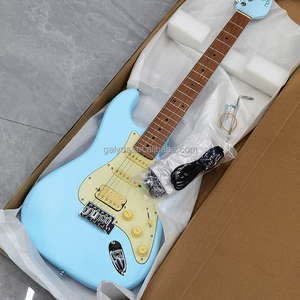
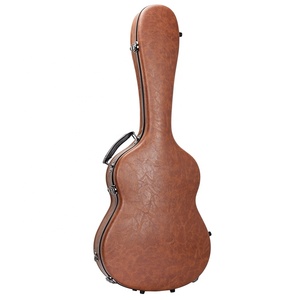
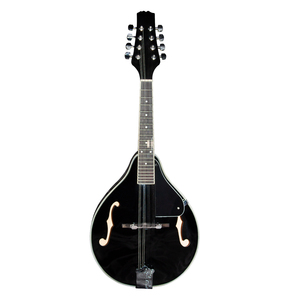
Direct factory production lines for scaled acoustics, carbon-fiber cases, precision hardware, and stringing accessories tailored for international distributors, private labels, and chain retailers.

Why Global Importers Partner with Our Manufacturing Base
Combining over 150 years of acoustic instrument design ethos (dating back to 1871 American stringed-instrument traditions) with state-of-the-art Chinese precision volume manufacturing.
Century-Old Acoustic Heritage
Anchored by the engineering heritage of brands like Oscar Schmidt (founded 1871, inventors of the Autoharp®) and sister-brand standards of Washburn. We inject historic bracing paradigms into contemporary mini acoustic scale architectures.
CNC Multi-Axis Lutherie
Every mini acoustic neck, bridge slot, and body dovetail joint is processed on automated 5-axis German and Japanese CNC routers, maintaining tolerances of ±0.05mm across 50,000-unit mass manufacturing runs.
Equilibrium Kiln Seasoning
Woods undergo our proprietary vacuum RF-drying protocols to stabilize moisture content between 8% and 10%. This prevents fret sprouting, soundboard warping, and belly bulging when shipped into arid or humid target climates.
CITES & FSC Certified Sourcing
Full chain-of-custody documentation on African Mahogany, Sitka Spruce, Koa, and eco-friendly engineered Techwood fingerboards. Friction-free customs clearing across the EU, US Lacey Act, and Australasian ports.
Technical Lutherie Whitepaper: Engineering the Modern 3/4 & Travel Mini Acoustic
Mini acoustic guitars (ranging from 34-inch parlor frames to 36-inch baby dreadnoughts and 38-inch 3/4 size scale formats) are no longer viewed merely as novice "toys." Today's procurement channels demand concert-grade harmonic resonance, rigorous dimensional stability, and multi-channel stage-readiness.
Helmholtz Cavity Calibration
Shrinking the air volume inside a guitar body drastically raises its internal Helmholtz air resonance, often choking the fundamental low-E frequency (82.4Hz). Our R&D team solves this through parabolic scalloped X-bracing and strategically enlarged soundhole radiuses, dropping resonance peaks down to an organic, warm 98Hz.
Compensated Scale Tensioning
On shortened scale lengths (578mm to 597mm vs standard 648mm), low string tension frequently induces intonation drift and fret buzz. We utilize compensated bone saddles paired with custom-wound core strings to equalize fretboard down-force without necessitating high string action.
Smart Under-Saddle Electronics
The emerging generation of buskers and traveling indie artists require plug-and-play amplification. We integrate ultra-thin piezo transducer films coupled to micro-transducer onboard preamps that preserve acoustic air dynamics without heavy routing that deadens soundboard deflection.
Future Procurement & Demand Trends for 2026–2030
Strategic guidance for inventory directors, purchasing managers, and e-commerce brand builders evaluating supply chain transitions.
1. Direct-to-Consumer Packaging Optimization
Rising LTL and air-freight tariffs have made volumetric weight a critical balance sheet metric. Procurement teams are moving toward mini guitars packed in ultra-compact drop-test retail packaging (ISTA-3A compliant), dropping parcel transit damages below 0.4% while trimming international pallet shipping footprints by up to 28%.
2. Alternative Tonewood & Polymer Hybrids
With traditional Sitka and Indian Rosewood facing tightening CITES appendices and price volatility, modern purchasers favor torrefied (baked) spruce tops, carbon-fiber composite soundboards, and composite walnut/HPL back & sides that withstand outdoor humidity spikes from 20% to 90% RH without crack propagation.
3. Complete Turnkey SKU Bundling
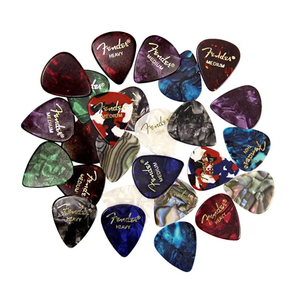
End consumers demand unboxing immediacy. Global retail leaders no longer buy standalone guitars; they contract comprehensive bundles featuring tailored gig bags, chromatic clip-on tuners, hex keys, backup monofilament string sets, and custom-branded picks, yielding elevated gross profit margins at retail.
Frequently Asked Questions for B2B Importers
Actionable answers addressing order minimums, OEM tooling, QC standards, and cross-border container staging.
What is the minimum order quantity (MOQ) for custom OEM brand manufacturing?
How do you control acoustic stability during overseas oceanic container shipping?
Can you produce left-handed mini acoustic guitars within the same batch?
What quality assurance (QA) stages are performed prior to export release?
Are all tonewoods fully compliant with international CITES and Lacey Act requirements?
Expand Your Fretted Instrument Catalog with China's Premier Lutherie Base
Whether you require a custom OEM travel guitar run, turnkey beginner bundles, or container-load distributor pricing, our acoustic engineering and international trade specialists are at your service.
Inquire Now