Engineered Stringed Instruments & Protective Hardware
Our industrial acoustic facilities produce concert-grade classical and acoustic guitars, custom multi-string fretless instruments, folk harps, and engineered travel protection cases tailored for private label distribution.
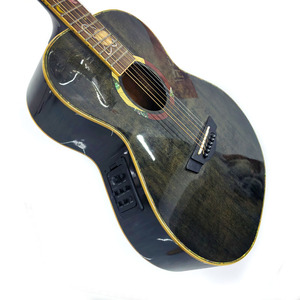
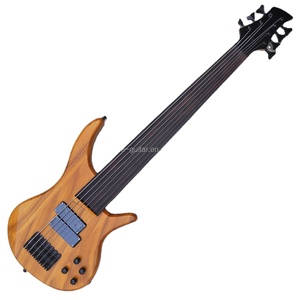
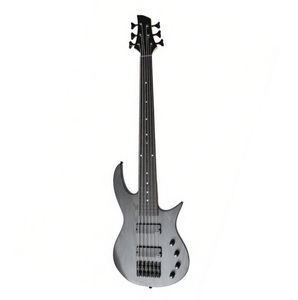
Fretless Ashwood Edition
Weifang Rebon 6 String Fretless Electric Bass Guitar With Ashwood Body
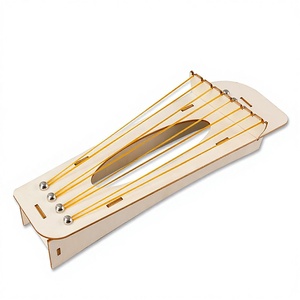
Heritage Plucked Strings
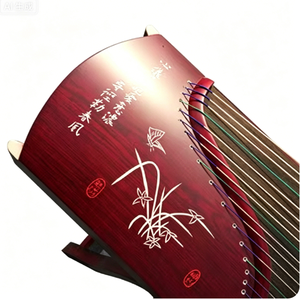
Portable Wooden Guzheng Zither for Beginner Practice and Examination Customized Color & Size
Technical Procurement Monograph
The Engineering Foundations of Custom OEM Classical Guitars
A comparative evaluation of resonant acoustics, tonewood climate stabilization, bracing architecture, and industrial production tolerances for international brand directors.
In modern high-precision musical instrument manufacturing, executing a successful OEM classical guitar line demands a synthesis of century-old acoustic handcraft and rigorous industrial physics. Unlike steel-string acoustics or electric guitars that rely heavily on string tension leverage and electromagnetic transducers, a classical guitar derives its entire dynamic range, overtone complexity, and projection volume from subtle soundboard resonances excited by low-tension nylon strings. Producing thousands of uniform instruments that each honor this sensitive dynamic threshold represents the core challenge for international instrument distributors, educational conservatories, and private label brands.
Our OEM manufacturing protocols begin at the cellular level of raw tonewood selection. The vibrational efficiency of a classical soundboard is dictated by its Velocity of Sound (c = √(E/ρ)), where longitudinal elasticity (E) must be maximized while minimizing density (ρ). For premium concert models, we deploy quarter-sawn A-Grade Engelmann Spruce or Canadian Western Red Cedar seasoned through a mandatory dual-phase process: 36 months of open-air atmospheric acclimatization followed by computerized kiln drying that stabilizes moisture content precisely between 8.0% and 10.5%. This controlled stabilization prevents soundboard sinkage, belly bulge, and fret sprouting across transatlantic shipping routes and unpredictable regional retail climates.
Acoustic Resonance Benchmark: Each soundboard blank is thicknessed using automated CNC sanders to a calibrated thickness profile ranging from 2.0mm to 2.4mm, followed by proprietary mechanical deflection testing. By indexing soundboard flexibility prior to brace gluing, our luthiers adjust internal fan bracing dimensions to achieve uniform Helmholtz fundamental chamber resonance between 98 Hz (G#2) and 106 Hz (A2).
Bracing architecture defines the harmonic fingerprint of private label instruments. Depending on the brand's target sound curve, our production line alternates between traditional Torres-style 7-fan asymmetrical bracing, modern lattice carbon-fiber composite bracing, and double-top soundboards incorporating aerospace-grade Nomex honeycomb cores. Torres configurations deliver the romantic, warm, and woody midrange essential for conservatory pedagogy, whereas Nomex double-tops produce the immediate acoustic velocity, string-to-string separation, and hall-filling projection favored by contemporary concert performers.
Industry Intelligence
Classical Guitar Manufacturing & Technology Trends
Aerospace Nomex Double-Tops
Micro-thin exterior wood veneers (0.5mm) sandwiching an ultra-light Nomex honeycomb core reduce top mass by up to 35%, yielding unprecedented transient response and immediate overtone bloom.
Thin-Film Eco Polyurethane & UV Finishes
Transitioning from thick polyester varnishes to UV-cured thin-film finishes (<70 μm) enables complete soundboard breathing while ensuring total VOC regulatory compliance for strict North American and EU markets.
Ergonomic Radiused Fingerboards & Soundports
Modern classical OEMs increasingly request 16″ to 20″ radiused fretboards and player-side upper-bout acoustic soundports, bridging the tactile gap between traditional nylon performance and crossover modern players.
150+
Years Heritage DNA (1871)
45,000
Monthly Production Capacity
≤0.2mm
CNC Neck Profile Tolerance
100%
CITES & Lacey Act Compliance
2026–2030 Classical Guitar Sourcing Trends
Key procurement directives transforming wholesale musical instrument distribution: regulatory compliance, timber alternatives, and intelligent lean production.
Sustainable Hardwood Substitution
With CITES tightening rosewood restrictions (Dalbergia spp.), leading OEM clients are adopting torrefied eucalyptus, thermally modified walnut, and richlite technical fretboards. Sourcing directors must partner with manufacturers offering certified supply chains that prevent port detentions.
Hybrid Acoustic-Electric Crossover Lines
Market demand is pivoting toward nylon-string guitars equipped with under-saddle piezo ribbons, internal condenser microphones, and discreet Bluetooth onboard preamps. Retail chains report faster turnaround for classical crossover guitars featuring narrower nut widths (48mm vs 52mm).
Pre-Packaged Retail Bundles & Custom Cases
Direct-to-consumer online fulfillment drives the need for container-optimized, drop-tested protective instrument packaging. OEM agreements increasingly incorporate customized leatherette wood cases, gig bags, and branded setup tooling packed directly at the assembly line.
Why Industry Leaders Choose Our OEM Capabilities
From our 1871 American heritage roots to modernized ISO-certified production facilities, our manufacturing framework delivers proven advantages to global guitar brands and distributors.
Century-Old Luthiery Lineage
Rooted in historic American stringed instrument engineering established in 1871, we unite generational hand-carving knowledge with high-throughput computerized workflow. This pedigree guarantees instruments with authentic musical character and acoustic refinement.
End-to-End Multi-Category Synthesis
Our industrial workshops go far beyond classical bodies: we craft acoustic guitars, Autoharps, banjos, mandolins, electric basses, and precision flight cases. Single-source purchasing streamlines shipping consolidations and lowers logistics overheads.
Quality Assurance & Warranty Backing
Every batch undergoes individual laser fret leveling, double-action truss rod calibration, and climatic stress cycles (-10°C to +45°C). All export orders are backed by direct warranty support and accessible regional service protocols.
Purchasing Due Diligence
Classical Guitar B2B Procurement FAQ
Clear technical insights on minimum order quantities, private labeling, wood certification, and shipment stability.
01
What are your standard OEM and Private Label Minimum Order Quantities (MOQ)?
Our standard production runs begin at 50 units for fully solid-wood custom concert instruments and 100 units for laminated or select solid-top models. Custom laser headstock branding, branded heel caps, bespoke rosettes, and custom interior labels are fully supported at these baseline volume thresholds.
02
How do you guarantee timber legality and prevent international customs seizures?
All tonewoods utilized in our manufacturing facilities are 100% compliant with the US Lacey Act, European Timber Regulation (EUTR/EUDR), and CITES Appendix II frameworks. Each shipment is accompanied by comprehensive Chain of Custody documentation, phytosanitary certifications, and exact botanical taxonomy declarations.
03
Can you manufacture true left-handed configurations across classical models?
Yes. Distinct from manufacturers who simply restring right-handed bodies, our OEM left-handed program features mirrored internal asymmetrical fan bracing, reversed bridge slot compensation angles, and correctly oriented side dot inlays to ensure authentic intonation and acoustic response.
04
What protective measures prevent soundboard cracking during oceanic transit?
Finished guitars are acclimated in a dedicated 45% relative humidity buffer zone for 72 hours before boxing. Units are packaged in sealed microclimate vapor barrier bags with active desiccant packs, double-wall corrugated export cartons (ECT-44), and optional molded wooden or carbon fiber flight cases.
Architect Your Custom Classical Guitar Line Today
Partner with a heritage-grade manufacturing powerhouse. Connect with our engineering and procurement team to request material specifications, custom rosette design proofs, tonewood certificates, and our complete wholesale price sheet.