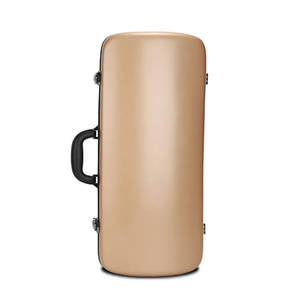
Factory Production Portfolio
Featured OEM Products & Supporting Musical Hardware
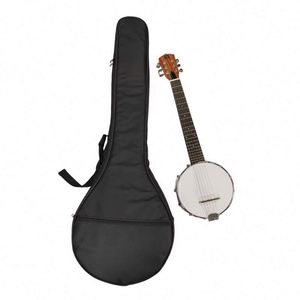
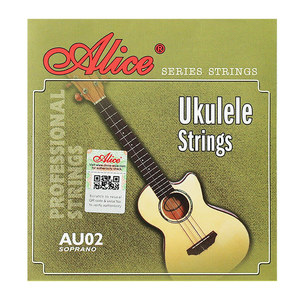
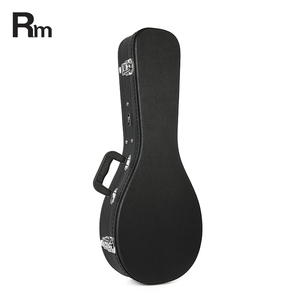
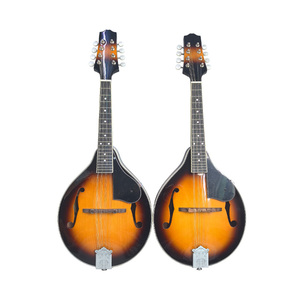
Our high-capacity automated production facilities engineer custom wound string series alongside an expansive catalog of OEM instrument accessories, professional gig bags, hard-shell flight cases, and traditional folk strings tailored for overseas distributors.
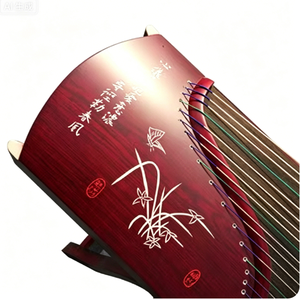
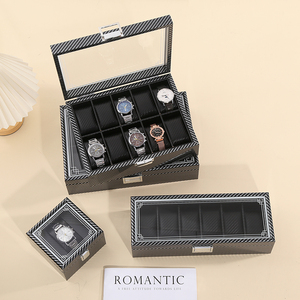
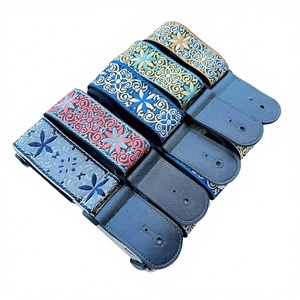
Engineering Whitepaper
Bass String Metallurgy & Structural Architecture
Unlike guitar strings, bass guitar strings operate under severe longitudinal tension and excessive kinetic excursion. Sourcing precision-engineered OEM bass strings requires deep mastery over mechanical tolerances, core-to-wrap diameter ratios, and specialized metallurgical plating.
High-Carbon Hexagonal Core Wire
We source Swedish-grade tin-plated high-carbon steel drawn precisely with a 6-sided profile. The razor-sharp edges of the hexagonal core bite directly into the initial underwrap, eliminating internal string slippage, preventing dead notes, and providing superior intonation longevity under aggressive slap and fingerstyle playing.
Computer-Controlled Multi-Winding
Bass low B and low E strings require multi-layered wrap executions (.105 to .135 gauges). Our automated digital winding centers apply proportional micro-tension across outer wraps, ensuring uniform pitch distribution and zero air-gap formation along the entire vibrating string length.
Advanced Outer Wrap Alloys
Choose from an extensive selection of sonic formulations: 80/20 Nickel-Plated Steel (balanced mid-forward acoustic cut), Stainless Steel 430/304 (maximum magnetic output, hyper-bright high end for metal and slap), Pure Nickel (vintage thump), and Flatwound ribbon ground stainless for smooth fretless response.
| Winding Profile | Alloy Composition | Magnetic Response | Tactile Feel | Target Playing Style / Acoustic Persona |
|---|---|---|---|---|
| Roundwound Standard | Nickel-Plated Steel (NPS) | High (Linear Induction) | Textured Ridges | Versatile Standard: Rock, Pop, Funk, Session Tracking |
| Pro Stainless Steel | Austenitic/Ferritic Cr-Ni | Very High | Dry / Pronounced Grip | Aggressive Attack: Heavy Metal, Slap, High Transient Precision |
| Polished Flatwound | Flattened Stainless Ribbon | Moderate / Warm Lows | Ultra-Smooth / Glass | Vintage Motown, Classic Jazz, Fretless Bass, Reggae |
| Micro-Coated Nanoweb | Fluoropolymer-Shielded NPS | High Balanced | Silky Natural Feel | High Humidity Touring, Studio Longevity, 3x Anti-Corrosion |
Strategic Procurement Analysis
Future Procurement & Manufacturing Trends in Bass Strings
Wholesale buyers, contract brand managers, and OEM instrument manufacturers must prepare their supply chains for key shifts occurring across environmental legislation, micro-plating engineering, and private label consolidation.
VCI Anti-Corrosion Packaging
Global sea-freight challenges mandate shifts away from non-barrier paper sleeves. Future-proof procurement relies on nitrogen-flushed, sealed foil sachets and Vapor Corrosion Inhibitor (VCI) films that guarantee a 5-year shelf-life in damp regional distribution centers.
Extended-Scale & Multi-Scale Dominance
With headless and fanned-fret multiscale bass guitars capturing large market share (34" to 37" scale lengths), OEM buyers are ordering tapered windings where string ball ends transition into dynamic scale lengths without saddle clashing.
Hydrophobic Sub-Micron Coatings
Thick polymer coatings deaden fundamental bass harmonics. Next-generation ODM contracts focus on molecular-deposited thin coatings (under 5 microns) that safeguard the inner hex valley against player sweat while maintaining natural acoustic brightness.
Turnkey Private-Label Bundling
Brands are optimizing supply chains by cross-sourcing bass strings directly with fitted gig bags, leather straps, and instrument cases from one unified manufacturer, reducing logistics overhead and streamlining custom brand packaging.
Factory Advantage
Why Top Global Brands Rely On Our ODM/OEM Supply Chain
Rooted in string craft heritage dating back to 1871, our manufacturing infrastructure fuses historical acoustic artistry with state-of-the-art CNC wire tension mechanics and full-scope private-label support.
Strict Core-to-Wrap Tension Balance
Our engineering division calculates precise tension coefficients for 4-string, 5-string, 6-string, and short-scale sets. This balance guarantees uniform finger-resistance across the neck, eliminating unbalanced fret-buzz on heavy B strings and high G strings alike.
End-to-End Private Labeling
From custom color-coded brass ball-ends and custom silk-wrap thread colors at the peg-head to bespoke UV-varnished retail boxes and eco-friendly tinplate canisters, we turn your brand concept into market-ready retail assets within 30 days.
Comprehensive Fretted Instrument Ecosystem
As documented in our complete catalog, our production capabilities extend beyond strings to Autoharps, banjos, mandolins, ukuleles, and heavy-duty instrument cases. Partnering with us gives overseas buyers a unified manufacturing source for musical accessories and instruments.
ISO9001 & RoHS Certified Clean Production
All core wires and winding alloys undergo continuous spectrographic inspection. Our strings are 100% compliant with EU RoHS and REACH regulations, guaranteeing no toxic chemical residues or heavy metals contact players' fingers.
Procurement Guidance
Bass Strings OEM/ODM Frequently Asked Questions
Key answers addressing custom MOQ requirements, lead times, core geometry, and private-label packaging to streamline your B2B sourcing decisions.
What is the typical Minimum Order Quantity (MOQ) for custom private-label bass strings?
For standard gauge formulations utilizing our stock nickel-plated or stainless steel wraps, our baseline MOQ starts at 500 sets with custom silk-wrapped ends. For full private-label packaging (custom designed retail boxes and sealed branded inner poly-packs), the MOQ is typically 1,000 to 2,000 sets. Custom alloy formulations or proprietary gauge combinations can be engineered under custom trial contracts.
Why choose Hexagonal Core wire over Traditional Round Core wire for electric bass strings?
Hex-core wire features 6 distinct geometric edges. During automated high-speed winding, the inner wrap wire locks tightly into these corners. This mechanical interlocking prevents outer winding slippage when players bend strings or execute heavy slap strokes. Hex cores also yield consistent fundamental pitch stability and predictable tension resistance across diverse climate conditions.
Can you manufacture multi-scale and extended-range sets (5-String, 6-String, Bass VI)?
Yes. We engineer specialized sets with extra-long winding lengths (up to 38" ball-to-taper) to accommodate contemporary multi-scale and fanned-fret basses (such as 34"-37" configurations). We calibrate the taper point before the tuning post to prevent heavy wrap wire from cracking around standard machine post diameters.
How does anti-rust coating impact low-end bass string response?
Older dipped coating processes deposited heavy polymer layers that dampened high-frequency harmonics and reduced sustain. Our factory applies micro-thin vapor deposition and ultra-fine surface passivation (sub-5 micron thickness). This preserves magnetic flux linkage with bass pickups and maintains genuine metallic brightness while blocking sweat, lactic acid, and environmental oxidation.
What are the lead times for custom production and prototyping?
Engineering prototype sets based on your exact tension, gauge, and alloy specifications are dispatched within 7–10 business days. Full commercial production runs for private label orders generally require 25–35 days following digital artwork sign-off, accompanied by comprehensive salt-spray testing, tension-break checks, and micrometer quality assurance logs.
Launch Your Custom String Line With an Industry-Leading OEM Partner
Partner with an established instrument & accessory manufacturer. Request our comprehensive OEM engineering catalog, custom gauge charts, and factory-direct pricing samples today.
Get Catalog