Featured OEM/ODM Guitar Bodies & Precision Components
Explore our production capabilities spanning solid-body bass systems, cast hardware, acoustic builds, and instrument protection. Designed strictly for lutherie brands, commercial importers, and enterprise music retailers.
Industrial Manufacturing Paradigms: Solid & Semi-Hollow Guitar Bodies
Understanding the mechanical stress distribution, acoustic impedance, and dimensional stabilization required for scalable electric guitar and bass body OEM manufacturing.
1. Wood Seasoning Dynamics and Hygroscopic Stability
In high-grade OEM/ODM guitar body manufacturing, acoustic velocity and dimensional consistency depend primarily on timber conditioning. Solid wood blocks—whether North American Alder (Alnus rubra), Swamp Ash (Fraxinus americana), African Mahogany (Khaya ivorensis), or Basswood (Tilia americana)—contain hygroscopic free and bound cell-wall moisture. Substandard kiln drying causes long-term post-machining shrinkage, neck pocket warpage, and finish checking along glue seams.
Our production facilities utilize a dual-stage timber seasoning cycle. Following primary dehumidification kiln operations, book-matched tone blanks undergo specialized atmospheric stabilization inside controlled curing vaults for 90 to 180 days. This stabilizes core equilibrium moisture content (EMC) strictly between 6% and 8%. This controlled processing mitigates transverse shrinkage across seasonal climate transitions and prevents glue-joint telegraphing beneath high-gloss polyurethane or ultra-thin nitrocellulose lacquer topcoats.
2. 5-Axis Multispindle CNC Machining & Neck Pocket Tolerancing
Scalable private-label lutherie demands microscopic interchangeability across production batches. Our milling floors operate high-speed industrial 5-axis CNC machining centers equipped with optical tool-wear compensation. Critical geometries—including standard Fender-spec 56mm (2-3/16") neck pockets, recessed tremolo spring cavities, rear control routs, and belly carve profiles—are machined in a single reference clamping pass.
Eliminating multi-fixture repositioning keeps neck pocket lateral tolerances within ±0.05mm and depth tolerances within ±0.02mm. For boutique builders requiring drop-in assembly without manual scraping, our automated chamfering tools maintain uniform edge radii (R2 to R12) and clear pickup wire pathways, cutting factory assembly cycle times by up to 35%.
Lamination & Glue Seam Integrity
Multi-piece body blanks (2-piece center-joined or 3-piece offset) are bonded with structural aliphatic resin adhesives under hydraulic edge clamps at 1.2 MPa pressure. Joints match the natural resonant velocity of surrounding grain structures, with no structural cold-creep under string load.
Precision Weight Relief & Chambering
Modern stage instruments require optimal ergonomic balance without losing structural bass punch. We utilize algorithm-driven honeycomb, sound-chambered, and multi-hole weight relief routines, tuning resonant frequencies prior to gluing figured maple tops.
Industrial Finishing Laboratories
Equipped with robotic electrostatic spray booths and UV-cured production lines. We produce durable finishes ranging from 0.08mm micro-thin open-pore satin polyester to hand-buffed mirror gloss (95+ GU) and vintage-correct nitrocellulose lacquer.
Future Procurement Trends in Guitar Body & Component Sourcing
Strategic supply chain analysis for category managers, lutherie operations directors, and commercial musical instrument brands navigating 2026–2030 manufacturing conditions.
1. Regulatory Compliance & CITES-Resistant Tonewoods
Stringent cross-border monitoring under CITES Appendix II and the US Lacey Act has driven global procurement toward verified, deforestation-free hardwoods. Volume brands are diversifying away from restricted Rosewood (Dalbergia) and high-tax tropical Swietenia species. High-heat Torrefaction (Thermo-Treated Maple, Roasted Ash, and Carbonized Poplar) is now an industry standard, conferring acoustic aging benefits and humidity immunity without export documentation bottlenecks.
2. Hybrid Digital Lutherie & Direct-to-Assembly Kits
High assembly labor costs in Western and European markets are changing B2B purchasing habits. Brands are increasingly ordering completely pre-buffed, pre-shielded (conductive carbon shielding cavities), and pre-grounded bodies. Supplying guitar bodies with factory-installed ground eyelets, precision bridge drillings, and matching electronics pickguard assemblies enables brands to shift toward fast, screwdriver-only final assembly.
3. Integrated Metal-Wood Component Co-Engineering
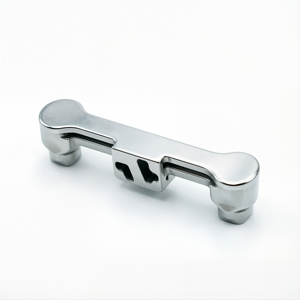
Sourcing guitar wood from one vendor and bridge hardware from another frequently introduces mounting stud and string-thru channel misalignments. The industry now favors turnkey OEM manufacturers that manage precision investment casting stainless steel saddles, bridge assemblies, and CNC-cut pickguards under one roof, guaranteeing sub-millimeter mechanical matching.
Bridging Craft Heritage with Scalable Factory Automation
Carrying a rich legacy dating back to 1871—historically tied to classic American stringed instruments, including the Autoharp® and traditional folk gear—our manufacturing infrastructure marries heritage lutherie insights with multi-axis automated CNC woodcraft.
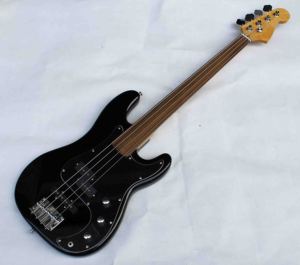
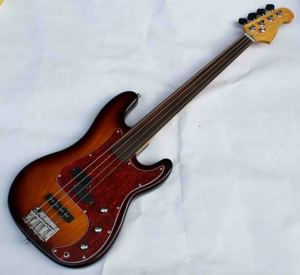
Whether executing traditional 4-string fretless bass body lines (PB-FL series), thin-line semi-hollow carves, or custom acoustic tops, our production combines seasoned wood selection with industrial-grade repeatability.
Turnkey OEM/ODM Engineering Specifications
• Wood Species: Select Red Alder, American Swamp Ash, Okoume, Mahogany, Basswood, Hard Maple, Roasted Poplar.
• Construction: 1-Piece Master Grade, 2-Piece Bookmatched Center Seam, Multi-Piece Export Grade.
• Pickup Routing Configurations: SSS, HSS, HH, P-Bass, J-Bass, Soapbar, Custom Piezo Recesses.
• Neck Pocket Profile: Standard 5/8" (15.8mm) depth, contoured heel carves, or deep-set neck tenons.
• Finishing Chemistries: Low-VOC Polyurethane, Thin Polyester High-Gloss, Hand-Rubbed Satin Wax, Nitrocellulose Lacquer.
Enterprise Manufacturing Capabilities & Institutional Advantages
Our engineering facility provides end-to-end original equipment manufacturing for worldwide distributor brands, retail groups, and boutique design houses.
Deep Historic Heritage
Rooted in instrument craft that has built trusted tone since 1871, our engineering team balances historical lutherie nuances with clean modern designs.
Full Category Breadth
From solid electric bodies and precision cast hardware to folk instruments (Autoharps, banjos, mandolins, ukuleles) and custom flight cases, one manufacturing partner handles your entire line.
Rigorous QA & Warranty
Every production run passes multi-stage dimensional verification, grain pore sealing inspection, and hardware alignment checks backed by factory warranties.
Global Logistics Support
Turnkey export execution with complete phytosanitary certificates, certified CITES-compliant wood sourcing records, and palletized sea/air freight management.
Frequently Asked Questions for B2B Importers & Brands
Technical, operational, and commercial insights for guitar body sourcing, prototyping, and container-scale production.
What are your minimum order quantities (MOQ) for custom OEM guitar body production?
How do you prevent body warping and neck pocket expansion during ocean transit?
Can you manufacture drop-in bodies matched to pre-existing third-party necks?
Do you support left-handed (Lefty) and asymmetric multi-scale body configurations?
What environmental and timber legality documentation do you supply?
Ready to Build Your OEM/ODM Guitar Line?
Connect with our senior engineering team to discuss tonewood selection, CNC routing drawings, finish options, and volume manufacturing quotes.
Get Catalog