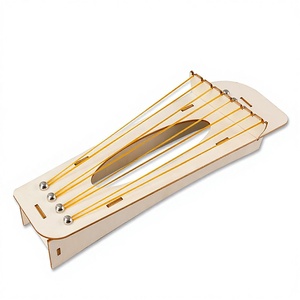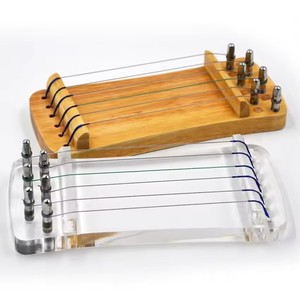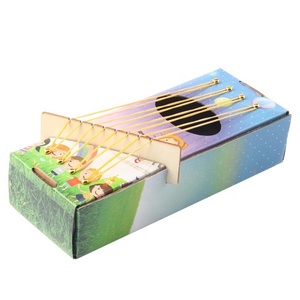
Engineered for tone balance, mechanical longevity, and export compliance. Select from standard configurations or submit proprietary technical drawings for full OEM/ODM tooling customization.
Combining the historic lutherie excellence pioneered since the late 19th century with modernized CNC production corridors, climate-isolated aging yards, and ISO9001 quality architectures.
Every resonant soundboard is produced from aged Paulownia (Kiri) and Northern spruce stock. Tonewood blanks undergo a 36-month natural outdoor aging process followed by computerized kiln drying that stabilizes wood moisture content strictly between 8% and 11%, eliminating warp risk across transatlantic shipping climates.
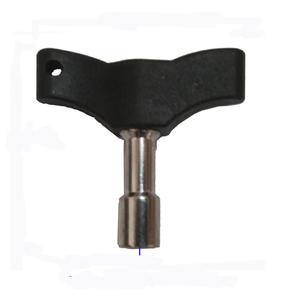
Tuning instability represents the primary customer return factor in multi-string zithers. Our factory utilizes multi-axis CNC drilling arrays to produce multi-laminate beech or rock maple pinblocks with 0.02mm tolerance, guaranteeing high-torque friction lock and consistent tension maintenance under rigorous international performance conditions.
We provide drop-test certified Amazon ISTA-3A/6A standard fulfillment packaging. Each zither instrument is packed in high-density EPE shock enclosures with molded head-and-tail anchors, desiccants, and multi-ply K=K corrugated master export cartons engineered to endure multi-tier intermodal maritime freight.
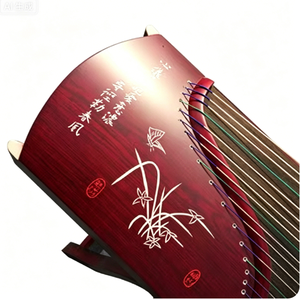
The global zither market, encompassing chorded autoharps, Asian concert guzheng/koto variants, dulcimers, and modern portable chromatic zithers, is experiencing a fundamental structural shift. Driven by international folk revivals, mainstream film/gaming score integrations, and an unprecedented expansion of school music curriculums across North America and Europe, commercial buyers must navigate modern procurement parameters that go far beyond surface aesthetics.
Strategic Purchasing Insight: Enterprise procurement data reveals that international acoustic instrument channels now place 64% higher weight on environmental chamber compliance (anti-crack thermal cycling) and standardized modular assembly than on decorative shell hand-carving.
As retail supply chains optimize for inventory turnover and omni-channel e-commerce fulfillment, OEM/ODM zither sourcing focuses on four decisive engineering parameters:
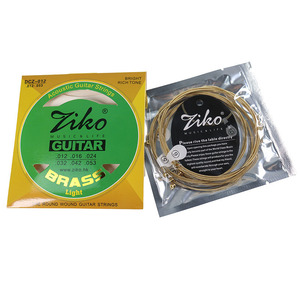
A zither's acoustic timbre is ultimately determined by the interface between its string metallurgy and soundboard resonation. Historic iron or loose brass strings have been completely superseded in industrial production by specialized alloy cores. Our factory utilizes German high-tensile spring steel hexagonal core wires wound with micro-coated copper or multi-filament nylon wraps. This combination provides bright harmonics, rich fundamental undertones, and up to 300% greater resistance against humidity oxidation compared to traditional unsealed strings.
From custom acoustic CAD design to multi-stage timber curing and containerized shipping, our factory delivers complete traceability at every step of your private label production cycle.
Initial analysis of client soundboard specifications, bridge placement calculations, tuning pin layout, custom bracing geometries, and initial sample delivery within 14 working days.
Multi-axis automated woodworking machines cut tonewood profiles, pin block cavities, and acoustic soundboxes with sub-millimeter precision, guaranteeing structural consistency across large batches.
Master luthiers verify soundboard deflection, hand-fit the bridge contours, install tensioned string sets, and calibrate string action to eliminate sympathetic fretboard rattles or buzzing.
Instruments endure 48-hour climatic testing cycles (45°C down to -10°C, 30% to 85% RH) before drop-box packaging, serial number branding, and international freight containerization.
Critical operational answers regarding factory compliance, minimal order thresholds, climate stabilization, and custom brand engineering.