Benchmark Baritone & Extended-Range Ukuleles
Engineered to balance structural stability, standard D-G-B-E baritone intonation, and high-volume container shipment tolerances. Explore our verified factory-direct export configurations.
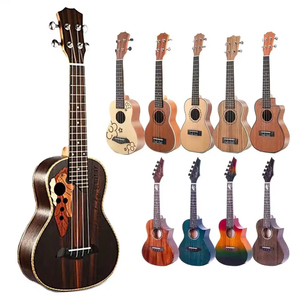
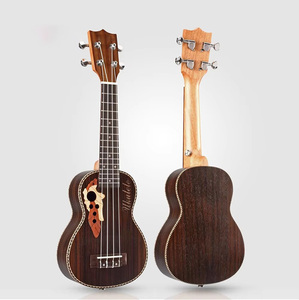
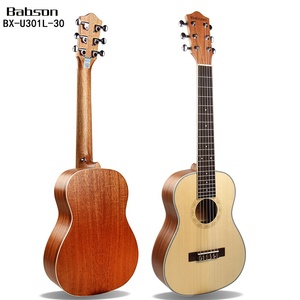
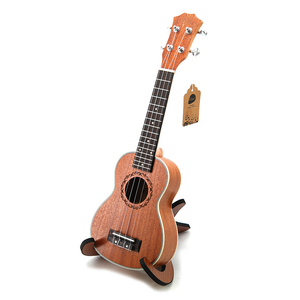
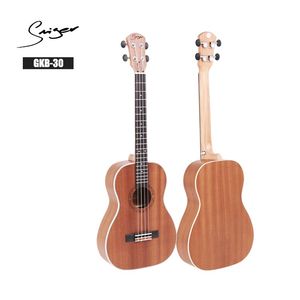
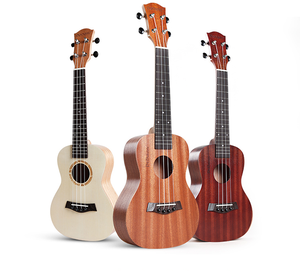
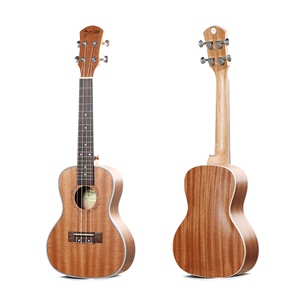
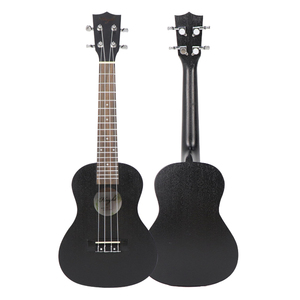
Defining Tier-1 Baritone Ukulele Exporters
For international musical instrument retail chains, institutional educational distributors, and e-commerce private labels, qualifying an OEM/ODM exporter demands criteria far exceeding superficial unit pricing.
Timber Equilibrium & Kiln Curing
Unlike soprano or concert models, the 30-inch baritone body profile carries significantly greater air volume and physical string tension. Tier-1 exporters enforce moisture content (EMC) thresholds between 8% and 10% through computer-automated, multi-stage RF vacuum kilning.
This prevents body sinkage, longitudinal neck bowing, and fingerboard shrinking across different climate zones upon customer unboxing in North American and European territories.
Intonation Integrity & Scale Mechanics
With an extended scale length averaging 485mm to 510mm, acoustic baritones frequently suffer from intonation drift on the lower D and G wound strings. Reputable exporters employ laser-guided fret slotting and compensated bone saddles.
Precise engineering ensures octave pitch drift stays within a stringent tolerance of ±3 cents, even when strung with alternate low-tension fluorocarbon setups.
Regulatory Documentation & Lacey Act
With evolving CITES timber listings regarding rosewood (Dalbergia) and mahogany species (Swietenia macrophylla), tier-one manufacturing partners provide complete chain-of-custody documentation, certified phyto-sanitary inspection records, and compliant Lacey Act declarations.
This mitigates legal seizure hazards at customs terminals for commercial importers worldwide.
Acoustic Metric Comparison: Baritone vs. Traditional Scale
Understanding the structural necessity of enhanced bracing, truss rod integration, and neck joint tensile thresholds across scale tiers.
| Ukulele Scale Classification | Overall Length | Standard Scale Length | Standard Tuning | String Tension Aggregate | Truss Rod Engineering Standard |
|---|---|---|---|---|---|
| Soprano (Standard) | 21 Inch (53 cm) | 13.6 Inch (345 mm) | G4 - C4 - E4 - A4 | ~28 - 32 lbs | Optional / Carbon Rod |
| Concert | 23 Inch (58 cm) | 15.0 Inch (380 mm) | G4 - C4 - E4 - A4 | ~32 - 36 lbs | Optional / Reinforced Spline |
| Tenor | 26 Inch (66 cm) | 17.0 Inch (430 mm) | G4 - C4 - E4 - A4 (or Low G) | ~38 - 44 lbs | Dual-Action Optional |
| Baritone (Professional) | 30 Inch (76 cm) | 19.5 - 20.1 Inch (510 mm) | D3 - G3 - B3 - E4 | ~54 - 62 lbs | Mandatory 2-Way Adjustable Truss Rod |
| Guitarlele (6-String) | 30 - 31 Inch (78 cm) | 17.0 - 20.0 Inch (500 mm) | A2 - D3 - G3 - C4 - E4 - A4 | ~60 - 72 lbs | Mandatory 2-Way Adjustable Truss Rod |
Product Development & Global Sourcing Trends
How international brand owners and OEM buyers can capitalize on seismic shifts in modern consumer demographics, smart production, and acoustic preferences.
The Guitar-to-Ukulele Crossover Migration
Demographic analytics confirm an escalating surge in guitarist onboarding onto 30-inch baritones. Because standard baritone D-G-B-E tuning mirrors the top four strings of a standard acoustic guitar, acoustic performers, singer-songwriters, and travel enthusiasts are bypassing entry-level soprano models.
Exporters experiencing the steepest market share expansion are those providing cutaway body profiles, solid spruce/cedar tops, and integrated undersaddle transducer preamps designed specifically for performance stages.
Alternative Tonewood Permutations
While traditional solid mahogany and flamed acacia remain staples of luxury retail, high-efficiency export programs are pivoting toward environmentally sustainable alternatives. Sapele (Entandrophragma cylindricum), torrefied Sitka spruce tops, and high-density technical composite fingerboards (Blackwood/Richlite) provide superior climate resilience.
These engineered materials drastically lower inventory loss rates across international omni-channel fulfillment hubs while delivering pristine tonal warmth.
Integrated Hybrid Transducers & Smart EQ
Passive undersaddle pickups are being systematically supplanted in procurement orders by low-profile, rechargeable lithium-powered acoustic preamps. Contemporary buyers demand onboard chromatic tuners, phase cancellation switches, and magnetic soundhole pickups paired with digital sound processing (DSP) reverb/delay chips operable without external amplification.
Forward-thinking exporters are standardizing these smart acoustic modular options across production lines.
Frequently Asked Questions for B2B Importers
Essential operational, logistical, and technical considerations for global wholesalers and commercial buyers sourcing baritone ukuleles.
Why is a dual-action truss rod essential for a 30-inch baritone ukulele?
What are the typical MOQ requirements for custom OEM/ODM branding?
How do you handle wood acclimatization to prevent cracked tops in destination markets?
Are left-handed (Lefty) baritone configurations available for OEM production?
What export packaging standards are deployed to mitigate trans-oceanic freight damage?
Accelerate Your Fretted Instrument Supply Chain
Connect directly with our engineering division to discuss custom specifications, obtain full export price catalogs, review sample prototype production schedules, or evaluate dealer container-load discount tiers.