Export-Grade Instruments & Enterprise Assembly Solutions
From complete extended-range instruments to CNC-engineered structural hardware, high-tensile strings, and reinforced travel armor, explore our core lutherie catalog engineered for international distributors and retail chains.
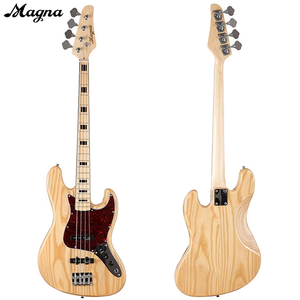
Magna Direct Model MJB-03 Fretless Bass Solid Maple & Ash Matt Finish
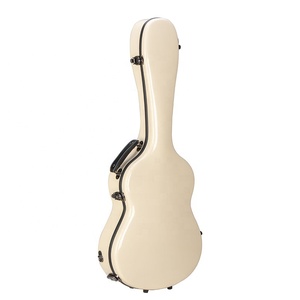
Fiberglass Ivory White Acoustic Instrument Backpack Hard Case
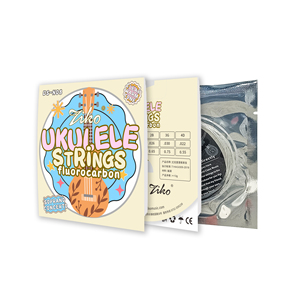
High-Tensile Carbon Nylon Monofilament Engineered Instrument Strings
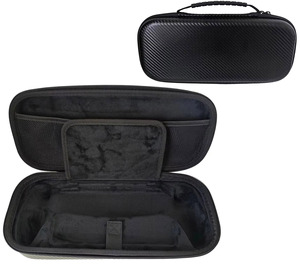
Shockproof High-Density EVA Molded Component & Device Storage Case
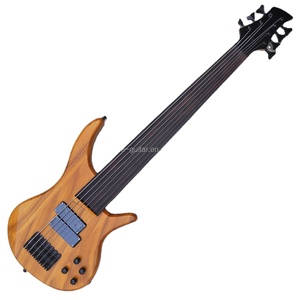
Custom Extended 7-String Fretless Electric Bass Guitar Hardwood Build
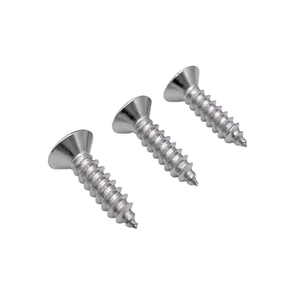
OEM Precision M3*12mm Corrosion-Resistant Bass Pickguard Screws
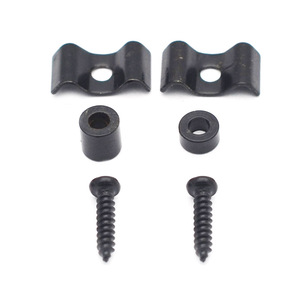
Headstock & Bridge High-Tension String Anchor Retainer Clamps
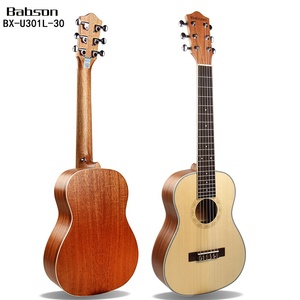
China Factory Direct 30-Inch Extended Range Wooden Guitarlele
The Mechanical Physics of Modern Five-String Bass Manufacturing
For music instrument distributors, private-label brands, and institutional procurement agencies, sourcing five-string basses requires evaluating acoustic parameters far beyond standard four-string manufacturing. The primary challenge in extended-range bass guitars revolves around the fundamental frequency of the low-B string (B0 = 30.87 Hz). When a low-B string is played, its long physical wavelength demands sufficient mechanical tension and an ultra-rigid acoustic foundation; otherwise, the note suffers from low-frequency mud, severe inharmonicity, and rapid harmonic decay.
Structural Integrity: Carbon-Fiber Truss Reinforcements
A standard 4-string bass neck withstands approximately 160 to 180 lbs of combined string tension. Adding a .125 or .135 gauge low-B string increases continuous static pull to 215–240 lbs. In high-volume commercial production, traditional single dual-action truss rods prove insufficient against long-term rotational torque and seasonal neck warping. Enterprise OEM manufacturing mandates dual parallel carbon-fiber stabilizing rods flanking a dual-action high-modulus steel truss rod. This composite architecture preserves precise neck relief tolerances (maintaining 0.3mm to 0.5mm action at the 8th fret) across diverse international climate zones.
Pickup Transduction & Low-Frequency Preamplification
Export-tier 5-string basses demand carefully matched pickup magnetic geometry. Standard single-coil transducers often suffer from 60-cycle mains hum and struggle to reproduce 31 Hz without distortion. Our OEM production lines utilize split-coil and humbucking soapbar configurations wound with 42 AWG or 43 AWG enameled copper wire around Alnico V or Neodymium pole pieces. Integrated onboard active preamps operating at 9V or 18V offer an active 3-band EQ with center frequencies engineered for modern sub-bass control: Bass boost/cut at 40 Hz, sweepable midrange centering at 400–800 Hz, and treble roll-off centered at 4 kHz.
Future Procurement & Engineering Trends for Extended-Range Basses
As international consumer demand shifts toward modern gospel, technical metal, contemporary jazz, and immersive studio production, the 5-string bass has transitioned from a niche instrument into a staple requirement of any comprehensive instrument retail line. Importers and procurement executives must align their product development roadmaps with four prevailing manufacturing transformations occurring across global supply chains:
Multi-Scale Fanned Fret Architecture
Increasing from 8% of catalog production in 2020 to over 34% in 2026, multi-scale systems (34" treble to 37" bass) provide ergonomic fingerboard geometry and optimal string-to-string tension, eliminating the "dead-note" syndrome common to traditional standard-scale low-B strings.
Torrefied / Roasted Tonewoods
Controlled thermal vacuum crystallization (roasting maple necks at 180°C–200°C) caramelizes hemicellulose and lignin inside the cell walls. This imparts CITES-safe tropical rosewood density, imperviousness to atmospheric humidity changes, and heightened resonant response.
Smart Electronics & Solderless Harnesses
Modern B2B importers demand modular assembly to lower factory repair costs. Quick-connect solderless 3-band preamps, dual active/passive bypass push-pull pots, and USB-rechargeable lithium battery cavities represent the fastest growing specification requests.
CITES Compliance and Responsible Eco-Lutherie
Global regulatory oversight on timber imports has made non-CITES certification a commercial imperative. Traditional Honduran rosewood (*Dalbergia*) and ebony variants are now substituted in forward-thinking OEM programs with high-pressure laminates, black richlite, thermally treated jatoba, and plantation-grown laurel. Our factory chain maintains complete supply chain chain-of-custody documentation, ensuring hassle-free Lacey Act and EU Timber Regulation (EUTR) customs clearances for our distribution clients.
Engineering Benchmark: Standard vs. Commercial Export Grade 5-String Basses
Before issuing purchase orders, evaluate the structural criteria differentiating entry-level retail instruments from long-term stage-ready export products:
| Evaluation Parameter | Generic Commodity Factory | Our OEM/ODM Export Standard | B2B Distributor Advantage |
|---|---|---|---|
| Scale Length Geometry | Uniform 34-inch scale across all models | Choice of 34", 35" extra-long, or 34"–37" multi-scale | Superior low-B clarity, eliminating consumer returns for string buzz. |
| Neck Construction | Single-piece maple with single standard truss rod | 5-piece laminate (Maple/Walnut) + twin Carbon Fiber spars | Impervious to freight temperature fluctuations and dry climates. |
| Fret Dressing & Edge Fillet | Manual rough file, sharp fret sprout risk | CNC slotted, hydraulic pressed, semi-hemispherical ball ends | Premium out-of-the-box playability, zero warranty setup labor required. |
| Cavity Shielding | Unshielded bare wood or single thin carbon wash | Triple-layer nickel/silver conductive shielding + grounded foil | Zero stage EMI buzz; meets strict CE/FCC electromagnetic regulations. |
| Bridge Mass & Anchoring | Thin bent-steel sheet plate (0.8mm) | High-density cast zinc monorail or high-mass brass bridge | Extended string-to-body vibration transfer, longer low-frequency sustain. |
150+ Years of American Stringed Instrument Heritage Built into High-Capacity OEM Sourcing
Established in Jersey City, New Jersey, in 1871, the Oscar Schmidt legacy has driven American acoustic and electric stringed instrument innovation for more than a century and a half. As the historical creator and global champion of iconic folk instruments like the Autoharp®, our engineering DNA combines generational lutherie secrets with modern manufacturing efficiency.
Operating under JAM USA LLC and hand-in-hand with our sibling brands such as Washburn, our manufacturing ecosystem blends historic hand craftsmanship with automated CNC precision. Our export capabilities feature:
- ✓ Kiln Drying Chambers: Advanced automated moisture monitoring brings raw maple, mahogany, and ash timber to a stable 6%–8% equilibrium before rough profiling.
- ✓ Custom Private Labeling: Complete OEM headstock re-profiling, inlay laser cutting, custom fretboard radiuses (from 9.5" vintage to 16" modern flat), and bespoke pickup voice wind setups.
- ✓ Total Quality Gate System: Every instrument passes through a 72-hour string tension acclimation chamber followed by a 14-point luthier inspection for intonation, neck angle, and finish depth.
- ✓ Global Logistics Infrastructure: Experienced container consolidation, ISTA 3A certified drop-test packaging, and rapid air-freight spare parts support.
Frequently Asked Questions: B2B Sourcing of 5-String Basses
Clear, direct answers regarding production cycles, minimum order quantities (MOQs), quality assurance, and international trade compliance.
What is the standard Minimum Order Quantity (MOQ) for custom OEM 5-string basses?
How does your factory ensure the low-B string does not suffer from fret buzz or intonation drift?
Are all tonewoods certified CITES-exempt and compliant with US/EU import regulations?
Can we specify custom electronics such as active/passive switches and specialized pickup voicings?
What are the lead times for prototyping and high-volume mass production?
How are instruments packaged to prevent neck breakages and finish cracking during maritime transit?
Ready to Scale Your Extended-Range Bass Catalog?
Partner with an industry-leading stringed instrument manufacturer offering 150+ years of technical authority, turnkey private-label customization, and streamlined global export logistics.
Contact Us