State of the Art in Resonator Guitar Manufacturing: Acoustic Physics, Metallurgy, and Mass Production
The resonator guitar occupies a unique and demanding segment within the stringed instrument manufacturing sector. Originally patented by John Dopyera in the late 1920s to overcome the natural volume limitations of traditional acoustic guitars in dance orchestras and ensemble settings, the resonator guitar relies entirely on mechanical speaker diaphragms—spun or stamped aluminum alloy cones—rather than a resonant spruce or cedar soundboard. For international musical instrument distributors, purchasing managers, and institutional brand owners, sourcing resonator guitars requires technical discernment far beyond typical acoustic instruments.
Technical Clarification: The Three Canonical Mechanical Diaphragm Architectures
1. Single-Cone Spider Bridge (Dobro-Style): Features an inverted cone pointing downward into the body well, topped with an eight-legged cast aluminum spider. It projects high treble bite, fast transient response, and extended mid-range sustain favored in bluegrass and country slide playing.
2. Single-Cone Biscuit Bridge (National-Style): Utilizes a convex cone pointing upward, capped by a small circular wooden biscuit (typically hard rock maple) holding the bone saddle. It produces an unmistakable percussive 'bark,' punchy fundamental frequencies, and short sustain prized by Delta blues and ragtime musicians.
3. Tricone System: Employs three 6-inch hand-spun aluminum cones interconnected by a cast T-shaped bridge. This creates complex harmonic overtones, extended natural reverb, and stereo-like acoustic dispersion at the cost of higher assembly complexity and increased weight.
1. Cone Metallurgy: The Divergence Between Stamped and Hand-Spun Diaphragms
The single most decisive cost and acoustic determinant in resonator guitar manufacturing is the resonator cone. Cheap mass-market instruments almost universally utilize mechanically stamped aluminum sheets. While hydraulic stamping yields thousands of units per shift at microscopic unit costs, cold-stamping strains the metallic grain structure, introducing localized micro-stress fractures and thickness variations across the acoustic spiral. As a result, stamped cones sound brittle, produce unwanted harsh overtones around 3.5 kHz, and decay rapidly.
Conversely, premium B2B contract manufacturers utilize hand-spun aluminum alloy 1050 or 1100 (99.5% minimum purity). A luthier spins a blank sheet on an automated lathe against a turned wooden or steel mandrel using progressive wooden and brass burnishers. This gradual work-hardening alignment creates consistent graduation from the edge (approximately 0.45 mm) to the center ridge (approximately 0.35 mm). Hand-spun cones achieve three times greater dynamic sensitivity, warmth, and tonal head-room, serving as an essential selling point for premium distributor brands.
| Resonator Archetype | Cone Material & Thickness | Body Material Options | Timbral Signature | Primary Commercial Genre |
|---|---|---|---|---|
| Spider Cone (Single 10.5") | Spun Aluminum 1050 (0.38mm) | Laminated Birch, Flamed Maple, Mahogany | Singing high sustain, tight mid snap, woody undertones | Bluegrass, Country, Western Swing |
| Biscuit Cone (Single 9.5") | Spun/Stamped Al 1100 (0.42mm) | Bell Brass, Mild Steel, Solid Mahogany | Aggressive percussive attack, metallic honk, fast decay | Delta Blues, Slide, Bottleneck Folk |
| Tricone (3x 6" Cones) | Hand-lathed Aluminum (0.32mm) | Nickel-plated German Silver, Bell Brass | Rich orchestral depth, ethereal decay, balanced bass | Hawaiian Lap Style, Classical, World Music |
| Square-Neck Lap Resonator | Reinforced 10.5" Spider Assembly | Carved Flamed Maple, Composite Walnut | Maximum volume ceiling, high string tension handling | Dobro Lap Steel, Americana Ensemble |
Comprehensive Review: Top 10 Resonator Guitar Manufacturers & OEM Facilities Worldwide
An objective B2B evaluation considering production footprint, proprietary tooling, raw material stability, minimum order quantities (MOQ), and contract engineering agility.
Oscar Schmidt & Allied OEM Facilities
Heritage Folk Lutherie & Scalable Contract ProductionTraceable to 1871 in Jersey City and operating under JAM USA LLC alongside sister brand Washburn, Oscar Schmidt represents one of the world's most robust OEM/ODM production infrastructures for folk string instruments. With extensive joint-venture facilities in Asia delivering millimeter-precise CNC-routed soundwells and authentic spun cones, their facilities balance high-volume commercial accessibility with time-tested American luthier engineering.
National Reso-Phonic Guitars
Ultra-Premium Handcrafted Boutique ProductionBased in San Luis Obispo, California, National Reso-Phonic is the recognized gold standard for authentic historical reproductions of 1930s-era biscuit and tricone guitars. Operating a dedicated metal fabrication department with deep-draw stamping, chemical etching, and hand-spun alloy cones, their instruments cater to elite touring musicians and top-tier retail boutiques.
Beard Guitars & Beard Cones
Precision Bluegrass Spider Resonators & Cone SupplyPaul Beard's workshop in Hagerstown, Maryland, is synonymous with modern acoustic resonator refinement. Beyond their high-end finished instruments, Beard manufactures the famous Legend Cone and cast aluminum spiders utilized by custom builders globally, featuring acoustic baffles and optimized soundwell geometry.
Grand Lutherie Industrial OEM Hub
High-Capacity Metal-Body & Wooden Resonator OEMCentrally located in the musical manufacturing corridor of Guangdong, this specialized industrial complex handles large-scale OEM contract runs for major American and European brands. Equipped with automated sheet metal hydraulic presses, nickel chrome electroplating lines, and automated polyester finishing booths, they offer unparalleled cost efficiencies on brass-body models.
Amistar Resophonic Instruments
European Hand-Turned Metal CraftsmanshipFounded in Prague, Amistar has maintained a legendary European reputation for producing meticulously soldered copper, brass, and nickel silver resonator bodies. Highly regarded for their hybrid acoustic-electric designs integrating magnetic neck pickups with under-cone piezo sensors for stage-ready feedback rejection.
Shandong Fine-Sound Musical Co.
Spruce & Mahogany Soundwell Wooden ResonatorsDominating the intermediate acoustic instrument tier, Shandong Fine-Sound operates an advanced climate-controlled tonewood aging facility. Specializing in laminate and solid-top wooden spider-bridge guitars, they utilize high-precision 5-axis CNC cutters to manufacture birch soundwells that maximize physical acoustic coupling without cone buzz.
Mule Resophonic
Raw Steel & Custom Torrefied Neck ArchitecturePioneered by Matt Eich in Saginaw, Michigan, Mule Resophonic has transformed the boutique resonator aesthetic with raw rusted steel and natural brass bodies paired with torrefied maple necks. Their internal acoustic volume tuning and mini-humbucker pickup integration make them an influential tastemaker for modern indie roots players.
Cort Musical Instruments (Cor-Tek)
High-Precision Automated Fretted Instrument ManufacturingWhile predominantly recognized for electric guitars, Cor-Tek's automated manufacturing centers have engineered reliable OEM resonator models for prominent global labels. Featuring electrostatic poly finishing, computer-monitored truss rod installation, and robotic fret leveling, their instruments set the benchmark for low warranty defect rates.
Michael Messer Resonators
Delta Blues British Design with Overseas ToolingRenowned British slide guitarist Michael Messer engineered a proprietary line of 1930s-inspired biscuit and tricone instruments. Manufactured under strict British supervision at partner plants in China, each instrument undergoes European inspection to guarantee correct neck break angles and hand-spun alloy response at an accessible B2B price tier.
Zhejiang Traditional Folk Craft Works
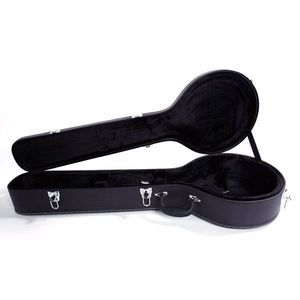
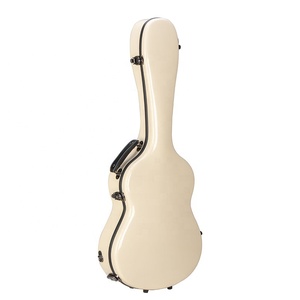
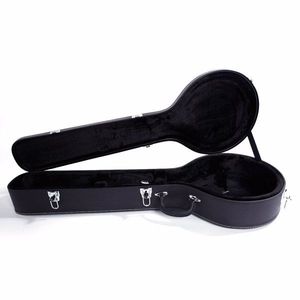
Integrated Folk Strings, Banjos, Resonators & Flight CasesA premier, vertically integrated factory catering to complete folk instrument assortments—encompassing round-neck resonators, squareneck dobro setups, five-string banjos, and heavy-duty composite flight cases. With an in-house metalworking shop capable of bell-brass brazing and decorative cover-plate stamping, they provide end-to-end catalogue solutions for private labels.
Future Procurement Trends & Technological Evolutions in Resonator Guitars (2025–2030)
The global fretted instrument market is undergoing rapid modernization driven by strict ecological regulations, stage amplification challenges, and digital retail fulfillment demands. B2B procurement leaders must factor three decisive technical transformations into their purchasing strategies:
Eco-Compliance & Alternative Tonewood Substrates
International CITES enforcement on rosewood (Dalbergia) and ebony has driven modern facilities to engineer stabilized alternatives. Premium resonator necks increasingly feature torrefied (roasted) North American maple, high-pressure composite fingerboards, and fast-growing engineered walnut soundwells. Metal bodies now leverage trivalent chrome and PVD eco-coatings, eliminating hazardous hexavalent electroplating chemicals while meeting REACH standards.
Hybrid Transducer & Stage Electronics Integration
Traditional single-cone resonator guitars present severe acoustic feedback challenges above 85 dB on stage. Modern B2B sourcing demand has shifted drastically toward factory-installed dual-channel pickup architecture: combining a magnetic flat-wound lipstick pickup at the fingerboard end with an under-cone active piezo crystal transducer. Onboard preamps allow blend balancing between metallic attack and warm magnetic punch directly to front-of-house consoles.
Drop-Shipping Packaging & Climate Stabilization
Because resonator guitars feature significant metallic internal mass and delicate aluminum diaphragms, traditional cardboard packing yields unacceptably high transit damage rates. Leading factories now mandate expanded polystyrene (EPS) form-fitted packaging or bundled custom flight cases. Necks undergo 72-hour environmental chamber testing (-15°C to 50°C, 20% to 85% RH) to eliminate post-import neck warping and fret sprout.
A Heritage of Stringed Excellence Since 1871
Anchored by over 150 years of American string craft originating from Oscar Schmidt and integrated into the global infrastructure of JAM USA LLC and Washburn, our partner facilities supply the worldwide folk music sector with peerless manufacturing integrity.
150+ Year Brand Provenance
From introducing the original Autoharp® across America to defining student and professional folk instruments, our legacy creates immediate consumer trust on dealer showroom floors.
Complete Folk Catalog Integration
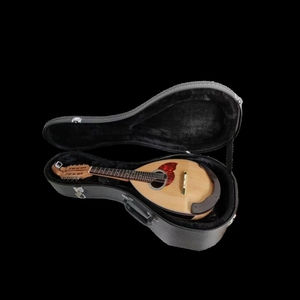
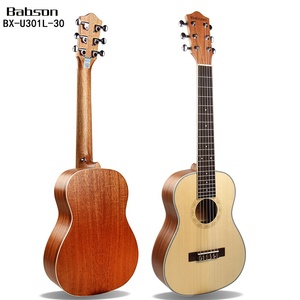
Single-source fulfillment covering resonators, 5-string banjos, bowl-back and F-style mandolins, ukuleles, dreadnoughts, and fitted ABS/fiberglass flight cases for maximum freight optimization.
True Left-Handed Production Lines
Eliminate compromised player conversions. We cast dedicated mirror-image spiders and machine authentic left-handed soundwells so Southpaw musicians experience uncompromised resonance.
Warranty & Worldwide Service Support
Backed by official manufacturer warranty networks, certified service centers, and comprehensive spare parts distribution (cones, biscuits, spiders, tailpieces) to safeguard distributor reputations.
Frequently Asked Questions: Resonator Guitar Procurement & Technical Specifications
What is the structural difference between Round-Neck and Square-Neck resonator guitars? +
Why is hand-spun aluminum alloy preferred over stamped cones in commercial contracts? +
How does body metallurgy affect the final tone of a resonator guitar? +
What international import compliance certifications are required for volume shipments? +
What are typical B2B Minimum Order Quantities (MOQ) and sample lead times? +
Connect with Our Engineering & Sourcing Team
Whether you require full container OEM/ODM production runs of spun-cone resonator guitars, institutional folk string supplies, or specialized flight cases, our direct factory specialists are available to provide immediate wholesale quotations and CAD specifications.
Contact Us