Engineered Cases & Acoustic Specialty Instruments
Explore direct-from-factory stringed cases, composite accessories, and precision-manufactured instruments engineered for distributors, private labels, and brand owners.
Engineering Principles of Commercial Wooden Guitar Cases
A deep dive into cross-grain laminate architecture, structural load dispersion, thermal inertia, and protective shell optimization for tier-1 musical instrument exporters.
3-Ply vs. 5-Ply Archtop Construction
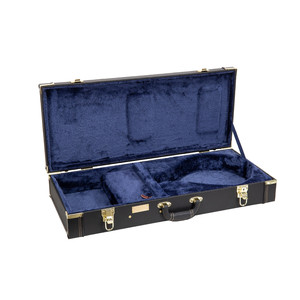
High-grade wooden hardcases rely on rotary-cut birch or poplar veneers cross-laminated under hydraulic press lines. While 3-ply shells (typically 5mm) suffice for basic utility storage, premium export tier specifications demand 5-ply cross-grain lamination (6.5mm to 7.5mm) paired with a pressurized arched top. The convex geometry redistributes vertical impact forces toward the perimeter valance, safeguarding fragile instrument soundboards against catastrophic localized crush loads during maritime consolidation and airline baggage handling.
Thermal Inertia & Humidity Retention
Solid tonewood instruments are hydroscopic, undergoing radial swelling or cracking when exposed to relative humidity fluctuations outside the 45%–55% zone. Unlike injection-molded plastics that transfer thermal changes rapidly, wood exhibits inherent low thermal conductivity. Combined with closed-cell polyurethane cushioning, velvet-lined dual-density EPS foam, and high-tensile Tolex/PVC outer cladding, wooden cases establish an insulated microclimate that retards rapid temperature gradients across transatlantic freight routes.
Hardware Resilience & Valance Seals
Structural integrity depends heavily on secondary mechanical anchorages. Export-grade cases feature heavy-duty gold or chrome-plated drawbar latching systems fastened with split-rivet reinforcement that penetrates both the outer wood carcass and inner structural reinforcement rails. Continuous heavy-gauge aluminum valance tongues and grooves prevent lateral shear under torsion, ensuring lid-to-base alignment remains moisture-tight even when stacked five containers high in containerized multimodal freight.
Material Comparison: Hardcase Shell Technologies
Comparative analysis for institutional buyers evaluating weight, compressive strength, unit costs, and long-term acoustic protection across international supply chains.
| Structural Metric | 5-Ply Plywood Archtop | ABS Molded Plastic | Carbon Fiber Composite | Traditional 3-Ply Flat Top |
|---|---|---|---|---|
| Compressive Resistance (Vertical) | High (140 - 180 kg) | Moderate (80 - 110 kg) | Extreme (200+ kg) | Moderate (70 - 90 kg) |
| Thermal Insulation Coefficient (R-Value) | Superior (~0.85 m²K/W) | Low (~0.22 m²K/W) | Moderate (~0.35 m²K/W) | High (~0.70 m²K/W) |
| Weight per Dreadnought Unit | 4.2 - 5.0 kg | 3.8 - 4.3 kg | 2.4 - 3.1 kg | 3.5 - 4.1 kg |
| B2B Tooling & Molding Costs | Zero / Low (CNC cut) | High ($8k - $15k tooling) | Very High ($15k - $30k tooling) | Zero (Manual template) |
| Aesthetic & Vintage Prestige | Iconic / Heritage Grade | Utilitarian Modern | High-Tech Futuristic | Vintage Budget |
| Bulk Sourcing Unit Cost Index | Moderate ($28 - $48 OEM) | Low-Mid ($22 - $36 OEM) | Premium ($110 - $220 OEM) | Budget ($18 - $26 OEM) |
Over 150 Years of Acoustic Lineage & Craft Excellence
Founded in Jersey City in 1871, the Oscar Schmidt acoustic legacy has defined traditional fretted instruments and protective gear across global stages. As a recognized division of JAM USA LLC and sister brand to Washburn, our manufacturing protocols integrate historical lutherie expertise with automated industrial tolerances.
Our OEM/ODM case and instrument production ecosystem provides overseas brand owners with verified structural consistency, strict formaldehyde emission limits (CARB Phase 2 and TSCA Title VI certified), and a globally integrated supply network spanning acoustic guitars, ukuleles, Autoharps®, banjos, mandolins, and premium flight-grade hardshell cases.
Direct Factory B2B Procurement Desk
Streamline private-label manufacturing, custom mold development, or regional distributorship contracts directly with our product engineering directors.
Send an InquiryFuture Sourcing & Manufacturing Trends (2025-2030)
Anticipate market transitions across environmental sustainability, structural hybridization, and inventory optimization frameworks.
Bio-Resin Adhesives & Sustainable Veneers
With stringent tightening of EU Deforestation Regulation (EUDR) and US Lacey Act enforcements, factories are phasing out traditional urea-formaldehyde bonding resins. Emerging export contracts mandate soy-based protein resins and bio-based polymeric methylene diphenyl diisocyanate (pMDI). Sustainably farmed Paulownia and certified Scandinavian birch cores are replacing unverified hardwoods, delivering a 22% reduction in overall tare weight while fulfilling corporate carbon offset mandates.
Hybrid Shell Composites (Wood-Carbon Hybrids)
While traditionalists favor vintage Tweed or Levant Tolex coverings, premium touring artists and boutique buyers increasingly demand hybrid composites. Exporters are debuting cross-laminated wood substrates wrapped in woven 3K carbon-aramid cloth (similar to our 600D protective lines). This hybrid architecture retains the exceptional acoustic shock damping and thermal insulation of solid ply, while dramatically upgrading puncture resistance and exterior tensile strength under severe road wear.
Telemetry-Integrated Smart Microclimates
The subsequent iteration of premium wooden guitar cases incorporates factory-integrated BLE (Bluetooth Low Energy) telemetry pucks directly into the neck-support accessory compartments. These low-draw sensor modules stream real-time relative humidity, temperature shock, and physical drop impact telemetry directly to consumer iOS/Android apps. This transparency allows high-value stringed instrument brands to adjudicate warranty claims and preserve vintage lacquer finishes dynamically.
Frequently Asked Questions for B2B Importers & Retailers
Clear, authoritative guidance resolving technical specifications, testing protocols, logistical packaging, and OEM customization requirements.
For standardized production dies (such as standard Dreadnought, Classical 4/4, Stratocaster/Telecaster outlines, or standard LP models), standard MOQs start at 50 to 100 units per production run. If your brand requires proprietary CNC interior foam molds or tailored body contours (e.g., custom Autoharp®, 6-string fretless bass, or boutique acoustic configurations), the tooling threshold typically requires 200 units to amortize customized master templates and exterior leatherette embossing dies without tooling surcharges.
A bare wooden case protects against static crush, but air shipment requires drop testing compliance. Professional factories utilize an inner 20mm cross-linked expanded polyethylene (EPE) cradle, suspended headstock clearance (minimum 25mm buffer above and below peghead), and an outer double-wall corrugated master carton (275 lb burst test rating). The suspension neck cradle must immobilize the guitar's heel, preventing whiplash momentum during 10-point corner drops.
Inferior solvent-based contact adhesives release volatile organic compounds (VOCs) that can blister sensitive nitrocellulose lacquer finishes on high-end instruments. Tier-1 exporters utilize automated hot-melt water-based polyurethane adhesives (PUR) that are 100% cure-stable within 72 hours. All inner lining textiles undergo stringent colorfastness rub tests and REACH / RoHS screenings to ensure zero formaldehyde residue or dye leaching onto guitar tops.
Yes. Partnering with an integrated supplier network such as Oscar Schmidt and partner manufacturers enables unified container packing. Shipping guitars pre-cased inside their dedicated hardcases reduces carton volume consumption by up to 34% compared to separate freight packing, entirely eliminates transit scuffing, and significantly reduces import duties in jurisdictions where cased instruments qualify under harmonized musical accessory tariff codes (HS 9209.92).
Standard factory lead times range between 35 to 45 business days for initial samples and 60 to 75 days for full 40-foot HQ container orders (approx. 850–1,100 cased units depending on nesting configuration). For pre-holiday shipments (Q4 delivery), overseas purchase orders must be finalized and locked by late May or mid-June to accommodate container bookings and transpacific maritime transit schedules.
Comprehensive OEM customization includes deep-stamped leatherette exterior embossing, cast metal alloy badges with electroplated enamel fills, customized silk-screened or embroidered interior headstock silks, personalized antique bronze or brushed nickel hardware plating, and custom velvet lining pantones engineered to harmonize with your core instrument colorways.