Top Trusted Custom Guitars Manufacturer & Suppliers
The authoritative global B2B procurement matrix for precision fretted instruments, acoustic engineering, private-label bespoke shop builds, and specialized travel casings.
150+YrsLutherie Heritage (Est. 1871)
±0.02mmCNC Neck Pocket Tolerance
100%Acoustic Humidity Stabilized
50+CountriesGlobal Wholesale Supply Network
Production Portfolio
Precision Musical Gear & Instrument Protection Systems
From custom multi-string headless configurations to military-grade composite flight cases, examine our turnkey OEM manufacturing capabilities engineered to rigid master luthier tolerances.
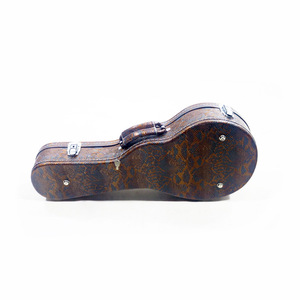
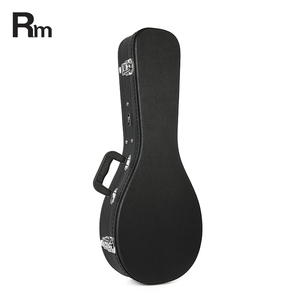
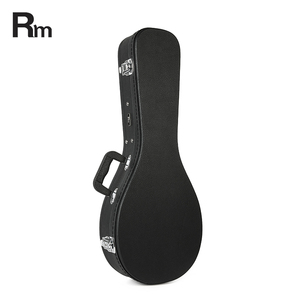
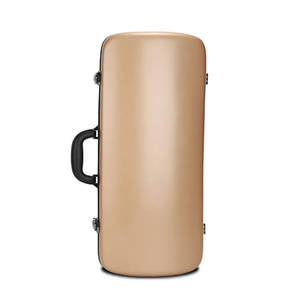
Multi-ply arched cross-laminated wood core clad in high-durability waterproof leatherette. Designed with high-tensile hardware and pressurized acoustic damping foam.
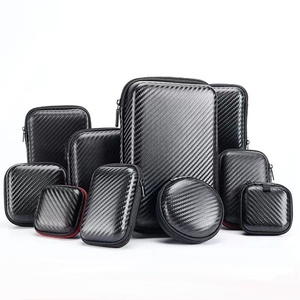
Thermal-formed ethylene-vinyl acetate (EVA) armor with textured carbon-matrix skin. High impact dispersion for studio gear, guitar electronics, and repair tool sets.
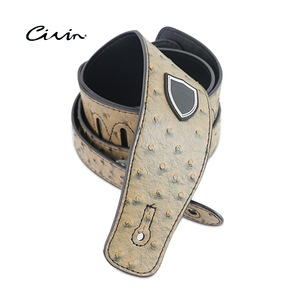
Multi-layered high-density microfiber PU composite strap with reinforced pinhole ends. Balanced pressure alleviation for heavy solid-body electrics and basses.
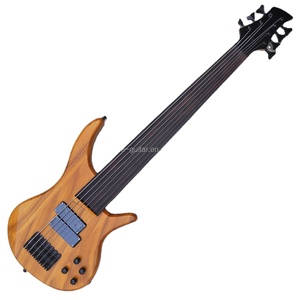
Extended-register fretless electric bass with select tonewood body, stable multi-ply laminated neck, and rosewood fingerboard for microtonal fluidity and rich low-B response.
Technical White Paper
Master Lutherie Engineering & Industrial Production Architecture
How modernized manufacturing solves dimensional instabilty, intonation anomalies, and finishing degradation across multi-market OEM supply channels.
In the contemporary musical instrument supply chain, procuring premium custom electric guitars, acoustic guitars, and traditional folk instruments demands an empirical synthesis of wood chemistry, CAD/CAM micro-machining, and artisan voicing. Commercial brand integrity is intrinsically tied to neck stability, fretwork planar uniformity, and tonal resonance. Sourcing managers and international distributor networks no longer simply evaluate cosmetic finishes; procurement decisions now hinge upon moisture equilibrium indexes, adhesive tensile properties, and neck pocket dimensional repeatability.
As a leading custom guitar manufacturing authority tracing roots to foundational American lutherie traditions established in 1871—anchoring brands such as Oscar Schmidt and working synchronously alongside historic institutions like Washburn under JAM USA LLC—our facilities bridge 19th-century acoustic bracing methodologies with 21st-century five-axis CNC machining. Delivering scalable OEM/ODM guitar solutions requires addressing the fundamental material behavior of tonewoods exposed to transcontinental maritime transit and diverse localized climates.
Material Integrity Directive: Thermo-Vacuum Equilibrium & Cryogenic Stabilization
Every billet of Canadian hard maple, African mahogany, Sitka spruce, and rosewood undergoes a proprietary 60-day dual-cycle drying protocol: first in automated dehumidification kilns down to 6% moisture content, followed by room-stabilization conditioning to 8–10% relative humidity. This cellular annealing permanently immunizes our necks and acoustic soundboards against warping, seasonal fret sprout, and hydro-expansion.
Acoustic resonance is governed by micro-tolerances. In acoustic instruments, ukuleles, autoharps, and mandolins, the soundboard acts as a transducer of mechanical string energy into acoustic wave pressure. Hand-scalloped quarter-sawn spruce bracing must match the deflection profile of each individual wood plate. In our solid-body and semi-hollow electric production lines, high-frequency spectral analyzers map the resonant harmonic nodes of guitar blanks before CNC milling, assuring that body-and-neck assemblies deliver coherent harmonic sustain rather than frequency cancellation dead-spots.
Robotic PLEK Fret Dressing
Automated fret levelling under simulated string tension achieves tolerances within 0.01mm across all 24 frets, eliminating buzz and ensuring optimal low-action playability right out of the shipping carton.
Torrefaction & Pyrolysis
Oxygen-deprived thermal cell baking cures wood resins, converting hemicellulose to mimic the crystalline cell structure of 80-year-old vintage acoustic tonewoods with elevated projection and dynamic headroom.
Thin-Skin UV Curing
Ultra-violet photo-polymer finishes cured at 100% solids eliminate volatile solvent emissions while depositing a glass-thin 0.08mm protective layer that prevents acoustic dampening typical of heavy polyurethane coatings.
Strategic Sourcing Intelligence
Global Procurement & Supply Chain Trends (2025–2030)
Analytical forecasting for institutional music distributors, brand licensors, and e-commerce aggregators managing fretted instrument lines.
The global fretted instrument manufacturing terrain is undergoing systemic re-alignment driven by international environmental treaties, escalating freight tariffs, and evolving consumer demographics. Retail procurement executives must shift away from fragmented transactional purchases toward collaborative partnerships with vertically integrated manufacturing centers capable of providing full compliance auditing, automated customization, and end-to-end casing solutions.
Key procurement vectors currently transforming global supply contract negotiations include:
CITES & FSC Traceability
Mandatory chain-of-custody documentation for Dalbergia species and alternative sustainable substitutes such as roasted Jatoba, Blackwood, and Richlite synthetic fretboards to ensure immediate customs clearance across North America and Europe.
Modular Extended Ranges
Exploding market demand for 7-string, 8-string, multi-scale fanned fret guitars, and fretless electric basses requires modular tooling adaptable to asymmetrical neck carves, dual-action truss rod anchors, and split rail active pickup footprints.
Co-Engineered Protection
Direct bundle manufacturing where instruments are shipped paired with matched thermo-molded EVA or fiberglass cases, slashing distributor repackaging labor, reducing maritime transit damage rates below 0.3%, and lowering volumetric cargo weight.
Direct-to-Dealer Custom Shop
B2B buyers increasingly require low minimum order quantity (MOQ) pilot runs for limited-edition boutique drops, utilizing laser-cut pearl inlays, custom nitrocellulose sunbursts, and boutique coil-wound pickups without requiring 1,000-unit commitments.
Production Benchmark
Industrial Manufacturing Matrix vs. Commercial Workshops
Rigorous comparative benchmarks illustrating why leading global music labels transition their high-volume OEM/ODM contracts to our specialized lines.
Why Tier-1 Music Brands Partner with Our Lutherie Network
Rooted in 150 years of historic instrument craftsmanship, reinforced by modern multi-category industrial scaling.
Our industrial infrastructure is not an anonymous manufacturing operation; it represents the operational continuum of Oscar Schmidt—the iconic musical brand founded in Jersey City, New Jersey, in 1871. Renowned worldwide for patenting and perfecting the Autoharp® and popularizing American acoustic folk stringed instruments, our heritage stands at the center of fretted instrument history. Backed by the institutional scale of JAM USA LLC and operating alongside sister marque Washburn, our OEM manufacturing divisions provide an extraordinary operational bridge between lutherie artistry and global corporate logistics.
When selecting our manufacturing facilities as your contract supplier, you secure unmatched structural advantages:
150+ Years of Acoustic Voicing
Unrivaled institutional archive of soundboard graduation, hand-cut kerfing, and tone-bar placement across 8 instrument families: acoustic guitars, Autoharps, banjos, mandolins, ukuleles, electrics, and basses.
Turnkey Integrated Casings
Unlike standard guitar factories that outsource casings, our in-house hardshell and gig-bag facilities engineer matched fiberglass, ABS, EVA, and wooden flight cases under identical quality management protocols.
True Left-Hand Tooling Parity
Dedicated mirror-tooled CNC programs for left-handed electric, acoustic, and traditional folk configurations ensure left-handed players experience the exact ergonomic contouring and tone-bar balance as standard models.
Clear, uncompromising engineering answers for brand founders, product engineers, and international procurement agents.
What are your minimum order quantities (MOQ) for custom private-label electric and acoustic guitar builds?
Our flexible manufacturing matrix allows for tiered entry points. For fully customized OEM solid-body electric guitars or standard acoustic dreadnought lines, our standard production batch MOQ is 50 units per color/finish specification. For high-end Master Series or boutique drops featuring figured maple burl tops, multi-scale fanned frets, or exotic inlays, pilot batches can be initiated at 25 units. Component accessories, molded EVA tool cases, and hardshell cases generally require 100 units per mold tooling cycle.
How does your factory ensure compliance with international CITES timber export regulations?
All tonewoods are sourced through strictly certified, FSC-verified timber brokers. For species governed under CITES Appendix II (such as specific Dalbergia rosewoods and genuine mahogany), our export department secures pre-approved CITES re-export certificates and phytosanitary clearance documents prior to container sealing. Furthermore, we maintain specialized production cells using sustainable high-grade engineered tonewoods (such as thermo-treated Jatoba, baked maple, and acoustic-grade composite ebony) that require zero CITES filings for friction-free global customs entry.
Can your engineering team reverse-engineer vintage neck profiles or develop proprietary body contours?
Yes. Utilizing industrial high-density optical 3D surface scanners, we can non-destructively digitize any historic neck silhouette—from vintage 1959 rounded C-shapes to modern progressive ultra-thin D or asymmetrical profiles. Our engineering team translates the point-cloud data into parametric STEP/IGES CAD files for five-axis CNC routing within ±0.02mm repeatable accuracy across thousands of production units.
What finishing options are available, and how do they balance tone resonance with durability?
We operate three dedicated finishing clean-rooms: (1) High-solids UV polyester/polyurethane cured under robotic UV arrays, yielding exceptional impact resistance with a total film thickness of only 0.08–0.12mm; (2) Traditional hand-rubbed thin nitrocellulose lacquer for vintage reissue lines seeking natural wood breathing and authentic lacquer checking over time; and (3) Open-pore satin polyurethane finishes that maximize the acoustic resonance of folk soundboards while providing soft, non-stick neck ergonomics for high-velocity playing.
How do your matched cases and gig bags protect against lacquer reactions and transit shocks?
A major vulnerability with outsourced musical instrument packaging is off-gassing adhesives that chemically react with nitrocellulose or thin-poly finishes, causing clouding or finish melting. Our wooden, EVA, and fiberglass hardshell cases utilize certified solvent-free waterborne adhesives and non-staining micro-fiber crushed velvet. Cushioning systems are engineered using dual-density EVA and closed-cell memory foams contoured to disperse drop impacts along the perimeter ribs rather than transferring kinetic shock to the vulnerable guitar headstock joint.
What is the standard production lead time from CAD sign-off to container loading?
For initial prototype development and first-article golden sample approval, our turnaround is approximately 30 to 45 business days. Once the golden sample is verified and production tooling/CNC scripts are locked, mass production runs require 60 to 75 days, which includes our non-negotiable 14-day post-finish acoustic stabilization and settling period before final PLEK setup, inspection, and export crating.
Ready to Scale Your Brand's Lutherie Manufacturing?
Initiate a direct dialog with our engineering team. Whether you need custom OEM solid-body runs, traditional folk instruments, or co-engineered carbon-pattern flight cases, we engineer solutions to elevate your brand's market authority.