Precision Hardware & Accessories
Engineered Transit Gear & Musical Craft Portfolio
Explore our industrial-grade protective cases, handcrafted stringed instruments, and custom-tension accessory collections manufactured under stringent quality tolerances for the Japanese and international markets.
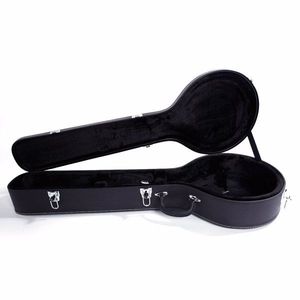
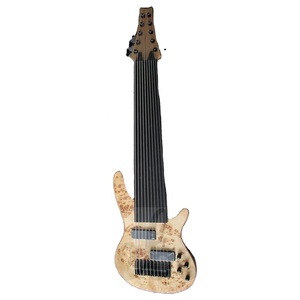
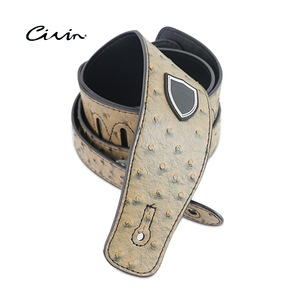
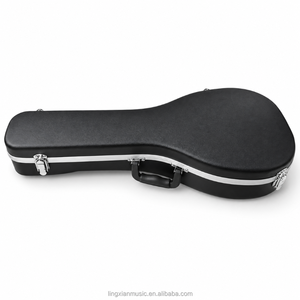
The Tokyo Transit Stress Factor: Engineering for the Yamanote Line Squeeze
The operational landscape for stringed instrument carriage in Tokyo is distinct from almost any other metropolitan territory worldwide. Musician-commuters traversing the high-density rail arteries—such as the JR Yamanote Line, Chuo Line Rapid, and Tokyo Metro Ginza or Tozai lines—encounter peak morning congestion rates exceeding 180% passenger capacity. Under these conditions, an electric bass in a standard unreinforced soft bag is subjected to severe continuous lateral compression and unpredictable point-load shocks against steel handrails and automatic sliding doors.
As a seasoned supplier and exporter supplying retail partners in Ochanomizu, Shibuya, and Shinjuku, our design architecture replaces obsolete polyurethane single-foam padding with a sophisticated three-stage laminate: an ultra-abrasion-resistant 1680D Ballistic Nylon outer shell with hydrophobic polyurethane backing, a structural core of high-rebound closed-cell EVA foam (density >45kg/m³), and an internal high-elasticity EPS honeycomb perimeter skeleton. This prevents lateral crush forces from bottoming out against vulnerable neck heel joints, preamps, and machine heads, ensuring instruments arrive at rehearsal studios in Shimokitazawa and Koenji in pristine, playable tune.
Headstock Decoupling System
Reinforced neck cradles incorporating velcro-locked micro-fleece stabilizing blocks absorb headstock snap moments, protecting both classic straight headstocks and delicate tilted 5/6-string configurations.
Tsuyu Season Climate Isolation
Tokyo’s June-July rainy season (Tsuyu) causes rapid humidity spikes from 40% to 90% RH. Our internal chambers feature microporous waterproof barriers that retard hygroscopic shifts and stabilize wood hydration.
Low-Profile Center of Gravity
Tailored shoulder harness mounting angles keep long-scale bass necks below average subway clearance overhead lines, preventing collisions with ticket gates, escalators, and low ceiling corridors.
Tokyo Bass Retail Trends: The Shift from Flight Cases to Hybrid Enclosures
Over the last five fiscal years, commercial buyers for prominent instrument retail chains across the Kanto plain have reported a clear structural shift in end-user preferences. Traditional ABS and heavy plywood flight cases—while still standard for long-distance domestic touring via freight vans—are becoming unsellable for everyday metropolitan gigs due to the total unviability of navigating Tokyo's steep pedestrian overpasses and cycling infrastructure with 10kg+ flight cases.
Consequently, the demand for Hybrid Rigid Gig Bags (semi-hard enclosures weighing under 3.5kg) has surged by 42% year-on-year among Japanese working bassists. Professional musicians who frequent live houses in Roppongi, Akasaka, and Shibuya require high protection with high urban velocity: waterproof taped YKK zipping, hideaway breathable air-mesh backpack harnesses, high-visibility reflective piping for nighttime bicycle commuting, and designated compartments for compact class-D amplifiers (Darkglass, Gallien-Krueger) and pedalboards.
Bicycle & Scooter Commuting Ergonomics
Dual sternum-clamping retention harnesses and load-lifter straps keep long-scale bags stable against the spine, eliminating dangerous side-sway during tight-corner cycling in Nakano and Suginami.
Modular Storage Configuration
Japanese session players carry modern iPad chart interfaces alongside heavy shielded cables. Our multi-tiered accordion pockets distribute accessory mass evenly down the center vertical spine.
Minimalist Visual Aesthetics
Unlike Western markets favoring rugged military camouflage patterns, Tokyo retail distribution favors understated matte graphite, dark charcoal, and refined bespoke leather appointments matching urban corporate attire.
Oscar Schmidt & Goze Music: Over a Century of Proven Luthier Integrity
Founded in Jersey City, New Jersey, in 1871, Oscar Schmidt established the historical benchmark for accessible, dependable string craft—earning legendary status as the home of the original Autoharp® and developing folk, acoustic, and bass instruments that defined generations of performance. Today, operating under the international manufacturing and distribution umbrella of JAM USA LLC and Washburn, our enterprise infrastructure bridges historical craftsmanship with advanced automated factory production lines.
Our OEM/ODM export manufacturing divisions maintain total vertical supply chain integration: from CNC automated multi-axis wood machining, precision bridge and fret slotting, and proprietary leather stitching to robotic ultrasonic welding of high-density EVA textile shells. By operating certified ISO9001/ISO14001 facilities with strict environmental and chemical safety compliance (RoHS, REACH, and California Prop 65), we guarantee Japanese corporate importers that every shipment meets flawless dimensional consistency, clean lot traceability, and comprehensive warranty coverage.
Strict Quality Control
100% incoming raw material inspection for tensile strength, zip-cycle endurance tests (>10,000 pulls), drop-impact stress validation, and zero-lead hardware guarantees.
Full OEM/ODM Customization
Bespoke industrial design services including custom laser-cut silicone badges, embossed luxury pull tabs, custom EVA mold stamping, and tailored internal compartment geometries.
Direct Tokyo Sea & Air Logistics
Streamlined maritime container logistics to the Port of Tokyo and Yokohama Port, combined with rapid sample routing to Haneda and Narita for seasonal buyer assessments.
B2B Import Guidance
Frequently Asked Questions for Tokyo Importers & Distributors
Critical compliance, dimensional fits, and logistics information for professional musical instrument retail buyers across the Kanto region.
What are the shipping lead times, customs clearance terms, and port destinations for Tokyo orders?
We provide full FOB, CIF, or DDP pricing directly serving the Port of Tokyo (Aomi/Ohi terminals) or Yokohama Port. Maritime transit typically requires only 3 to 7 days from our primary deepwater export facilities. For rapid restocking and prototype reviews, express air freight delivers to Tokyo Narita (NRT) or Haneda (HND) within 48 to 72 hours. All shipments include comprehensive export packaging with barcoded master cartons, desiccants suited for ocean freight, and compliant Japanese commercial invoices.
Do your bass gig bags accommodate traditional 34-inch scale and extended 35/36-inch multi-scale basses?
Yes. Our standard electric bass models accommodate all classic 34-inch long-scale instruments (Jazz Bass, Precision Bass configurations). For modern extended-range and multiscale instruments (5-string, 6-string, Dingwall, or Fodera styles), we manufacture an extended 124cm internal length chassis equipped with adjustable bottom strap-button protection blocks and widened headstock channels to prevent side friction against tuning machines.
How does your export facility handle Japan-specific environmental and textile compliance standards?
Every textile, synthetic leather, zipper slider, and adhesive used in our production complies strictly with the Japanese Household Goods Quality Labeling Act and international chemical standards. All materials are certified free from restricted azo dyes, formaldehydes, phthalates, and organotin compounds. Detailed Safety Data Sheets (SDS) and test certifications from international laboratories (SGS / Intertek) are furnished alongside batch orders.
What are the minimum order quantities (MOQ) for custom-branded OEM orders for Japanese retail chains?
For custom-branded OEM production featuring tailored rubber logos, woven labels, and personalized embroidery, our standard minimum order quantity starts at 200 units per colorway/style. For established retail chains requiring bespoke industrial patterns, proprietary mold tooling, or custom exterior textile dyes, customized runs start from 500 units with complete pre-production physical sign-off within 15 business days.
Can hybrid gig bags survive dense moisture cycles during Tokyo's summer and sudden downpours?
Our bags utilize dual-barrier protection: the outer 1680D high-density nylon features an exterior DWR (Durable Water Repellent) fluorocarbon coating backed by an internal laminated PU film rated up to 10,000mm hydrostatic head. Additionally, all zippers across our pro-tier gig bags utilize reverse-coil inverted seams or watertight PU-laminated tape closures, supplemented by a hidden integrated bottom pocket containing a high-visibility waterproof rain cover.
Request Tokyo B2B Wholesale Pricing & OEM Catalog
Partner with a legacy string craft and instrument transit manufacturer. Connect directly with our international export engineering team to request factory pricing tiers, material samples, and custom design specs.
Get Catalog