Export-Ready Fretless Electric Basses & Components
Direct factory supply lines tailored for music distributors, regional conservatories, and commercial instrument retailers across Tashkent, Samarkand, and Bukhara.
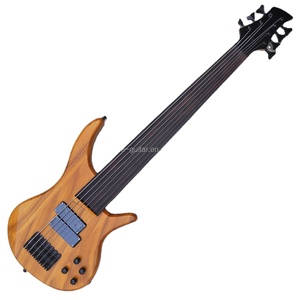
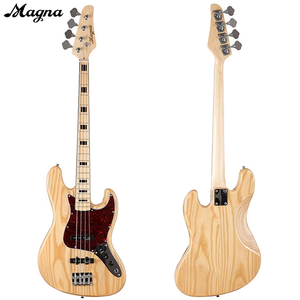
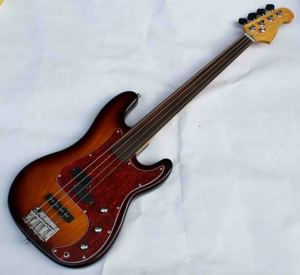
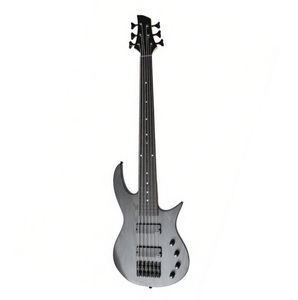
Fretless Bass Applications Across Uzbekistan's Sonic Ecosystem
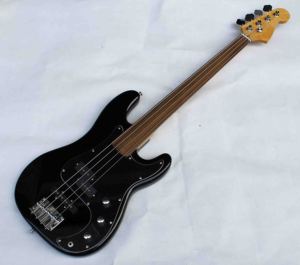
The microtonal continuity of the fretless bass fingerboard establishes an organic bridge between traditional Central Asian modal architecture and contemporary electrified performance.
Shashmaqam & Microtonal Integration
Traditional Uzbek and Tajik classical cycles, specifically Shashmaqam, rely on untempered intervals, neutral thirds, and subtle glissandi natively produced by traditional plucked lutes like the Tanbur and Dutar. Standard fretted basses force Western equal temperament onto these modal textures, creating harmonic friction. A fretless bass gives regional bassists the exact, uninterrupted fingerboard freedom needed to mirror complex vocal microtones and fretless lute ornamentation smoothly.
Tashkent Ethno-Jazz & Fusion Conservatories
At institutions such as the State Conservatory of Uzbekistan, modern composition students and studio arrangers increasingly combine European jazz harmonies with local folk themes. Extended-range fretless basses—such as 5-string, 6-string, and custom multi-string configurations—supply the resonant, singing mid-range and distinctive "mwah" timbral inflection required for lead fusion melodies and deep acoustic-like harmonic support.
Live Stage & Commercial Wedding Orchestras
Uzbekistan’s vibrant live performance industry, including major wedding banquet halls (To'yxona) and touring pop ensembles, demands flexible dynamic ranges. Modern pop arrangements require tight, punchy electric bass lines alongside seamless glides that blend naturally with bowed Gijak or traditional Ney lines. Factory-direct 4-string and 5-string fretless instruments offer a reliable alternative to acoustic upright basses on loud, amplified stages.
Navigating Uzbekistan’s Continental Climate: Luthier Engineering Realities
Overcoming severe seasonal humidity swings between dry summer heat and cold winter heating through dedicated manufacturing protocols.
Industrial Wood Curing & Dimensional Fingerboard Stability
Uzbekistan features an extreme continental semi-arid climate. Temperatures in summer often rise above 40°C with relative humidity dipping below 20%, while winters bring freezing conditions with artificial dry heating indoors. For a standard fretted instrument, fret sprout is an annoying aesthetic flaw. For a fretless bass, however, uneven fingerboard contraction causes fatal relief shifts, dead spots, and uneven tonal buzz along the string path.
Our manufacturing facility mitigates these harsh conditions through multi-stage RF (Radio Frequency) vacuum kiln drying coupled with prolonged post-cure atmospheric acclimation. By stabilizing our Hard Maple, Swamp Ash, and specialized fingerboard blanks (dense Rosewood, Ebonol, and high-density Phenolic composites) to an equilibrium moisture content (EMC) of 6% to 8%, our instruments resist radical shrinkage and mechanical warping when transported across the dry Central Asian steppes.
Additionally, our dual-action truss rod systems are encased in rigid dual carbon-fiber stabilization rods. This ensures that instrumentalists and stage technicians in Tashkent, Fergana, or Samarkand can adjust neck relief accurately without risking fingerboard delamination or truss rod thread seizure under extreme atmospheric variations.
String Selection Dynamics: Flatwound vs. Roundwound Wear Resistance
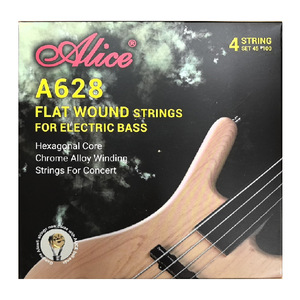
In high-wear professional applications, unlined and lined fretless fingerboards can suffer surface groove wear from traditional roundwound strings. Our industrial export packages systematically recommend and supply matched chrome-alloy flatwound sets—such as the Alice A628 Hex-Core Flatwound series. The ultra-smooth winding surface preserves the mirror-polished gloss of the fretboard surface, increases fundamental note projection, and minimizes high-frequency finger noise. This delivers the warm, double-bass-like sub-frequencies favoured by traditional Central Asian string arrangements.
Why Retail Chains & Institutional Importers Partner With Us
Rooted in historic stringed-instrument traditions dating back to 1871, combined with automated CNC production lines and reliable global logistics.
Century-Old Craft Heritage
Built upon classic American lutherie disciplines honed over 150 years. We combine time-tested acoustic principles with specialized mass-production protocols for complex, unlined fretless fingerboards.
Full OEM/ODM Branding Support
We serve retail musical brands, educational conservatories, and private labels. Our production lines support custom headstocks, personalized pearl inlays, custom finishes, and tailored pickup configurations.
Bespoke Scale Lengths & String Layouts
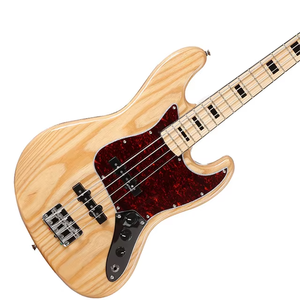
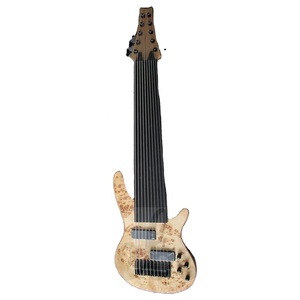
From standard 4-string and 5-string Jazz and Precision body contours to complex 6-, 7-, and 10-string extended range basses featuring hand-matched solid tops, burl maple veneers, and multi-laminate neck heels.
Door-to-Door Central Asian Logistics
Streamlined logistics routes serving Uzbekistan via specialized rail and multimodal freight lines. Safe transport is guaranteed through moisture-barrier protective packaging and custom hardshell flight cases.
Frequently Asked Questions: B2B Sourcing in Uzbekistan
Practical answers addressing import duties, minimum orders, local setup, and technical performance.
Q1: What is the Minimum Order Quantity (MOQ) for custom OEM fretless bass shipments?
For standard catalog configurations (such as the Magna MJB-03 series), our trial MOQ starts at 10 to 20 units. For custom OEM specifications requiring personalized silk-screen or inlaid headstock logos, custom body routings, or non-standard preamps, typical initial runs begin at 30 to 50 units. Mixed container loads with fretted guitars, folk instruments, and padded gig bags are supported to help regional dealers manage their retail floor inventory.
Q2: How do your instruments survive the dry summer heat and winter conditions of Tashkent?
Every wooden component undergoes kiln drying down to 6-8% moisture content, followed by multi-week stabilization in climate-controlled resting racks. Fingerboards are sealed with specialized hydrophobic natural penetrating oils or ultra-tough high-gloss polyurethane seals. Furthermore, all necks incorporate internal carbon-fiber stiffening bars to prevent seasonal back-bow and S-warping.
Q3: Can these fretless basses be tuned to accommodate Central Asian microtonal or modal tunings?
Yes. The fretless fingerboard has no fixed metal fret divisions, allowing players complete freedom over intonation. Bassists can easily adjust their technique to execute Quarter-Tone systems, Turkish/Arabic Makam intervals, and traditional Shashmaqam intervals. Furthermore, our bridge saddles offer wide intonation travel, letting musicians use heavier gauges or drop-tunings without running out of compensation adjustment.
Q4: What are the payment terms, customs clearance documents, and transport options for Uzbekistan?
We work under standard international commercial terms (FOB, CIF, or DAP Tashkent). We provide full customs clearance packages, including Certificates of Origin, international packing lists, commercial invoices, and wood species declarations (CITES documentation where required). Payments are handled securely via T/T bank transfers and confirmed Irrevocable Letters of Credit (L/C).
Q5: What fingerboard materials perform best for professional conservatory use?
For music schools and intensive conservatory practice, we recommend dense Rosewood, Ebony, or engineered Phenolic composite fingerboards paired with flatwound strings. Phenolic fingerboards deliver exceptional surface hardness that resists string-groove wear, maintains uniform sustain across the entire neck, and does not crack under low atmospheric humidity.
Q6: Do you supply full commercial accessories alongside wholesale orders?
Yes. As a comprehensive string instrument manufacturer, we supply fitted hardshell wooden cases, heavy-duty padded waterproof gig bags, hex-core flatwound replacement strings, instrument cables, setup toolkits, and spare dual-action truss rod hardware in wholesale carton batches.
Initiate Factory-Direct Wholesale Sourcing
Connect directly with our engineering and international trade desks to request our comprehensive B2B instrument catalog, factory unit pricing, OEM sample production schedules, and dedicated freight solutions for Uzbekistan.