Export Catalog & Associated Stringed Gear Architecture
Explore our industrial musical instrument accessories, precision CNC components, and protective case solutions engineered for European and international distribution.
The European musical instrument market, anchored predominantly by Germany’s robust distribution framework, maintains the highest standards of technical scrutiny, acoustic fidelity, and chemical compliance on the globe. As commercial trade hubs in Frankfurt, Treppendorf, Markneukirchen, and Hamburg dictate procurement trajectories across the European Union, sourcing a mechanical accessory such as a guitar capo transcends basic transactional purchasing. To German master luthiers (Gitarrenbaumeister), orchestral technicians, wholesale distributors, and retail procurement directors, a capo is not an incidental gadget; it is a precision-engineered acoustic clamping system that directly influences string intonation, fretboard longevity, lateral fret crowning, and mechanical resonance.
When evaluating qualified guitar capos exporters catering to the German commercial sphere, procurement specialists must balance classical ergonomics with modern manufacturing methodologies. An exporter supplying the German Federal Republic must demonstrate comprehensive compliance with stringent European Union directives—notably Regulation (EC) No 1907/2006 (REACH) concerning plasticizers and polycyclic aromatic hydrocarbons (PAHs) in elastomeric pads, along with Directive 2011/65/EU (RoHS). Concurrently, engineering excellence demands micrometer-accurate pressure calibration to counter the notorious pitch-sharpening distortion caused by excessive spring load. This technical guide serves as an authoritative B2B evaluation framework for German importers, wholesalers, catalog brands, and OEM buyers navigating international supply channels.
150+
Years Acoustic Pedigree (Est. 1871)
±0.02 mm
CNC Machining Tolerance
100%
REACH & RoHS SVHC Certified
< 1.5 Cents
Intonation Pitch Deviation
The fundamental engineering dilemma of any guitar capo lies in resolving the physical vector forces applied across uneven string core diameters. In a standard set of acoustic bronze strings, the diameter varies drastically from 0.012 inches (unwound high E) to 0.053 inches (wound low E). Traditional mass-produced trigger capos apply a uniform linear spring force across the entire fretboard. Because the heavy wound strings encounter the clamping pad first, the thinner treble strings either buzz due to insufficient pressure, or the player over-tightens the mechanism, pulling wound strings downward into the fret spacing and causing sharp intonation shifts exceeding 8 to 15 cents.
Screw-Driven Micrometer Clamping
Utilizes an ultra-fine pitch screw mechanism allowing the musician to apply the precise micro-Newtonian pressure required to eliminate fret buzz without driving the string out of pitch. Preferred in German recording studios and high-end acoustic fingerstyle environments.
Tempered Steel Trigger Systems
Engineered for swift single-handed positioning on stage. Our export models utilize calibrated oil-tempered silicone-manganese spring wire (65Mn) that undergoes cyclically tested fatigue protocols ensuring a stable tension curve across 50,000+ operations without degradation.
Adaptive Radius Technology (ART)
Features an internal articulating bar that instantly matches the complex compound radii common in modern German lutherie (ranging from 7.25" vintage Fender profiles up to 16" flat acoustic fingerboards and completely flat classical fretboards).
| Capo Topology |
Structural Metallurgy |
Pad Shore Durometer |
Intonation Deviation |
Primary Target Instrument |
| Micrometer Screw Dial |
Aircraft 6061-T6 Aluminum / Brass Thread |
55° Shore A Vulcanized Silicone |
± 0.8 Cents |
Handmade Boutique Acoustic / Archtop Guitars |
| Fast-Action Trigger |
High-Pressure Die-Cast Zamak-3 Zinc Alloy |
65° Shore A Synthetic TPE Polymer |
± 2.5 Cents |
Electric & Acoustic Stage Touring Instruments |
| Yoke-Style Center Screw |
Hand-Polished 304 Stainless Steel |
50° Shore A Natural EPDM Rubber |
± 0.5 Cents |
Vintage Vintage Dreadnought & Bluegrass Instruments |
| Classical Flat Clamp |
Ultra-Light CNC Machined Carbon Fiber |
45° Shore A Inert Elastomer |
± 0.3 Cents |
Nylon-String Concert Classical Guitars (52mm Nut) |
To capture market share in Germany, an international exporter must align product lines with specific regional traditions, institutional standards, and acoustic performance cultures. The German musical sector is uniquely diversified, requiring specialized capo designs tailored to distinct use cases:
Academic & Music School Pedagogy (VdM)
The Association of German Music Schools (Verband deutscher Musikschulen - VdM) and state conservatories place premium emphasis on classical nylon-string guitars with wide, unradiused fretboards (typically 50mm to 54mm width). Classical capos must feature perfectly flat pressure bars and soft elastomeric dampening that mimics natural finger tissue, avoiding damage to delicate nickel-silver frets or French-polished shellac neck finishes.
The Folk, Celtic, & Liedermacher Circuit
From the enduring German Liedermacher (singer-songwriter) culture to open-air folk festivals in Bavaria, Thuringia, and the Ruhr, rapid key transpositions are paramount. Performing artists require ergonomic quick-release trigger capos that can park securely on the headstock behind the nut without de-tuning the instrument or scratching nitrocellulose lacquers.
High-End Luthier & Studio Production
Germany houses world-renowned boutique guitar makers who demand minimalist, low-profile stainless steel or CNC billet titanium capos. In pristine recording studio environments across Berlin, Cologne, and Munich, micro-adjustable yoke capos prevent mass-loading of the neck, maintaining the natural sustain, overtone spectrum, and harmonic balance of the instrument.
Exporters attempting to clear German customs (Zollamt) without comprehensive European documentation face immediate shipment impoundment, fines, or mandatory product destruction. Commercial buyers such as Thomann, Music Store Professional, and regional buying groups mandate full regulatory dossier integration before approving procurement SKUs:
REACH Regulation (EC 1907/2006)
Direct skin-contact accessories must be independently certified free from SVHCs (Substances of Very High Concern). Rubber cushions are strictly lab-tested for restricted phthalate plasticizers (DEHP, DBP, BBP, DIBP) and Polycyclic Aromatic Hydrocarbons (PAHs) below statutory threshold limits (AfPS GS 2019:01 PAK Cat. 1).
VerpackG & LUCID Packaging Register
German packaging legislation holds importers and their overseas supply partners responsible for circular recycling. All retail blister cards, FSC-certified kraft boxes, and shipping cartons exported to Germany must be fully registered with the Zentrale Stelle Verpackungsregister (ZSVR) through active dual system recycling contracts (e.g., Der Grüne Punkt, Interseroh).
Non-Reactive Lacquer Contact (DIN EN 71-3)
German lutherie frequently employs traditional nitrocellulose and spirit varnishes that are chemically vulnerable to solvent migration. Our exported capo pads utilize platinum-cured, plasticizer-free vulcanized silicone compound guarantees that prevent finish softening, haze marks, or chemical cross-linking on valuable instrument necks.
Rooted in a stringed-instrument lineage dating back over 150 years to Jersey City, New Jersey, Oscar Schmidt—operating within the global framework of JAM USA LLC alongside iconic sister brands like Washburn—combines historic acoustic heritage with state-of-the-art manufacturing automation. While widely celebrated as the definitive home of the Autoharp® and premier folk string instruments, our industrial engineering facilities operate proprietary high-tonnage die-casting, automated electrostatic powder coating, multi-axis CNC milling, and high-modulus composite fabrication lines.
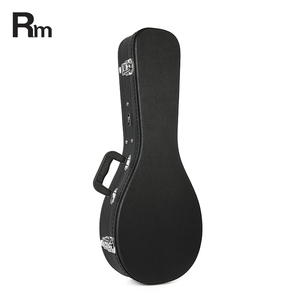
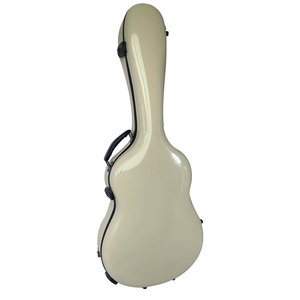
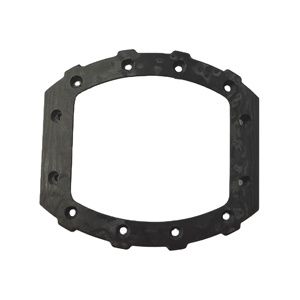
For German wholesalers, private label musical brands, and OEM buyers, this heritage translates into unequaled operational stability. We bridge the gap between traditional tonal empathy and industrial manufacturing scale. Whether producing custom-branded trigger capos with laser-etched retailer logos, high-tensile fiberglass and wooden flight cases (such as our precision A-shape mandolin cases), or advanced CNC carbon-fiber components, our multi-tier Quality Assurance protocols mirror German industrial expectations: batch tensile testing, metallurgical salt-spray corrosion resistance tests (ISO 9227), and strict adherence to dimensional tolerances within ±0.02 mm.
Direct B2B OEM / Private Labeling
Complete custom branding options including pad-printing, fiber-laser annealing, custom Pantone anodizing, and German-language retail-ready FSC packaging tailored to your regional SKU strategy.
Multi-Category Consolidation
Consolidate your ocean containers or air freight shipments across our 8 core instrument and accessory divisions, reducing landing costs, customs clearing overhead, and minimum order friction.
Direct European Freight Logistics
Seamless execution under Incoterms 2020: FOB Shanghai/Ningbo, CIF Hamburg/Bremerhaven, or fully landed DDP delivery directly into your regional distribution center in Germany, Austria, or Switzerland.
What are the exact HS customs tariff classification codes for importing guitar capos into Germany?
Guitar capos exported to Germany are classified under EU TARIC code HS 9209.92.00.00 ("Parts and accessories for musical instruments of heading 9202: Other"). In Germany, the standard third-country import customs tariff duty is typically 3.2%, accompanied by the national standard import turnover tax (Einfuhrumsatzsteuer - EUSt) of 19%. As an experienced international exporter, we supply fully compliant commercial invoices, packing lists with net/gross weights, and preferential Certificates of Origin to streamline clearance through German main customs offices (Hauptzollamt).
How do your silicone pads prevent chemical reactions with nitrocellulose finishes common in German boutique guitars?
Traditional low-cost capos utilize cheap vulcanized rubber loaded with volatile plasticizers and processing oils. Over time, these petrochemicals migrate into the porous nitrocellulose lacquer, resulting in clouding, softening, or permanent finish degradation. Our export-grade capo cushions are manufactured from 100% platinum-cured solid silicone or medical-grade cross-linked thermoplastic elastomers (TPE). These inert polymers contain zero plasticizers, zero phthalates, and undergo high-temperature post-curing baking cycles to remove all volatile organic compounds (VOCs), guaranteeing complete surface inertness upon contact with delicate finishes.
What is the Minimum Order Quantity (MOQ) for custom private-label guitar capos destined for Germany?
For standard production models carrying standard export packaging, our baseline MOQ begins at 500 units per variant. For custom OEM/private-label projects—including bespoke laser-engraved logos, custom color anodization (matte black, titanium gray, vintage bronze, rose gold), and localized German retail blister packaging complying with the German Packaging Act (VerpackG)—our flexible production lines accommodate MOQs starting at 1,000 to 2,000 units, with scalable capacity exceeding 150,000 units monthly.
Do your guitar capos conform to EU REACH and RoHS environmental safety mandates?
Yes. Every export batch undergoes stringent material testing through accredited international test laboratories (such as SGS or TÜV SÜD). We furnish complete test certificates verifying that all structural metals, electroplating coatings, internal steel springs, and polymer dampeners comply with REACH Regulation (EC) No 1907/2006 for SVHCs (including lead, cadmium, hexavalent chromium, and organotin compounds) and EU RoHS Directive 2011/65/EU and its amendment (EU) 2015/863.
How is mechanical spring tension calibrated to ensure zero fret buzz while preventing string sharpening?
Our trigger-style capos employ computer-calibrated 65Mn spring wire specifically tempered to generate a clamp force profile between 18.5 N and 21.0 N across the effective fingerboard width. This precise force threshold provides adequate downward vector pressure to stop buzzing on thick 0.053" acoustic low-E strings while remaining sufficiently gentle to prevent pushing lighter 0.012" unwound strings into the fret well. For master-grade applications, our micrometer-screw capos provide infinite user-controlled tension adjustment, achieving intonation variances of less than ±0.8 cents.
Can German clients order consolidated shipments across instruments, cases, and guitar accessories?
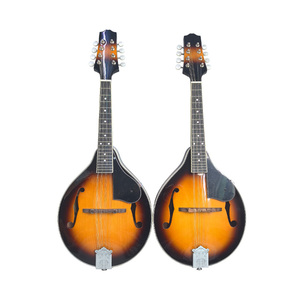
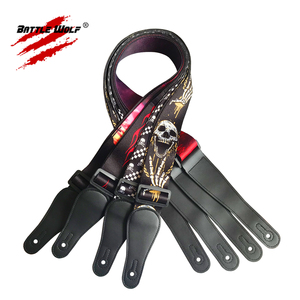
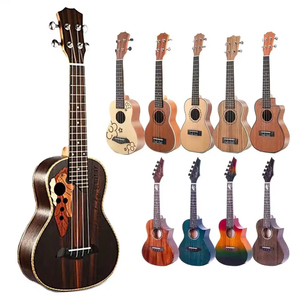
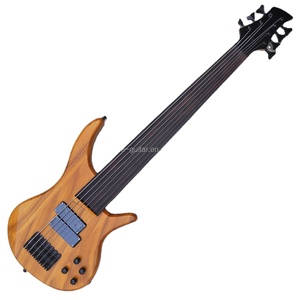
Absolutely. Leveraging the comprehensive manufacturing capabilities of Oscar Schmidt and JAM USA LLC, commercial clients can combine diverse instrument and accessory lines into unified sea-freight containers (FCL) or palletized LCL shipments. You can consolidate guitar capos, custom polyester guitar straps, fiberglass and wooden mandolin cases, concert ukuleles, and specialty multi-string instruments into a single commercial order, optimizing container cubing efficiency and drastically reducing landed logistics overhead.
Partner with a World-Class Musical Instrument Hardware Exporter
Request our complete 2026 OEM/B2B Hardware Specification Catalog, compliance documentation dossiers, and wholesale pricing matrices tailored for European importers and retailers.