Guitar Hardware Factories & Supplier in Seattle

Industrial-grade precision component engineering, custom CNC milling, and cold-rolled metallurgical solutions supporting Pacific Northwest lutherie, retail OEMs, and global instrument manufacturers.

Direct Factory Catalog

High-Tolerance Guitar Hardware & Mechanical Assemblies

Manufactured under strict ISO9001 and RoHS tolerances. Sourced by commercial instrument brands, custom luthiers in King County, and international distributors demanding acoustic resonance, anti-fatigue metallurgies, and micro-inch surface treatments.

±0.005mm
CNC Machining Tolerance
150+ Years
String Craft Tradition (Est. 1871)
96 hrs
Salt-Spray Corrosion Resistance
100%
RoHS & REACH Compliance
Localized Engineering Impact

Precision Applications Across Puget Sound & The Pacific Northwest

From custom luthier workshops in Ballard and Fremont to large-scale supply chain fulfillment across Washington State, guitar hardware must satisfy specific acoustic and regional environmental conditions.

Marine Moisture & Rust Defiance

Seattle’s maritime climate features sustained 70-85% relative humidity and saline moisture from Puget Sound. Standard pot-metal and low-grade nickel platings oxidize rapidly, seizing truss-rod nuts and bridge saddles. Our 304/316 grade stainless steel and electro-galvanized finishes offer 96-hour neutral salt-spray certification, guaranteeing rust-free operation for touring musicians and seaside venues alike.

Boutique Luthier Setups in King County

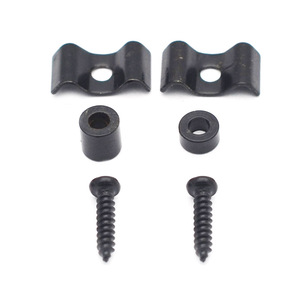
Seattle is a world-renowned cradle for alternative rock, grunge, indie folk, and custom lutherie. Independent luthiers require ultra-low batch minimum order quantities (MOQs) for precision investment-cast saddles and high-mass string fixation clips that preserve natural sustain and fundamental body frequencies across extended-scale and multi-scale fretboards.

Commercial OEM Integration & Repair Depot Logistics

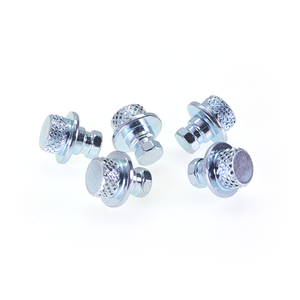
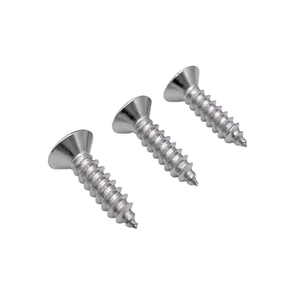
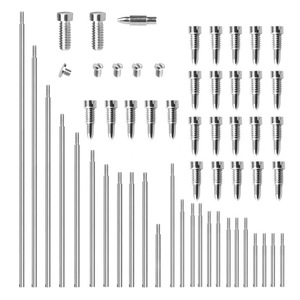
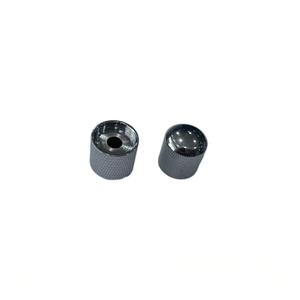
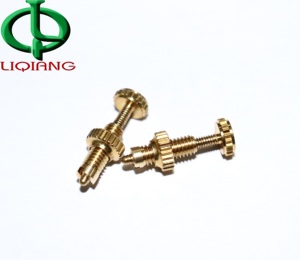
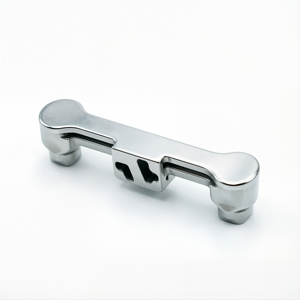
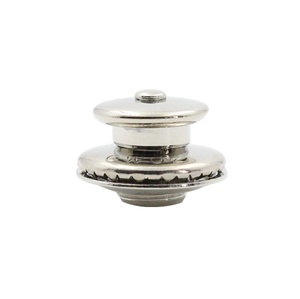
Regional instrument chains and repair centers from Tacoma to Bellevue require drop-in dimensional compatibility. Our screws, potentiometer knurled knobs, and OWOZ strap anchors are machined to imperial and metric standard tolerances, ensuring seamless retrofitting on classic vintage restorations, Autoharp chord bar mechanisms, and modern electric stages.

Technical Perspective: Acoustic Resonance Transfer in Ferrous vs. Non-Ferrous Alloys

In electric guitar and folk instrument design, hardware does not simply bind structural wood components together; it forms the critical electro-acoustic boundary condition where vibrating strings interface with solid tone blocks. In high-tension instruments—such as Oscar Schmidt Autoharps with 36 or 37 tensioned wire strings, or electric guitars driven by hard-tail tremolo systems—the selection of bridge saddle metallurgy determines upper-harmonic overtone preservation.

Zinc-diecast alloy hardware exhibits internal microscopic voids that act as mechanical dampening filters, reducing sustain across the 2.5 kHz to 5 kHz presence frequencies. By contrast, CNC-milled cold-rolled carbon steel and lost-wax investment casting stainless steel (CF8M/316) maintain an uninterrupted crystalline lattice. This structure delivers superior acoustic transmission velocity (~5,100 m/s in steel versus ~3,800 m/s in zinc alloys), translating directly into greater note definition, faster attack response, and zero dead-spots across fretboard positions.

Furthermore, our fully threaded solid brass screws and saddle inserts add focused structural mass without introducing magnetic interference to single-coil or humbucking pickup fields, maintaining pristine signal-to-noise ratio in high-gain amplification environments favored by Northwest rock innovators.

Market Intelligence

Emerging Trends in Music Hardware Supply Chains

How technical buyers, repair hubs, and guitar factories in the Seattle-Tacoma metropolitan area are evolving their component acquisition strategies.

Additive Prototyping to High-Speed CNC

Local workshops are moving away from universal catalog bridges toward tailored ergonomics. Designers generate 3D CAD files for headless guitar locking nuts and custom-spaced saddle clips, requiring supplier factories that bridge quick-turn 5-axis CNC prototyping with scalable volume production without expensive stamping dies.

Eco-Plating & Sustainable Metallurgy

Environmental compliance in Washington State places strict scrutiny on heavy metal leachates. Industrial suppliers must eliminate hexavalent chromium plating in favor of physical vapor deposition (PVD) titanium nitrides, black oxide passivation, and lead-free free-machining brass alloys (RoHS 2.0 directive).

Supply Chain Redundancy via West Coast Hubs

Given the proximity of the Port of Seattle and Sea-Tac air freight lines, instrument brands are creating hybrid inventory nodes. By partnering with direct ISO-certified hardware factories that manage agile Pacific ocean routes, guitar makers avoid mid-country distribution markups and transit bottlenecks.

Factory Heritage & Expertise

Why Instrument Manufacturers Depend On Our Hardware

Rooted in a string craft lineage dating back to 1871—synonymous with American musical history through the iconic Autoharp® and acoustic engineering under JAM USA LLC—we combine historic lutherie sensibility with state-of-the-art metal manufacturing.

Over 150 Years of Instrument Pedigree

Tracing back to 1871 in Jersey City and evolving across global acoustics, our foundational knowledge of string tension dynamics, chord bar damping, and fretted bridge ergonomics remains unmatched in modern parts fabrication.

Comprehensive Category Coverage

Supplying hardware across 8 major fretted and folk categories: acoustic guitars, Autoharps, banjos, mandolins, electric guitars, basses, and specialty gig-proof flight case fasteners.

True Left-Handed Engineering

Unlike third-party distributors who treat left-handed players as an afterthought, we engineer mirror-tooled left-handed bridge saddles, reversed-thread potentiometer knobs, and tailored bridge configurations from the ground up.

Warranty-Backed Quality Control

All OEM hardware components are backed by strict batch metallurgical certifications, Rockwell hardness testing, and responsive customer engineering support through authorized technical service networks.

Procurement Guide

Frequently Asked Questions by Seattle Buyers & OEMs

Clear, technical answers to common queries regarding lead times, material specifications, custom CNC runs, and regional distribution.

Can Seattle luthiers and boutique brands order custom CNC hardware with low minimums?
Yes. We accommodate custom OEM and ODM production runs for boutique builders across Washington State. Our 5-axis CNC milling centers can execute rapid prototype batches as low as 50 to 100 units for custom brand knobs, bridge baseplates, or string clips. For large factory orders, high-volume die-casting and precision investment casting setups scale seamlessly up to 100,000+ units per month with consistent dimensional tolerances within ±0.005mm.
How do your metals withstand the high humidity and damp conditions of Western Washington?
Pacific Northwest moisture poses serious oxidation risks to bridge components, pickguard screws, and tuning shafts. We employ military-grade surface engineering: 304/316 austenitic stainless steel components, high-density electro-galvanizing on carbon steel fasteners, and micro-molecular wax sealing on solid brass. All export guitar hardware passes a standard 96-hour ASTM B117 neutral salt spray test to ensure zero pitting or thread freezing.
Are replacement screws and saddles dimensionally compatible with vintage American instruments?
Yes. We produce dual product lines adhering to both US Imperial standard threads (e.g., 4-40, 6-32, 8-32 pickguard and pickup mounting threads) and ISO Metric threads (such as M3*12mm and M4 configurations common in Asian and European manufacturing). Our hardware drops directly into historical instruments, including heritage brands like Washburn and Oscar Schmidt Autoharps, eliminating the need to re-drill delicate tonewoods.
What are the lead times for shipping to the Seattle-Tacoma metropolitan area?
For catalog items held in inventory, standard express air courier arrives in Seattle within 4 to 7 business days via Sea-Tac logistics channels. For bulk maritime container deliveries into the Northwest Seaport Alliance (Seattle/Tacoma terminals), factory dispatch to port clearance typically averages 16 to 22 calendar days, representing one of the fastest direct-from-factory transit routes on the North American West Coast.
Do your fasteners and components comply with California Prop 65 and RoHS environmental standards?
Every component shipped to US distribution facilities comes with certified metallurgical reports confirming RoHS 2.0 and REACH compliance. Our brass fasteners maintain lead content well below regulated thresholds, and our electroplating facilities use trivalent chromium and eco-friendly nickel processes that meet US and international commercial retail requirements.

Ready to Upgrade Your Instrument Manufacturing Pipeline?

Speak directly with our senior metallurgical engineers and procurement specialists. Whether you need custom CNC potentiometer knob prototypes, investment-cast saddles, or bulk factory fastener supply in Seattle, our team delivers precision craftsmanship backed by over a century of string heritage.

Send an Inquiry